Seijun-kei (Pure / Innocent Archetype)
✎ 本文編集 (admin) 🖼 画像編集 (admin)“Seijun-kei (Pure / Innocent Archetype)” works on DLsite
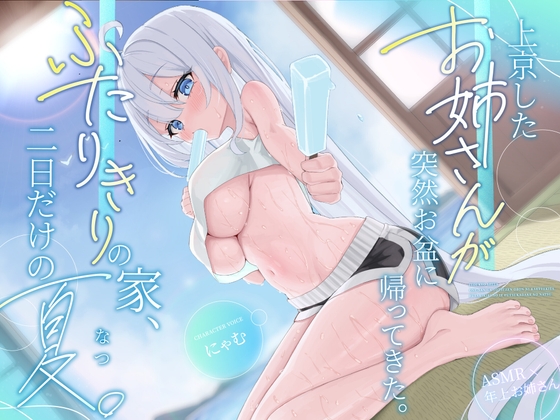
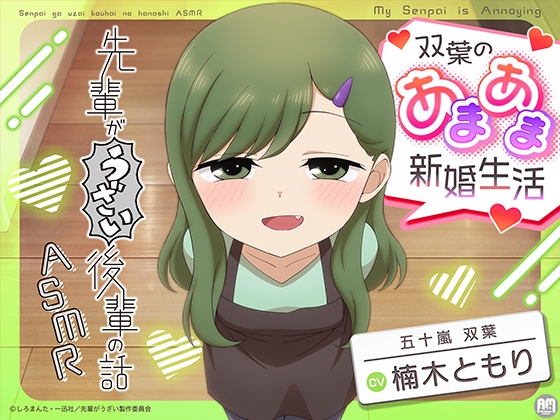
Long black hair flowing over one shoulder, a white blouse and a knee-length skirt. Light makeup, modest pink lipstick. A soft way of speaking, never raising the voice. She reads on the train and spends weekends at the library. Sexual experience is shallow; at sexual topics she reddens and lowers her eyes. This set of attire, tone, and behaviour constitutes a single character sign-system. Seijun-kei is the taste for a female character type that combines these visual, behavioural, and psychological indices, with the performance of sexual purity at its core.
Seijun-kei (清純系, “pure type”) is the collective term for the taste for a female character type built from visual, behavioural, and personality signs of innocence: a modest personality, prim attire, and sexual inexperience. It partly overlaps with related terms such as seiso-kei (clean-cut type) and junjou-kei (pure-hearted type) and has been widely used across subculture, AV, and entertainment. Its distinctive structure is that its core is a visual, semiotic “performance of innocence,” distinct from the concept of the virgin as a biological fact.
Overview
The core is a structure in which sexual purity is performed as a set of signs. Independent of actual sexual experience, characters in this category share the semiotic attributes of “shallow sexual experience, weakness toward sexual topics, unfamiliarity with sexual contact.” This is established through a combination of indices: physical form, clothing, hairstyle, speech, behaviour, and manner toward others.
Visual signs include (1) black or dark long hair, (2) conservative clothing such as blouse, cardigan, and skirt, (3) modest makeup, (4) minimal accessories, and (5) dominance of calm tones (white, pastel). These have continuity with attire socially recognised as “clean-cut,” “refined,” or “ojousama-like,” gaining visual identifiability.
Behavioural and personality signs include (1) modest speech and low volume, (2) a shame reaction to sexual topics, (3) suggestion of shallow sexual experience, (4) a passive, reserved personality, (5) intellectual, bookish hobbies, and (6) a normative, ethical attitude. This set forms the ideal type of the “clean-cut woman” in contemporary Japan, and seijun-kei arises by transferring that ideal type into the erotic context.
Etymology
Seijun is a modern Japanese two-character compound meaning “pure and clean state.” Seiso, used near-synonymously, means “clean and unadorned beauty.” Both functioned from the Meiji period in literature, newspapers, and magazines as vocabulary expressing the ideal type of woman, incorporated into the construction of the modern Japanese woman.
The subcultural derivatives seijun-kei, seiso-kei, and junjou-kei were organised as attribute tags in the bishoujo game and AV contexts from the late 1990s to the 2000s. In the AV market the catchphrase “pure-type AV actress” operated from the 1980s as a differentiation axis for marketing actresses, functioning in parallel with other attribute systems. The contrastive placement of “pure type” against “gal,” “amateur,” and “married woman” formed a basic axis of AV genre classification.
In English, corresponding terms such as innocent type and pure type exist, but the Japanese seijun-kei is recognised as its own sign-system and is borrowed in English communities as seijun-kei.
History
The lineage of the seijun-kei attribute runs parallel to the modern construction of the Japanese woman. From the Meiji period, alongside modern education and women’s labour, the “good wife, wise mother” ideal was nationally promoted and expressed in the vocabulary of seijun, seiso, and “chaste.” This vocabulary formed the basic frame of modern Japanese female representation, the historical backdrop of the subcultural attribute system.
The direct attribute system formed in the 1980s AV industry’s actress-marketing strategy. “Pure-type AV actresses” who debuted from the mid-1980s citation needed were marketed with a new catchphrase differentiated from previous adult-actress images, and the category became commercially independent. From the 1990s the AV industry institutionalised classification of actresses along axes such as “pure type,” “amateur type,” “married-woman type,” and “gal type,” a classification still operating as the basic industry structure.
In parallel, the bishoujo game field organised the seijun-kei heroine as a standard attribute from the late 1990s. The principal heroine types in To Heart, Kanon, and AIR supplied the core samples of the system, establishing attribute-based character design in the eroge field, with seijun-kei as one of its central axes.
From the 2000s, derivation and compounding advanced. Composite attributes such as “pure-type big-breasted,” “pure-type clumsy girl,” and “pure-type ojousama” were mass-produced, and seijun-kei shifted from a standalone attribute to a base attribute permitting combination with others.
Derivative and adjacent concepts
The virgin (shojo) denotes the biological and medical absence of sexual experience, a different category from seijun-kei. The two may overlap, but seijun-kei centres on semiotic performance while the virgin centres on factual state; a seijun-kei character need not be a virgin, and a virgin character need not follow the seijun-kei sign-system.
The lewd and lustful types operate as the opposite of seijun-kei. Their contrastive placement forms the two-pole structure of female characters’ sexual attitude, a basic axis of attribute-based design. Gap settings such as “innocent looks but actually lewd” or “looks lewd but actually a virgin” are typical methods using the contrast as narrative drama.
The uniform, blazer uniform, and sailor uniform have high affinity with the seijun-kei sign-system. The school uniform functions socially as a sign of “immaturity, innocence, normativity” and is frequently used as seijun-kei attire.
Reception
The cultural pull of seijun-kei lies in the narrative drama of “transgression” produced by the performance of sexual purity. The structure of “stepping into a sexual relationship with a pure partner” functions as a device maximising the drama of the moment a pure state is destroyed or transformed. This transgression overlaps with the virgin concept, but seijun-kei has independent psychological pull because it is established at the semiotic level as a set of signs.
Sociologically, the attribute sits on the extension of modern female-image construction, functioning as a cultural device transferring the “clean-cut woman” ideal into the erotic context. In recent AV, changes appear in its operation: narrative developments such as “shedding the pure type” or “turning lewd after a pure debut” operate as central axes of actresses’ career design, and seijun-kei increasingly functions as a starting point for attribute conversion rather than a fixed attribute. In subculture too, composite operation with other attributes now dominates over pure standalone use.
See also
Updated
References
- 『Otaku Yougo no Kiso Chishiki (Basics of Otaku Terminology)』 Takarajimasha (2014)
- 『Sentou Bishoujo no Seishin Bunseki (The Psychoanalysis of the Fighting Beauty)』 Ohta Books (2000)
- 『Sexuality no Shinrigaku (The Psychology of Sexuality)』 Yuhikaku (2001)
Also known as
- seijun-kei
- pure type
- innocent type
- innocent girl character
Related
- Ojousama Character (Wealthy Heiress Archetype)
- Twintails
- Tandere character type
- Dark Elf (Fantasy Character Archetype)
- Demon Girl Moe (Akuma Chara)
- Bakajoshi (Airhead Girl Archetype)
- Debu Otoko (Fat Bastard / Ugly Bastard)
- Dosukebe (Super-Lewd Character Type)
- Twins Moe (Futago Moe)
- Step-Parent Theme (Giri no Oya-kei)
- Haraguro Moe (Two-Faced Character Appeal)
- Hikikomori Character Moe