Ponytail (kink)
✎ 本文編集 (admin) 🖼 画像編集 (admin)“Ponytail (kink)” works on DLsite

![[隔週刊]ポニテマニアックス 第109話 「かいもの」 〜47歳エロビデオ屋店員が深夜バイト中に拾った痴女が最強宇宙人でしたーン〜](https://img.dlsite.jp/modpub/images2/work/doujin/RJ01733000/RJ01732493_img_main.jpg)
![[studio みゃーび]ポニテマニアックス 09巻](https://img.dlsite.jp/modpub/images2/work/doujin/RJ01728000/RJ01727637_img_main.jpg)
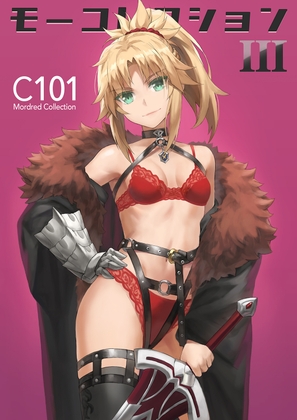
A simple gathered tail at the back of the head, a band securing it. A common, practical, athletic hairstyle by every measure. The fetish register of ponytail is one of the older recognised hair kinks in the international adult-content vocabulary, anchored in the simultaneously-utilitarian-and-stylised register of the hairstyle itself.
Overview
Ponytail (Japanese loanword: ponītēru, often shortened to ponite) is the hairstyle in which hair is gathered into a single bound tail at the back or top of the head, and the corresponding fetish register that takes the hairstyle and the body of associations it carries as a focal point of erotic attention. The hairstyle is, in everyday context, an utterly ordinary one — used in sport, in domestic work, in everyday convenience. The fetish register operates around the specific cluster of associations the hairstyle activates: the exposure of the nape and neck, the athletic and outdoor coding, the moment of the band coming off, and the visual register of the bound tail in motion.
It is essential to read all depictions of any kink in real-world adult content as operating under the standard distinction between consensual filming and non-consensual surveillance: ponytail-themed adult production runs under the normal consent-and-release framework that organises the wider Japanese AV industry and equivalent international productions. The discussion below addresses the kink in fictional and consensual-recorded contexts.
Etymology and definition
The English ponytail is an Anglo-American compound from pony + tail, after the resemblance to a young horse’s tail. The compound was popularised in the United States from the 1950s onward as the hairstyle reached mass adoption. The Japanese loanword ponītēru (sometimes shortened to ponite) entered Japanese in the postwar period along with the broader Western fashion vocabulary.
The hairstyle’s defining shape: hair gathered at a single point on the head — variously high (top of the head), middle (back of the head), or low (nape) — with the gathered hair falling in a single stream from the binding point. The lateral version — twin-bound on either side of the head — is twin-tail, a separately-named hairstyle and separately-identified kink. The nape-bound braided version is the bun and plaited tail tradition, structurally adjacent.
Historical context
Tied-and-bound hairstyles are old. Ancient Greek sculpture, ancient Egyptian wall painting, and ancient Chinese figurines all show hair gathered at the back of the head in shapes that would be recognised as ancestral to the contemporary ponytail. The contemporary specifically-Western ponytail tradition, however, is twentieth-century.
The hairstyle’s American mass-adoption dates to the 1950s, with prominent contributions from Hollywood film conventions of the period. Audrey Hepburn’s appearances, Brigitte Bardot’s signature look, and the wider 1950s-and-1960s American teen-culture register (the American Graffiti aesthetic; rock-and-roll culture; high-school cinema) all helped consolidate the hairstyle as the standard post-war American young-woman look.
The 1970s-onward expansion of women’s fitness culture (aerobics, jogging, organised competitive women’s sports) gave the ponytail a parallel career as the practical exercise hairstyle. Hair held back from the face, kept clear of the upper body, and free to move with motion — the practical engineering matches what an active body needs. The fitness-culture association became one of the deeper structural elements of the contemporary ponytail register and is part of why athletic and gym-related contexts feature so heavily in ponytail-fetish work.
In Japan, the postwar adoption of Western hairstyles brought the ponytail into the standard repertoire of female student and athletic hairstyles. School-club activity (bukatsu), gym-class hairstyle convention, and the wider sports-club register of contemporary Japanese girls’ and women’s culture all use the ponytail as the standard active-mode hairstyle.
The structure of the kink
The fetish register of ponytail operates on four structural elements.
The first is the nape exposure. Bound at higher positions, the ponytail leaves the back of the neck, the nape (unaji in the Japanese register), and the line of the neck-into-shoulder fully exposed. The traditional Japanese aesthetic of nape attention finds in the high ponytail one of its cleanest contemporary expressions: hair that ordinarily would cover the area is bound away, and the area is exposed in a way it ordinarily would not be.
The second is the athletic and outdoor coding. The ponytail’s strong association with sport, exercise, and active embodiment reads automatically into any image that includes the hairstyle. A flushed face after exercise, a damp neckline from sweat, a person actively moving — the ponytail brings these connotations almost automatically.
The third is the bind-and-release convention. The ponytail’s defining structural feature is that it is held in place by a single removable band. The instant of the band coming off — the bound hair falling to the shoulders and back, the active register dropping into the unbound private one — operates as a structural reveal moment. The convention operates both in adult content (where it functions as a kind of additional layer-removal) and in mainstream fiction (where the same moment functions as a private/public role-shift).
The fourth is the motion register. A ponytail in motion swings as a single unit — swinging from side to side as the wearer turns, hitting the shoulders and upper back, moving with breath and speech. The single-mass swing of the ponytail is structurally different from the dual-side swing of twin-tails (where the motion is symmetric and smaller-amplitude), and provides one of the kink’s distinctive visual registers.
Sub-styles
A range of ponytail sub-styles operate within the broader category, each with its own associations.
High ponytail: bound at the top of the head, with the strongest active and youthful coding.
Middle ponytail: the most ordinary register, bound at the back of the head.
Low ponytail: bound at the nape, with a more composed and adult coding.
Side ponytail: bound off-centre, with a more decorative and casual register.
Slick ponytail: hair pulled tight and finished smooth, with a more polished register.
Messy ponytail: deliberately loose and casual, with an off-the-clock register.
Braided ponytail: with a braid in the bound section, more ornamental.
Sports ponytail: the standard register for explicitly sports-context work, often paired with damp-skin and exertion conventions.
Cultural register and circulation
In adult content the ponytail register pairs heavily with sport and outdoor settings. AV titles set in tennis clubs, athletic clubs, swimming clubs, gym instructors, yoga teachers — the standard set of athletic-context titles — use the ponytail as a near-universal default. The combinations ponytail + jersey, ponytail + sailor school uniform, ponytail + gym uniform operate as recognised standard production conventions. The 2D tradition uses the ponytail as the standard active-character marker — sports-manga heroines, club-leader characters, older-sister-types with outdoor competence are routinely drawn with ponytails as their default register, and the put up a ponytail to do something serious moment is a recurring narrative beat across many genres.
In English-language adult-content vocabulary, ponytail is an established kink category, particularly within the fitness-and-sport-themed sub-genre. The ponytail tug — the partner physically grasping the ponytail during sex — is a recognised English-language sub-fetish with a well-established place in adult-content vocabulary. The structural appeal is the visual presence of the bound tail combined with the convenient grip-point that the bound hair provides.
A durability note
Ponytail’s durability across decades of fashion change traces to its operational simplicity: a band, three seconds, a fully-formed style. The hairstyle does not require complex styling, does not require prolonged morning preparation, does not require makeup integration. At the same time, the act of tying delivers a clear visible result: the nape opens, the athletic register activates, the binding point becomes visible, the bound hair acquires its distinctive motion. The simplicity-and-effect ratio is one of the highest in the contemporary hairstyle vocabulary, and the resulting signal-density is much of what has kept the ponytail’s fetish register stable across decades.
Related Terms
Updated
References
- 『Hair: A Human History』 Pegasus Books (2016)
- 『The Hair Book: Fashion, Style, and Culture』 Carlton Books (2010)
- 『髪型の文化人類学』 Hakusuisha (1995)
- 『Cosplay and Fan Culture in Japan』 Shin'yōsha (2013)
Also known as
- ponytail fetish
- ponytail kink
- high ponytail
- ponytail tug
- ja: ポニーテール
- ja: ポニテ