Shitabakushi (tongue-out fetish)
✎ 本文編集 (admin) 🖼 画像編集 (admin)“Shitabakushi (tongue-out fetish)” works on DLsite
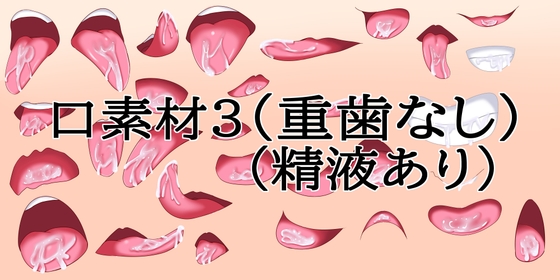
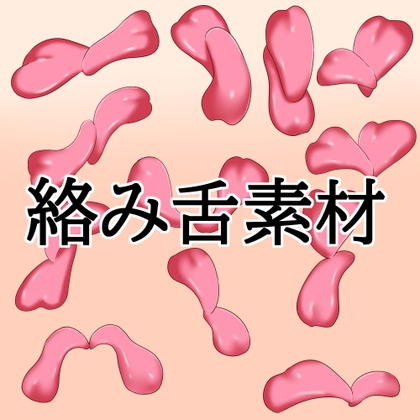
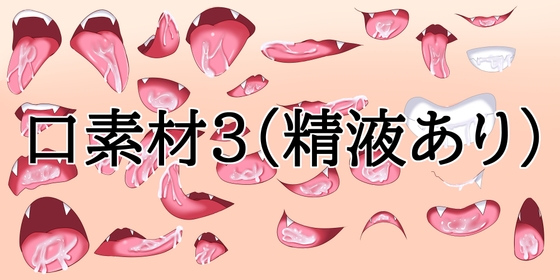
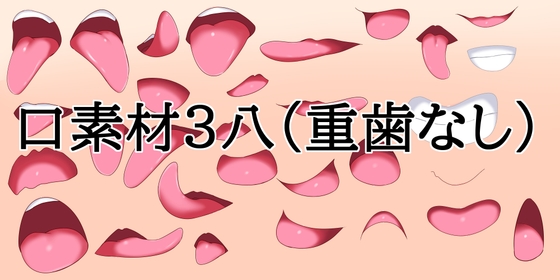
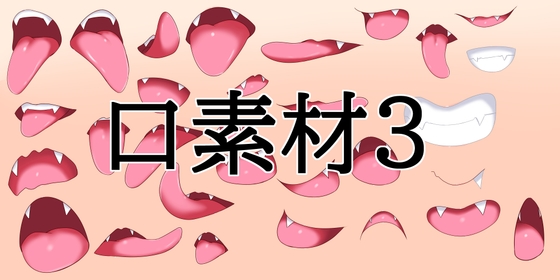



The mouth opens, the tongue protrudes, the eyes meet the viewer. The Japanese kink-aesthetic vocabulary has stabilised this combination of elements into a distinct category, shitabakushi, and the resulting category sits in the family of body-part-fetish vocabularies with a particular structural focus on a mobile, wet, signalling body-part that is both inside-and-outside the body at once.
Overview
Shitabakushi (Japanese: 舌出しフェチ, shitabakushi; literal compound: 舌出し shita-dashi, “tongue-out / tongue-protrusion” + フェチ fetchi, abbreviation of fetishism; English working translations: tongue-out fetish, tongue fetish, lingual fetish) is the Japanese kink-aesthetic category for sexual interest specifically in the tongue’s protrusion from the mouth. The category is distinguished from the broader ahegao facial-expression complex (in which tongue-out features as one element among several including eye-roll, flushed cheeks, and saliva) by its narrower focus: shitabakushi treats the tongue’s protrusion itself as the primary visual-erotic anchor, distinct from the climax-facial-expression context in which ahegao places it.
The category’s reading-context is the tongue as a mobile, wet, deliberately-positioned body-part that is partly inside and partly outside the mouth, and the resulting visual register includes detail-attention to the tongue’s shape, length, width, tip-curvature, surface-moisture, and direction-of-extension. The eyes-and-tongue alignment — the deliberate combination of tongue-protrusion with direct gaze toward viewer or partner — is treated as a particularly potent variant within the category, with substantial accumulated production-vocabulary built around the gaze-tongue alignment as a near-verbal seductive register.
Etymology and distinction from ahegao
The compound shita-dashi (tongue-out) is built from 舌 (shita, “tongue”) and 出し (dashi, “putting out / extending”). The compound is older than its erotic application: in pre-modern and modern Japanese, shita-dashi and the verbal-form shita o dasu describe ordinary acts of sticking-the-tongue-out (the playful child’s akkanbe gesture, expressions of teasing or mild defiance), with no necessarily erotic register. The contemporary erotic application of the compound stabilised in the 1990s-onward eromanga and adult-anime production traditions, as the resolution of facial-expression depiction increased and the tongue-out element acquired its own erotic-aesthetic recognition independent of the broader ahegao-and-climax-facial-expression complex.
The English-language adjacent category is tongue fetish and tongue-out fetish. The Japanese shitabakushi category sits within this broader international lineage but with somewhat narrower focus: the international tongue fetish tradition includes a broader range of tongue-related interests (long tongues, tongue-piercings, tongue-licking, deep-tongue contact), while the Japanese shitabakushi tradition has a sharper focus on the protrusion-and-gaze axis as the category’s primary visual register.
Distinguishing from ahegao
Ahegao is a climax-facial-expression convention that combines several elements (eye-roll, tongue-out, flushed cheeks, drool, distorted facial features) into a single visual register denoting peak-arousal in a fictional or AV context. Shitabakushi names a tongue-only convention that operates independently of climax-context: the tongue-out is the visual anchor in itself, and the interest applies as readily to a calm-state pre-climax tongue-protrusion, a playful-teasing tongue-protrusion, a feeding-licking tongue-protrusion, or a cum-receiving tongue-protrusion. The two categories overlap in the shared tongue-out element but differ in the breadth of the visual register: ahegao subsumes tongue-out within a complex; shitabakushi isolates tongue-out as the singular focus.
Reception structure
Four structural elements are typically cited for the category’s reception.
Inside-and-outside register. The tongue is normally a body-part inside the mouth, hidden from external view. Its protrusion outside the mouth places a normally-internal body-part into external visibility, and the small transgression-of-anatomical-norm reading is one of the structural readings the category supports.
Wet-mucous-membrane visual aesthetic. The tongue is one of the few body-parts whose normal-state surface is continuously wet. The visible saliva on the tongue surface produces a wet-mucous-membrane visual register that is anatomically and visually adjacent to the wet-mucous-membrane register of explicit-genital depiction; this provides one displacement-route by which the tongue can carry visual-erotic register without explicit-genital depiction.
Active-choice register. Tongue-protrusion is, by anatomical default, a deliberate movement of the tongue’s musculature: the tongue is moved by the body whose tongue it is, and the protrusion therefore reads as a deliberately-chosen action by the depicted character. In a visual register that is otherwise dominated by passive-receptive postures, the tongue’s active register provides a small but recognisable site for the depicted female character’s narrative-and-aesthetic agency.
Eye-tongue synchronisation. The combination of tongue-protrusion with direct eye-contact toward the viewer (or toward the depicted partner) produces a particularly concentrated seductive-register that the genre’s accumulated production-vocabulary treats as a high-impact visual configuration. The eye-and-tongue alignment carries semantic weight roughly equivalent to a substantial amount of verbal courtship in narrative.
Sub-forms
Pero-tto-dashi (peeking-tongue-out): a small protrusion of just the tongue-tip from beneath the lower lip, with playful-and-teasing register; widely deployed in moé-and-coquettish character-design vocabulary.
Tongue-kiss / deep-kiss: tongue-on-tongue contact with saliva-exchange, overlapping with the broader deep-kiss aesthetic; the tongues’ visible interlocking is a recognisable sub-register.
Licking-tongue-out: tongue protruded for licking the partner’s body or another object; the long-tongue visual register is particularly visible in this configuration.
Long tongue (chōzetsu): aesthetic preference for unusually-long tongues, with overlap into the international-cosplay-and-glamour photography long-tongue tradition.
Receiving-tongue-out: tongue protruded forward to receive ejaculate or other liquid; a recurrent finishing-shot convention in bukkake and adjacent registers.
Tongue-piercing: aesthetic preference for the metal-on-mucous-membrane combination of tongue-piercings.
Adjacent fetishes
The category sits in a small cluster of facial-and-mouth-region body-part fetishes. Adjacent categories include mouth fetish (lips and oral-cavity as a region), lip fetish, and teeth fetish. Within this cluster, the categories distribute by element-emphasis: lips are read predominantly as a static element, teeth as a structural-armature element, and the tongue as the dynamic element. The clustering produces a recognisable small-scale taxonomy within facial-aesthetic kink-vocabulary.
Cultural and historical lineage
In eromanga, the tongue’s depiction has stabilised as a central component of facial-expression vocabulary, and the depiction-style of the tongue has become a recognisable artist-signature within the genre. Some artists draw extremely-elongated tongues; others foreground the saliva-thread between tongue and lips; others emphasise the tongue-tip’s narrowness or curl. The artist-style differences sustain reader-segmentation within the genre.
In the ASMR and audio-content tradition, the tongue’s contact-sounds — the small clicks of tongue-against-mucous-membrane, the wet-friction sounds of tongue-on-skin, the saliva-related sounds — provide an audio-register that operates on the same body-part vocabulary as the visual shitabakushi register, with the audio-register reaching aesthetic objects that the visual register reaches independently.
The aesthetic interest in the tongue is not historically new. The classical Indian Kama Sutra (ca. 3rd-4th century CE) describes oral-amorous techniques and tongue-use systematically, and the broader Asian-and-Western erotic-and-instructional literature has consistently treated the tongue as an organ of erotic-and-courtship use. Japanese shunga (early-modern erotic woodblock prints) include scenes depicting partners with visibly-protruded tongues during kissing, indicating that the contemporary shitabakushi register is the descendant of a long lineage of tongue-aesthetic recognition rather than a recent invention.
Reception within international fan-vocabulary
The international hentai-and-eromanga reader vocabulary includes the loanword shitabakushi (and the broader tongue fetish, tongue-out fetish) in tag-systems and discussion-contexts. The category’s distinct identity relative to ahegao is recognised in the international vocabulary, with the two categories typically treated as adjacent-but-distinct. Within the dedicated reader-community, the eye-tongue-alignment configuration is widely recognised as a high-impact visual register and is commonly tagged separately from broader tongue-out content.
Related Terms
- Ahegao
- Deep kiss
- Mouth (kuchi)
- Lips (kuchibiru)
- Bukkake
- Erotic ASMR
- Shunga
Updated
References
- 『The Science of Kissing: What Our Lips Are Telling Us』 Grand Central Publishing (2011)
- 『Erotic Comics in Japan: An Introduction to Eromanga』 Amsterdam University Press (2021)
- 『The Moé Manifesto』 Tuttle Publishing (2014)
- 『Kama Sutra』 trans. various (1883) — Classical text on oral-amorous techniques and tongue-use.
Also known as
- tongue-out fetish
- tongue fetish
- lingual fetish
- shitabakushi
- ja: 舌出しフェチ
- ja: 舌フェチ
- ja: 出し舌
Related
- Ashi-fetish (foot fetish)
- Mesu-gao (female-aroused face)
- Gangimari (Drugged-Face Expression)
- Ankle fetish
- Chakui (clothed sex)
- Garter belt
- Belly bulge (hara-kobu)
- High heel
- Hime-dorei (princess-slave fantasy)
- Inmon (lewd crest)
- Hair kink (kami fetish / trichophilia)
- Kichiku-zeme (intense fictional kink)