Inmon (lewd crest)
✎ 本文編集 (admin) 🖼 画像編集 (admin)“Inmon (lewd crest)” works on DLsite
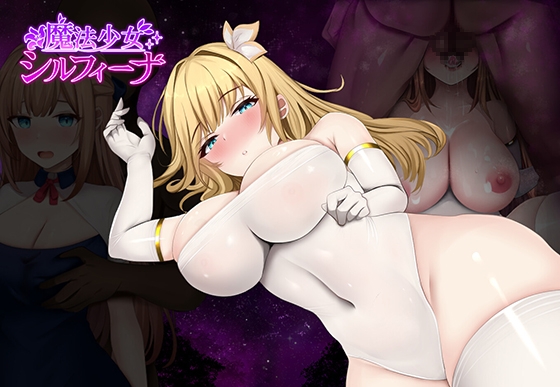
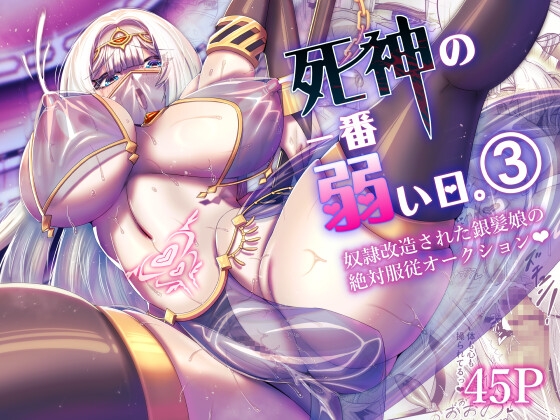

A glowing sigil rises on the heroine’s lower abdomen. Pale violet against skin, perfectly symmetrical, faintly pulsing in time with her breathing. The reader does not need a caption: the mark is the caption. Inmon is the Japanese hentai-and-eroge convention of the magical sigil that signals a fictional character’s transition into a state of sexual subjugation, demonic transformation, or contractual binding, and the convention has accumulated enough genre vocabulary to operate as an independent searchable category.
Overview
Inmon (Japanese: 淫紋, inmon; literal compound: 淫 “lewd” / “carnal” + 紋 “crest” / “sigil”; English working translations: lewd crest, succubus mark, carnal sigil) is the convention in Japanese fantasy-genre adult comics, eroge, and doujinshi by which a magical sigil is depicted on the body of a female character — typically the lower abdomen, sometimes the chest, neck, or thigh — as a visual signal of her transition into sexual subjugation, succubus or demonic transformation, or magically-binding contract. The convention is fictional and fantasy-coded: it operates within fantasy-magic-system narrative frames and refers to magical effects that do not exist in the physical world. The form is structurally distinct from real-world body modification, tattoo, or cosmetic practice; readers parse the inmon as a magical-system signal, not as a representation of a physical mark.
The category emerged as a recognisable production convention in the 2000s Japanese doujinshi-and-eromanga circuit and consolidated through the 2010s as a distinctly nameable sub-genre. Pixiv and Twitter (now X) creator-tag systems have stable inmon tags with substantial content volumes, and the convention’s combinatoric flexibility — the inmon pairs with succubus transformation, mind-control, magical contract, pregnancy, and a wide range of fantasy-genre narrative frames — has kept it a productive category across two-decades of accumulated work.
Etymology
The compound 淫紋 (inmon) is Sino-Japanese, formed from 淫 (in, “lewd / lascivious / lustful”) and 紋 (mon, “crest / sigil / family emblem”). The 紋 (mon) root in Japanese has a long history denoting heraldic family crests (kamon) and decorative emblems on textiles and ceramics, and the convention of marking the body with a crest has classical-Japanese, classical-Chinese, and broader East-Asian visual lineages that the term draws on as background. The 淫 (in) modifier is the standard Sino-Japanese intensifier for sexually-coded content (injū / “carnal beast”, intoku / “secret lewdness”, and many other compounds in classical and modern Japanese erotic vocabulary).
The compound inmon in its modern fantasy-hentai sense is a 2000s coinage: the term as a doujinshi-circle and Pixiv tag stabilised through the mid-2000s, with origins traced informally to late-1990s and early-2000s Comic Market doujinshi production where the visual convention was being assembled before the lexical category settled. The term has been carried into international anime and manga fan vocabulary as a Japanese-loan term, used in English-language doujinshi translations and on Western-language anime fan-site tag systems.
Form and iconography
The visual form of an inmon is governed by genre convention rather than by any single canonical design. Within the genre vocabulary, several recurring features have stabilised.
Symmetric and geometric. The form is bilaterally or radially symmetric, drawing on the visual logic of magic-circle (mahōjin) iconography in Japanese fantasy-genre vocabulary. The geometric ordering is an intentional cue to the reader that the mark belongs to a magical system rather than to a tattoo or body-art system.
Light-emission and pulsing. Pale violet, red, or black is the standard colour palette, and the mark is conventionally drawn with a faint glow or pulsing aura that intensifies with the character’s arousal or with the activation of the spell. This optical feature is a key reading-cue for the convention: the ordinary tattoo would not glow in synchrony with the wearer’s emotional state, and the glow is what marks the form as magical-fictional rather than physical.
Lower-abdomen placement. The most frequent placement is the lower abdomen below the navel, with smaller numbers placing the mark on the chest (between or below the breasts), the side of the neck, the inner thigh, or — more rarely — the genital region itself. The lower-abdomen default has narrative-and-aesthetic reasons: the position is associated with the womb in the genre’s reading vocabulary, which keys the inmon into pregnancy, succubus-incubation, and fertility narrative motifs.
Decorative complexity. Designs vary widely — flower-petal radial forms, magic-circle compounds, calligraphic forms, layered geometric tracery — but the underlying logic is consistently visible decorative complexity that signals magical-system origin. Compared to a tattoo (which would read as a personal aesthetic choice) or a brand mark (which would read as a sign of ownership in a non-magical register), the inmon’s decorative complexity reads to the genre-trained eye as “this came from a magic system”.
Sub-genres
Succubus-transformation type
The character begins as an ordinary human and undergoes progressive transformation into a succubus or demon. The inmon’s appearance and intensification serve as the reader-facing index of the transformation’s progress: a faint mark in early stages, a brighter and more elaborated form as the transformation advances, the full design as the transformation completes. The narrative arc pairs the inmon’s visual elaboration with the character’s increasing release from the social-and-rational human personality and her assumption of a demonic-libidinal disposition. This sub-genre intersects heavily with the broader chōkyō (training) vocabulary.
Curse / coercive-mark type
A hostile mage or demonic figure imposes the inmon on the character without her consent within the fictional frame, and the mark binds her body to respond against her conscious will to specified stimuli or commands. The convention is fantasy-magical coercion within a fictional frame; the genre operates at the surface level of magical narrative, not as a representation of real-world coercive practice. The sub-type intersects heavily with hypnosis and mind-control genre conventions, and characters subject to inmon-curses are typically restored to autonomy by narrative resolution in works that follow standard genre arcs.
Contract / pact type
The inmon as a binding contract sigil. The character has entered a pact with a demonic, magical, or otherwise-supernatural figure, and the inmon is the visible mark of the contract. The pact’s terms typically include sexual obligation as part of the consideration, and the narrative explores the character’s negotiation with the contract’s terms. Faustian-pact and witches’-mark traditions in Western folklore and fantasy fiction sit as background for the convention; the Japanese genre has developed its own elaborated form within that wider lineage.
Pregnancy / receptive-mark type
The inmon variant marking pregnancy, fertility, or receptive-womb status. The placement is below the navel, the design typically incorporates womb-and-fertility iconography, and the mark intensifies during the narrative arc that leads to conception. The sub-type intersects with the broader pregnancy genre conventions.
Reception and the structure of the kink
The inmon convention’s appeal to the reader-viewer rests on several structural functions.
Externalisation of internal change. Sexual transformation, demonic possession, or magical binding are interior states whose representation in narrative would otherwise require accumulated dialogue, expression, and behavioural signs. The inmon collapses this work into a single visible image. The reader sees the mark and reads the internal state directly. This compression is one of the convention’s principal aesthetic-and-functional resources.
Visualisation of irreversibility. The inmon, once placed, is conventionally not removable by ordinary means. The narrative cannot be reset by the character’s own will. The visible permanence of the mark on the page tracks the narrative permanence of the character’s transformation — and the reader’s implicit knowledge that the change has taken hold and will not be revoked is part of the convention’s reading-grammar.
Inheritance from older marking traditions. The inmon convention sits in a long lineage of marks-of-ownership-and-belonging in Japanese visual culture — heraldic crests, family-name stamps, branded marks in feudal narratives, and the broader visual culture in which a body bearing a mark belongs to or is bound by a system. The convention adapts that older lineage to a contemporary fantasy-hentai aesthetic, and the reader-viewer recognises the underlying signal even where the surface form is novel.
Decorative-erotic surface. The inmon also functions as an aesthetic-decorative element on the page. The decorative complexity of the form, the placement on a focal point of the female-character body, and the colour-and-glow handling all combine to give the inmon a substantial visual weight in the page composition. Many reader-viewer responses to the convention foreground this aesthetic register, treating the inmon as an iconographic element with its own rules of beauty rather than as a narrative device alone.
Production and distribution
Doujinshi, eromanga, eroge, doujin games, and CG sets are the principal production forms in which the inmon convention operates. Pixiv tags consolidate substantial volumes of inmon-themed illustration work, with creators specialising in the convention to varying degrees and developing personal design vocabularies that are recognised within the inmon-reader fan community. The bishōjo-game industry has produced a number of titles in which the inmon is integrated into the game’s UI itself — as a heroine-status indicator, a corruption-meter, or a corresponding gameplay element — and this UI integration is one of the more inventive uses of the convention.
In live-action AV, direct depiction of the inmon is technically difficult (the convention’s symmetric magical-iconography work does not translate cleanly to body painting in the available production schedules), but a small number of productions have used body-paint or post-production CG to render the form. The convention remains, fundamentally, a 2D-art convention — its formal logic developed by and for two-dimensional production, with three-dimensional adaptations as a marginal sub-category.
Note on the wider field
The inmon convention is one of the more clearly-bounded examples of a Japanese-hentai magical-fantasy convention that does not have a direct Western equivalent, and that has therefore entered international anime-and-manga fan vocabulary as a Japanese-loan category. The Western fantasy-fiction tradition has its own iconography of marked-body conventions (the mark of the witch, the rune of binding, the demonic scar), but the inmon as a moe-attribute-system iconographic category — symmetric, glowing, low-abdomen-placed, irreversible, magical-fantasy-coded — is structurally specific to the Japanese subculture in which it was developed. International audiences who encounter the convention recognise it as a Japanese-specific genre marker.
Related Terms
- Succubus / mahō (magic) genre
- Mesu-ochi (becoming-female / breaking)
- Pregnancy genre
- Hypnosis genre
- Mind-control genre
- Chōkyō (training)
- Fantasy genre
Updated
References
- 『Erotic Comics in Japan: An Introduction to Eromanga』 Amsterdam University Press (2021)
- 『Otaku: Japan's Database Animals』 University of Minnesota Press (2009) — Foundational on character-database consumption, including symbolic-mark attributes.
- 『The Moé Manifesto』 Tuttle Publishing (2014)
- 『Hentai Manga! A Brief History of Pornographic Comics in Japan』 Continuum (2010)
Also known as
- lewd crest
- succubus mark
- carnal mark
- inmon
- ja: 淫紋
- ja: 淫印
Related
- Mahou-mono (Magic-Themed Genre)
- Ninshin (pregnancy kink / impregnation narrative)
- Saimin (Hypnosis Genre)
- Chōkyō (training)
- Fantasy setting (J-eroge and adult game genre)
- Hime-dorei (princess-slave fantasy)
- Kichiku-zeme (intense fictional kink)
- Netori (perspective-shifted netorare)
- Princess Character (Hime-Kyara)
- Belly bulge (hara-kobu)
- Mesu-gao (female-aroused face)
- Shitabakushi (tongue-out fetish)