Netori (perspective-shifted netorare)
✎ 本文編集 (admin) 🖼 画像編集 (admin)“Netori (perspective-shifted netorare)” works on DLsite





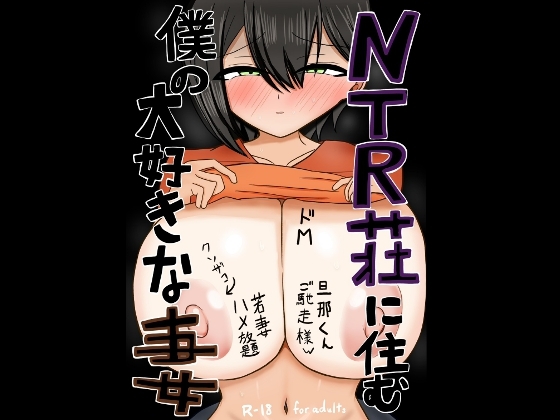


If netorare is the genre seen from the betrayed partner’s standpoint, netori is the same situation seen from the seducer’s. Two narratives, the same triangle, with the camera in different positions and reading the resulting story differently. Netori names the perspective-shift category as a Japanese narrative-fiction convention, and the category has stabilised in the contemporary eromanga, eroge, and doujinshi production matrix as a recognisable independent slot.
Overview
Netori (Japanese: 寝取り, netori; English working translations: cuckolding from the seducer’s perspective, active netori, cuckolder; subcultural abbreviation: NTI) is the Japanese narrative-fiction category in which fictional sexual-and-romantic infidelity is depicted from the perspective of the third-party seducer (the character who pursues the partnered romantic object) rather than from the perspective of the betrayed partner. The category is the perspective-shifted counterpart to netorare (NTR; the betrayed-partner perspective) and is structurally distinct from netorase (NTS; the husband-permits-his-wife-to-have-other-partners perspective). Together, the three categories — netorare, netorase, netori — form a triangle of narrative-perspective options on the same fictional infidelity scenario.
The category is firmly a fictional-narrative-perspective category. The works depict fictional infidelity between fictional adult characters, are produced by adults for adults, and operate as narrative fiction that explores the perspective-of-the-seducer literarily rather than as endorsement of or model for real-world infidelity. The Japanese subculture’s long-standing infidelity-narrative tradition — running through Edo-period rakugo and ninjō-banashi storytelling, through twentieth-century novelistic traditions, into the contemporary eromanga and eroge industry — is the broader frame within which the netori category operates.
Etymology
The Japanese verb netoru (寝取る) is the compound of 寝 (ne, “sleep” / “bed”) and 取る (toru, “take”), with the literal sense “to take a person from bed” — that is, to take another person’s spouse or romantic partner. The verb has wide circulation in classical and modern Japanese, appears in late-medieval and Edo-period literature, and is part of the standard vocabulary of pre-modern ninjō (human-emotion) narratives, with substantial appearance in Edo-period rakugo storytelling and later novelistic traditions.
The noun netori (寝取り) is the verb’s connective-form noun (“the taking-from-bed”, or the act of taking another’s partner). The corresponding netorare (passive form, “being taken-from-bed”) and netorase (causative form, “letting take”) complete the morphological triangle, with each form picking out a distinct grammatical and narrative position relative to the act.
The subcultural abbreviation NTI parallels NTR (netorare) and NTS (netorase). The proximate origin of the I in NTI is informally debated within the subculture: explanations cite the English Incoming and the active-incursion sense, the romanisation of netori (from a nettori spelling), or as a parallel to NTR/NTS that simply takes the third available consonant. The abbreviation has stabilised in subcultural-fan vocabulary regardless of the proximate origin.
In English, the category corresponds approximately to cuckolder (the partner-stealing party in cuckold-genre fiction), homewrecker (the relationship-disrupting third party), and affair partner (the more neutral relationship-vocabulary term). The Japanese loanword netori has begun to circulate in English-language anime and hentai vocabulary as the dedicated subcultural category-term, used in tag and recommendation contexts.
History
Differentiation from netorare
The netorare category consolidated in early-2000s Japanese adult-content production (eroge, eromanga, doujinshi), with the betrayed-partner perspective as its structural defining feature. The perspective-shifted netori category emerged as a recognised production-and-reception convention shortly afterward, with the recognition that the same fictional triangle could be narrated from three different perspective-positions and that each produced a structurally-different reading-and-aesthetic experience.
The differentiation rested on a precise observation about narrative perspective. In netorare, the reader-viewer is positioned with the betrayed partner — the husband, the boyfriend, the established romantic interest — and reads the loss-of-relationship event from that perspective. The aesthetic register is loss, regret, painful witness. In netori, by contrast, the reader-viewer is positioned with the seducer — the third party who pursues the partnered character — and reads the same event as a successful pursuit. The aesthetic register is acquisition, conquest, transgression-of-boundary. The two perspectives produce structurally different reading experiences, and the genre’s categorisation tracks this difference.
Sub-genre formation
By the late 2000s, the doujinshi-circuit and the eroge-industry had developed netori-perspective production as an independent sub-genre with its own conventions. Sub-categories formed by the relationship-type of the targeted partnered character: hitozuma-netori (married woman-targeted), kanojo-netori (girlfriend-targeted), senpai-no-tsuma-netori (senior-colleague’s-wife-targeted), gishi-netori (sister-in-law-targeted), and others. Each sub-category developed its own narrative-and-aesthetic conventions, and the resulting matrix of recognised sub-categories has been in stable production through the 2010s and 2020s.
Production brands in the eroge industry — the Silky’s family of brands, the Liar-soft family, the doujinshi circles Crimson and Anmitsu Hime, and a number of other dedicated producers — have built up substantial netori-perspective catalogues. Many of these brands also produce work in netorare and netorase categories, with the same triangle-scenario presented from different perspective-positions in different works.
Narrative and ethics
The netori-perspective category occupies a particular position in the eromanga-and-eroge industry’s discussion of narrative ethics. The seducer-perspective narration of fictional infidelity is structurally distinct from real-world advocacy of infidelity, and the genre’s responsible production-and-reception maintains the distinction. Industry-internal discussion has settled on a working position that treats the netori category as a fictional-narrative-perspective device — analogous to the long Western literary tradition of villain-perspective and seducer-perspective narration in works from Don Juan through Lolita — with the ethical work performed by maintaining the fictional frame, depicting only adult characters, and not endorsing the depicted behaviour as a model for real-world relationship conduct.
Sub-genres
Relationship-targeted classification
Sub-genres organised by the relationship-type of the partnered character targeted for seduction.
Hitozuma-netori (married-woman targeting): the most-developed sub-category, with substantial accumulated production. The fictional dramatic situation is the seducer-character’s pursuit of a married woman, with the husband-character occupying a structural background position whose presence is felt without being narrated.
Kanojo-netori (girlfriend targeting): the dating-relationship variant, often involving a friend or rival of the boyfriend-character.
Gishi-netori (sister-in-law targeting): the in-law-relationship variant.
Senpai-tsuma-netori (senior-colleague’s-wife targeting): the workplace-status-asymmetric variant.
Psychological-conflict typology
The narrative arc within netori works typically explores the internal tension of the seduced character — the partnered character — between commitment to the established partner and attraction to the seducing third party. The arc’s resolution direction (return to original partner, full transition to new relationship, parallel maintenance of both, or unresolved conclusion) generates further sub-genre divisions, with each resolution-pattern carrying its own narrative conventions.
Position in the perspective-triangle
The full perspective-triangle of the same fictional infidelity scenario is organised as: netorare (betrayed-partner perspective), netorase (permission-granting-partner perspective), netori (seducing-third-party perspective). The selection of perspective-position fundamentally restructures the work’s reading-and-aesthetic experience, and the three categories operate as genuinely independent production-and-reception slots even when they describe the same underlying fictional triangle.
Reception and the structure of the kink
The netori-perspective register operates on several psychological-and-aesthetic functions.
Conquest and acquisition. The seducer-perspective narration centres the structural-pleasure of acquisition: the reader-viewer reads the work from the position of the agent who succeeds in his (or her) pursuit. The conquest-register is the aesthetic-and-emotional resource the genre principally builds on, distinguishing it sharply from the loss-and-witness register of netorare.
Boundary-transgression. Cultural-narrative norms about partnered relationships make infidelity a transgression-coded action; the netori-perspective narration positions the reader-viewer as the agent of the transgression, with the resulting boundary-crossing register as part of the appeal. This appeal-structure is fictional and operates within the work’s narrative frame.
Triangle-perspective re-reading. Readers who follow both netorare and netori works often report that the perspective-shift between the two re-reads the same triangle-scenario in structurally different ways, and the recognition of the perspective-shift as a literary device is part of the genre’s reading-skill. The pleasure of recognising the same situation from different angles is one of the form’s structural rewards.
The Western literary-comparative context for the netori-perspective register includes the cuckold-and-affair-narrative tradition running back through Madame Bovary, Anna Karenina, and a substantial body of subsequent literary fiction. The Japanese netori-and-netorare-and-netorase triangle of perspectives is a contemporary subcultural genre vocabulary with its own elaborated production conventions, but the underlying narrative-of-infidelity territory is one of the older shared territories of cross-cultural literature, and the genre’s positioning relative to those older traditions has been a recurring topic of critical discussion.
Production and distribution
The netori-perspective category appears in eroge, eromanga, doujinshi, adult anime, and adult fiction. The doujinshi-circuit production has been particularly substantial, with dedicated circles producing netori-perspective work continuously through the 2000s, 2010s, and 2020s. Tag systems on the major distribution platforms (DLsite, DMM, and others) include netori as a stable searchable category, and reader-discovery patterns have stabilised around the genre’s defining production conventions.
In international English-language hentai-fan vocabulary, netori circulates as a Japanese-loan category alongside netorare and netorase. English-language doujinshi translation efforts in the 2010s and 2020s have carried the category to non-Japanese readers, and the perspective-triangle vocabulary (NTR / NTS / NTI) has stable presence in international hentai-fandom recognition.
Related Terms
Updated
References
- 『Erotic Comics in Japan: An Introduction to Eromanga』 Amsterdam University Press (2021)
- 『Cuckold: Adultery and Erotic Fiction in Western Cultures』 Routledge (2014)
- 『The Moé Manifesto』 Tuttle Publishing (2014)
- 『Otaku: Japan's Database Animals』 University of Minnesota Press (2009)
Also known as
- cuckolding from the seducer's perspective
- active netori
- cuckolder
- NTI
- ja: 寝取り
- ja: 寝取る
Related
- Netorare (NTR)
- Netorase (consensual cuckolding)
- Gishi (stepsister / sister-in-law kink)
- Doujinshi
- Dōtei (male virginity)
- Hime-dorei (princess-slave fantasy)
- Inmon (lewd crest)
- Kichiku-zeme (intense fictional kink)
- Blazer School Uniform
- Sexual Dimorphism Fetish (Dansa Fechi)
- Gakuen-mono (School-Setting Genre)
- Gangimari (Drugged-Face Expression)