Dōtei (male virginity)
✎ 本文編集 (admin) 🖼 画像編集 (admin)“Dōtei (male virginity)” works on DLsite


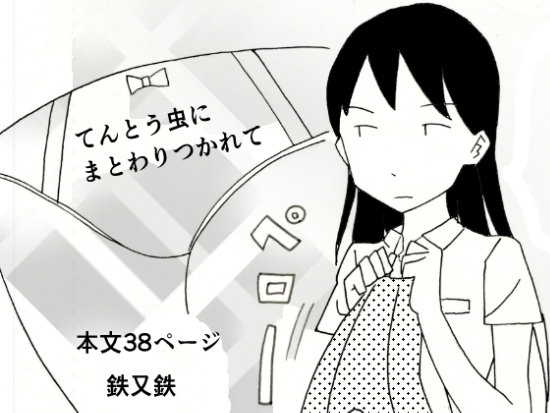





A category of social-and-cultural classification, not simply a medical fact. Across long cultural history, male virginity has been written and re-written as an identity-vocabulary in Japanese culture, with the contemporary form including a distinctive self-deprecating subculture register that is one of the more characteristic features of Japanese-language sexual-identity discourse. The Japanese vocabulary uses dōtei for this category, and the resulting category sits in the gender-and-cultural-symbol vocabulary at a position with substantial historical and subcultural-distinct dimensions.
Overview
Dōtei (Japanese: 童貞, dōtei; English: male virgin, male virginity; alternative readings: also dōjō in classical-Buddhist register; abbreviation: DT) is the Japanese category-term for male virginity, denoting a male individual who has not had sexual-intercourse experience. The compound originates in Buddhist celibacy-vocabulary, where it described the disciplinary-and-ascetic pre-monastic-or-monastic celibate state; modern Japanese (Meiji period onward) extended the term into the counterpart-of-shojo (female virginity) configuration as part of the broader Western-modernity-influenced gender-vocabulary integration.
The category is not a simple medical-fact term. The exact definition of “no sexual-intercourse experience” has multiple interpretations: whether to include or exclude oral-sex experience, masturbation experience, fellatio experience, paid commercial sexual-service experience, and similar boundary-cases varies in usage. The general default in everyday usage is the narrower “vaginal-intercourse with a partner” reading, with extensions and qualifications applying in particular contexts.
The contemporary Japanese-language usage includes two distinct registers. The first is the neutral-descriptive register, in which dōtei simply describes the inexperienced state. The second is the subculture-self-deprecating register, in which the category functions as a self-identification with associated cultural-symbolic content (the “wizard-at-30” trope, the DT-ijiri (DT-teasing) cultural practice, and similar). The two registers coexist in contemporary usage with substantial overlap.
Etymology
The compound 童貞 derives from classical Chinese, where it was a Buddhist religious-vocabulary term for celibate-from-childhood-onward states maintained by monastic-and-religious individuals. The pre-modern Japanese reception of the compound preserved this Buddhist religious-vocabulary register through the Heian-onward periods. Day-to-day usage was limited; the formal religious-and-ethical register was the primary application.
The Meiji-period (1868-1912) modernisation included substantial gender-and-sexuality-vocabulary integration with Western-source concepts. Virginity (predominantly female-applied in European-language vocabulary) entered Japanese-language discourse as a counterpart-pair, with shojo (女, female) for the female counterpart and dōtei (童, child + 貞, chastity) re-purposed for the male counterpart. The contemporary symmetric shojo / dōtei opposition-pair is therefore a Meiji-modernisation construct rather than a pre-modern Japanese vocabulary configuration.
Sociologist Tomomi Shibuya’s Modern History of Dōtei (2003) and Gender History of Dōtei (2014) provide the principal academic-historical-sociological treatment of the modern-Japanese vocabulary’s development.
Historical development
Buddhist origin
The compound’s pre-modern application appeared primarily in Buddhist religious-vocabulary contexts. Monastic celibacy was a central component of Buddhist disciplinary-frameworks, and the maintenance of celibacy from childhood was treated as the ideal practitioner-state in some lineages. The Heian-onward Japanese Buddhist tradition’s hagiographies-and-disciplinary-texts include the term in this religious-disciplinary register.
Modernisation and gender-vocabulary integration
The Meiji-period modernisation extended the term into the gender-and-sexuality-vocabulary as the counterpart-of-shojo. Initial usage emphasised the broader ideal of pre-marital chastity for both genders, in line with the Western-Christian-influenced modern-family-and-marriage normative framework that the Meiji government partially adopted in its modernisation programme.
In actual Japanese social-practice, however, the early-20th-century Japanese context maintained substantial gender-asymmetric sexual-norms in which young men’s pre-marital sexual experience was not strongly stigmatised — in fact was often integrated into broader male-coming-of-age cultural-pathways through the Yoshiwara and broader licensed-quarter cultural infrastructure. The dōtei category therefore did not function as a strongly-loaded category for young men in the same way that shojo functioned for young women in the period. The conscription system through the prewar-and-wartime period included cultural-practices integrating young men’s first sexual experiences around military-conscription-related life-transitions.
Postwar dōtei discourse
The postwar Japanese context produced new dōtei discourse in multiple periods. The 1950s-60s saw debates about pre-marital sexual-relations among young men, with dōtei shifting in cultural-positioning through the discussion. The 1970s-onward sexual-attitude-liberalisation and the spread of love-marriage substantially altered the cultural-positioning of dōtei, with the category increasingly read as a “delayed-male-coming-of-age” indicator.
Through the 1980s-90s, dōtei was frequently discussed in relation to young men’s self-identity, romantic-experience, and social-confidence, often with a complex-and-anxiety-coded register. The period’s women’s-magazines, men’s-magazines, and self-development books produced substantial discourse on the topic from various angles.
Subculture re-coding
The late-1990s and 2000s saw the most distinctive contemporary Japanese-language development on the topic: the re-coding of dōtei as a self-deprecating subculture-self-identification. Two-dimensional otaku culture, doujinshi, and internet-culture spaces collectively produced a re-positioning of dōtei from a passively-anxiety-coded category into an actively-self-affirming subculture-self-identification.
The “30-year-old wizard” (sanjussai mahōtsukai) trope is the most distinctive cultural-symbol from this re-coding period. The trope, established through multiple manga-and-internet-cultural reference points, holds (humorously) that “remaining dōtei until age 30 grants the ability to cast magic spells”. The trope’s effect is the symbolic-elevation of dōtei status from an anxiety-coded to a supernaturally-special configuration, providing cultural-distance from the underlying anxiety through humour.
The abbreviated DT (from the romaji initial-letters of dōtei), the verb-phrase DT-sotsugyō (“DT graduation”, referring to the loss of dōtei status through first sexual experience), the noun dōtei-kojirase (the long-term retention of dōtei status producing distinctive personality-and-relationship characteristics), and the noun dōtei-shū (“DT-smell”, a humorous metaphorical term for the personal-aura associated with dōtei status) are all related vocabulary-elements stabilising in 2000s-onward Japanese subculture.
Contemporary discourse
Contemporary Japanese discourse on dōtei operates across multiple registers. Sociological analysis of younger-generation male sexual-experience-rate decline (within the broader low-marriage-rate and demographic-decline discourse) treats dōtei as a subject of statistical-and-sociological consideration. Subculture self-identification continues the self-deprecating-and-self-celebrating tradition. A more recent register treats dōtei status as ethically-neutral and not requiring any particular evaluation, with the implicit position that “dōtei is just a state, not a deficit”.
Statistical reporting indicates that male sexual-experience-rate among young Japanese has declined since the 1990s, contributing to the demographic-and-social-issue framing of the topic.
Subculture types
In adult-content production, dōtei protagonist configurations have stabilised as recognisable narrative-types.
Dōtei-protagonist narratives: a dōtei male protagonist’s first-sexual-experience is provided by a chijo (dominant-female), married-woman, older-female, or similar more-experienced female-character. The narrative configuration distributes inexperience-and-experience asymmetrically across the gender-roles. Netori (taking-from-another) configurations in which a dōtei protagonist receives instruction from an experienced female character form a recognisable sub-type.
DT-graduation narratives: a dōtei protagonist’s progression to first-sexual-experience is the central narrative content, with character-psychological change pre-and-post-graduation as the depicted theme.
DT-self-deprecation narratives: a dōtei protagonist’s self-awareness, complexes, and social-isolation drive the narrative, in comic-or-serious registers. The recent-period subcultural form is widely-recognisable.
DT-ijiri and similar humorous-treatment configurations re-purpose dōtei as material for cultural-humour, with the resulting narrative-and-cultural-vocabulary being one of the more distinctive features of contemporary Japanese-language adult-or-romantic-genre subculture.
Sub-vocabulary
- DT: the romanized abbreviation of dōtei
- DT-sotsugyō: “DT graduation”, first-sexual-experience
- Dōtei-kojirase: long-term-retention-of-DT-status producing personality-features
- Sanjussai mahōtsukai: “30-year-old wizard”, the supernatural-elevation trope
- Kasei dōtei: “fake dōtei”, an individual with sex-industry experience but no relationship-context experience
- Dōtei bicchi: “DT bitch”, an individual with multiple-relationship experience but no sexual-intercourse experience — a Japanese-internet subcultural slang
- Dōtei-shū: “DT-smell”, a metaphorical humorous reference to the personal-aura
Gender asymmetry
The dōtei-and-shojo opposition-pair is, on its surface, a symmetric configuration. In actual cultural-and-social functioning, however, substantial historical asymmetry is apparent. Shojo has historically carried strong cultural-loading in connection with female-marriage-eligibility, family-honour, and broader social-evaluation; dōtei has functioned, in modern-Japanese contexts, predominantly as a self-evaluation or peer-evaluation category with much less external-social-evaluation pressure.
The asymmetry reflects the broader gender-asymmetry in family-systems, sexual-norms, and labour-market-roles across the modern-Japanese period. Gender-history scholarship treats the dōtei-and-shojo asymmetry as one of the structural-cultural reflections of this broader gender-asymmetric historical configuration.
Related Terms
- Shojo (female virginity) — the female-counterpart category
- Hentai-person — broader sexual-character-vocabulary
- Netori — narrative-configuration in which dōtei protagonist features
- Married woman (hitozuma) — typical character-type providing first-experience
- Doujinshi
Updated
References
- 『童貞の現代史』 Chūōkōron-Shinsha (2003)
- 『童貞のジェンダー史』 Akishobo (2014)
- 『Sex in Japan: From Brothels to the Bedroom』 Routledge (2012)
- 『Queer Japan from the Pacific War to the Internet Age』 Rowman & Littlefield (2005)
Also known as
- male virgin
- male virginity
- DT
- ja: 童貞
- ja: DT
- ja: 男性童貞