Otokonoko
✎ 本文編集 (admin) 🖼 画像編集 (admin)“Otokonoko” works on DLsite
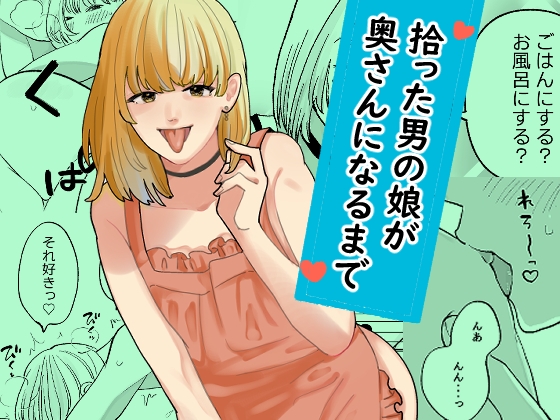
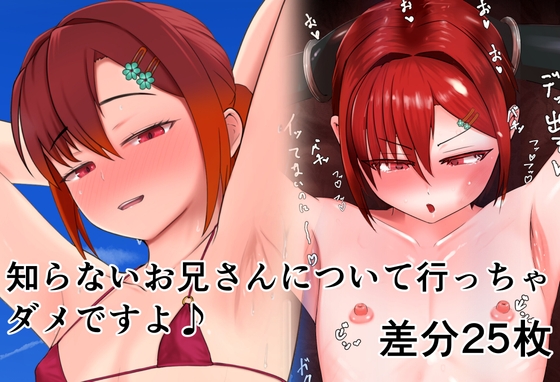
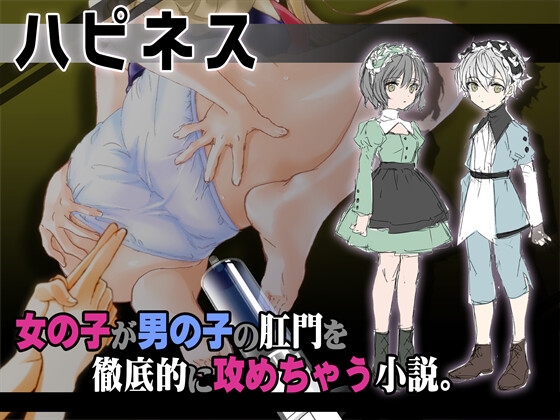

A Japanese coinage that visibly contradicts itself. Written with the characters 男 (“man”) and 娘 (“daughter, young woman”) side by side, otokonoko names a category of person who presents as both at once. The word arrived at the surface of Japanese subculture in the late 2000s and is now, in English-language anime and manga fandom, one of the more legible Japanese terms for a male character or person presenting in a feminine register.
Overview
Otokonoko (Japanese: 男の娘, otoko no ko) is a Japanese subcultural term, widespread from the late 2000s onward, for an adult assigned male at birth who adopts a feminine register of clothing, hair, makeup, voice, and movement. The term names an aesthetic and a mode of presentation, not a gender identity: persons described by the term may be cisgender men crossdressing for performance or fantasy, transgender women, non-binary individuals, or fans inhabiting the persona without an off-stage identification. What the word fixes is the look — male body, feminine presentation — and the cultural genre that has formed around it.
The term inhabits a specific cultural register. It is a Japanese fan-culture word, born in 2000s doujinshi and adult-game space, and it is most coherent inside that register. Within Japanese adult media, otokonoko is a recognised content category — visual novels, anime, manga, AV — with its own conventions, its own dedicated magazines (briefly), its own dedicated convention slots, and its own iconography (sailor uniforms, maid outfits, dresses, all anchored to a slim and short body type). Outside Japan, the romanised loanword has circulated in anime-manga fandom alongside the parallel English-language vocabulary of femboy, trap (a contested term), and crossdresser; the words denote overlapping but not identical fields.
This article treats otokonoko as a cultural category about adults. Subjects, performers, and audiences are presumed to be of legal age throughout.
Etymology
The compound otoko no ko — 男の娘 — is built on a deliberate orthographic joke. The kanji 娘 ordinarily reads musume and means “daughter, young woman”. By assigning it the alternative reading ko — using a possible reading of the character — the writer produces otoko no ko (“man’s child / boy”), which is homophonous with the entirely ordinary phrase 男の子 (“a boy”). The two phrases sound identical when spoken; they look very different on the page. The visual contradiction (man + daughter / otoko + musume) is the joke, and the joke is what carries the category.
The phrase’s origin in print is hard to date with precision, but the late-2000s doujinshi and adult-publishing scene is the clear source register. The launch of the magazine Waai! (Ichijinsha, April 2010 – 2014), the first commercial publication explicitly devoted to otokonoko material, marks the moment at which the term had stabilised enough to anchor a publishing line.
In English, several near-equivalents circulate. Femboy names a similar aesthetic and is the most direct equivalent in current English usage. Trap — once widespread in 2000s anime fandom — has become contested, particularly in the wake of trans-rights discussions, on the grounds that the word frames feminine male presentation as deception. Crossdresser is broader and carries a longer English-language history. The romanised otokonoko / otoko no ko is increasingly used in English-language contexts where the speaker wishes to refer specifically to the Japanese subcultural category rather than to the broader Anglophone vocabulary.
History
Long pre-history of gender-crossing performance
Japan, like most performing-arts cultures, has long lineages of male performers in feminine roles. The onnagata of kabuki — male actors specialising in female parts — have been a continuous tradition since the early seventeenth century. The otokoyaku-and-musumeyaku division of the all-female Takarazuka Revue (founded 1914) inverts the same logic. In post-war popular culture, public figures such as Akihiro Miwa carried gender-crossing performance into mainstream entertainment.
These traditions are part of the wider context in which otokonoko later became legible, but they are not the same thing. The kabuki onnagata, the Takarazuka otokoyaku, and the drag-queen circuits of contemporary Tokyo all institutionalise gender-crossing as performance. Otokonoko, by contrast, emerged from amateur print culture and online community space; its register is not staged virtuosity but everyday presentation, and its centre is the personal aesthetic rather than the theatrical role.
Subcultural emergence (2000s)
The genre coalesced through 2000s doujinshi events, adult-visual-novel releases, and subculture print media. Early adult-game characters — for example in Pajamas Soft’s Princess Witches (2005) — fixed the visual archetype of a slim, short, feminine-presenting male character, and similar characters began to appear in commercial manga and anime peripherally. Doujinshi events from around 2007–2009 began running otokonoko-themed sub-events, and by the close of the decade the category was stable enough to support its own publishing line.
Crystallisation (2010 onward)
The April 2010 launch of Waai! (Ichijinsha) was the consolidating moment. The magazine ran until 2014 and was joined by parallel titles, by dedicated otokonoko-only doujinshi conventions (“otokonoko only” events in Tokyo and Osaka), and by genre slots in established adult media. By the early 2010s, otokonoko was a recognised category at adult retailers, in adult-anime catalogues, and in dedicated AV labels.
In commercial mainstream manga and anime, otokonoko characters likewise multiplied. Takako Shimura’s Hōrō Musuko (“Wandering Son”, Comic Beam 2002–2013) addressed gender presentation as a developmental subject from a literary register. Norio Tsukudani’s Hime-Goto (serialised in Waai!) was a four-panel comic built entirely around an otokonoko cast, in a more clearly genre register. The two ends of the spectrum — literary treatment of gender presentation versus dedicated genre comedy — have continued to coexist.
International reception
The romanised loanword otokonoko / otoko no ko is in current use in English-language anime and manga fandom, alongside femboy and (in declining use) trap. The genre’s distinctive Japanese flavour — the slimness-and-shortness archetype, the school-uniform iconography, the doujinshi infrastructure — has generally not transferred wholesale to non-Japanese contexts; what has travelled is the basic aesthetic concept and the reading conventions, supplied with local visual idioms once outside Japan.
Adjacent categories
Otokonoko sits inside a larger field of gender-crossing concepts in Japanese subculture, each with a slightly different centre.
Newhalf — a Japanese coinage from the late twentieth century — historically denoted (and in commercial-entertainment contexts still denotes) trans women and gender-crossing performers, often with the implicit involvement of medical transition (hormones, surgery). The category is older than otokonoko, and the two are not the same: newhalf is anchored in the trans-and-performance economy of nightlife and media, otokonoko is anchored in subculture aesthetics.
Futanari — a fictional category in adult media — denotes characters with both male and female sexual characteristics. It is a hentai-specific concept distinct from any real-world gender presentation; otokonoko, by contrast, is anchored to a real-world (or quasi-real-world) presentation pattern.
Joso danshi (女装男子, “feminine-dressing boy”) and crossdresser are broader umbrella terms for male feminine-dressing without the specific subcultural valence of otokonoko.
The relation to transgender identity is the most delicate point. Otokonoko is, on its definition, an aesthetic-and-presentation category that does not commit to any particular gender identity for the person inhabiting it. In practice, the category is frequented by trans women (who may use otokonoko as a more comfortable initial frame than direct trans self-identification), by cisgender men (who use it as a presentation mode without identity claims), and by readers and fans who inhabit the persona at varying distances from their off-stage selves. The relationship between subcultural aesthetic categories and lived gender identity is one of the live discussions in Japanese trans-studies writing[citation needed].
Forms and variants
Visual / aesthetic register
The classic otokonoko visual register pairs a feminine outfit (sailor uniform, maid uniform, dress, gothic-loli) with a slim, short, soft-faced body type. The visual conventions overlap with the bishōnen (“beautiful young man”) aesthetic and with cosplay culture, and otokonoko characters frequently appear at cosplay events outside the genre’s primary spaces.
Character-archetype register
In adult visual novels, doujinshi, and manga, otokonoko characters are typically drawn with a stable cluster of attributes: feminine-coded body type, gentle and accommodating personality, a slender physique, a soft voice. The cluster has become recognisable enough that an experienced reader can identify the archetype within a panel or two.
Relational register
Plotting around otokonoko characters takes a few recurring forms: misrecognition plots (a character is drawn into a relationship before discovering the otokonoko’s body), recognition plots (the relationship begins after acknowledgement and centres on the negotiation), and persona plots (the character lives the otokonoko presentation across all areas of life). The category overlaps in publishing terms with both BL (the male-male romance market) and male-reader-oriented adult publishing, and the same archetype is read differently by the two readerships.
Cultural reception
The growth of otokonoko as a subcultural category has overlapped — without ever being identical with — the growth of public attention to transgender existence in Japan. Critics, transgender activists, and academic researchers have argued from different starting points: some see the otokonoko aesthetic as a low-friction entry point through which a person otherwise cautious about claiming a trans identity can move into feminine presentation; others note that an aesthetic-only frame can, in some contexts, displace the political and biographical stakes of actually being trans. The discussion is unresolved, and is one of the standing topics in Japanese-language gender-studies writing.
The 2010s and 2020s have brought wider mainstreaming of feminine male presentation in Japanese popular culture — visual-kei music, fashion magazines, online persona — and otokonoko, with its visible doujinshi-and-adult-fiction infrastructure, has been one of several feeders for that wider acceptance. As of the mid-2020s, otokonoko remains a recognisable subcultural category within the adult-fiction economy, and a shorthand outside it for a male body presented in a feminine register, without the term having yet stabilised a single fixed translation in English.
See also
Updated
References
- 『Boys' Love Manga and Beyond: History, Culture, and Community in Japan』 University Press of Mississippi (2015)
- 『Queer Voices from Japan』 Lexington Books (2007)
- 『男の娘文化研究』 Sansai Books (2012)
- 『BL進化論』 Ohta Publishing (2015)
Also known as
- otoko no ko
- Femboy
- Trap
- Male crossdresser
- ja: 男の娘
- ja: おとこのこ