Hitozuma (married woman)
✎ 本文編集 (admin) 🖼 画像編集 (admin)“Hitozuma (married woman)” works on DLsite
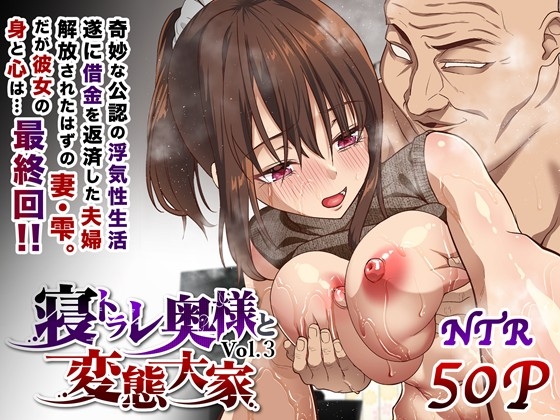
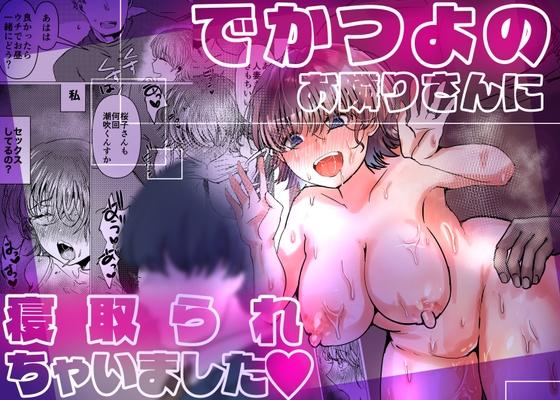
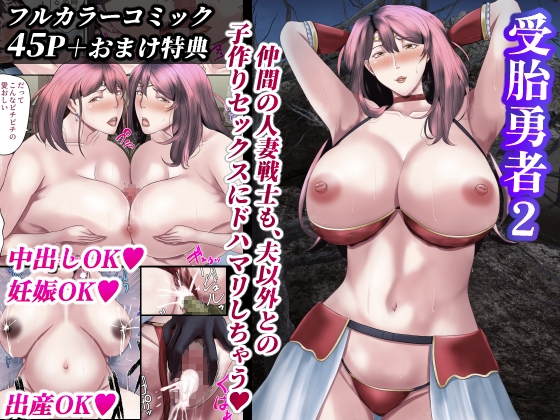
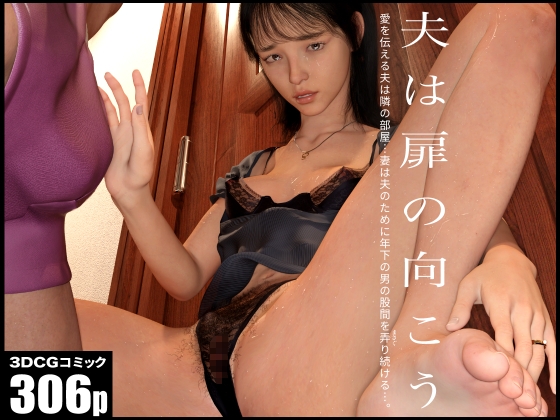
Hitozuma names a woman in a marital relationship, a basic Japanese word, and in the modern and contemporary subcultural field it is a word systematised as a principal human type of adult media. This article describes the fictional married-woman type from the standpoint of concept history and subculture studies; it does not endorse violation of real marital relationships.
Hitozuma (人妻) is a Japanese word designating a woman who currently has a spouse, one of the basic words used continuously from antiquity to the present. At the same time, from the 1990s onward it settled in as a genre category of adult manga, video, and fiction, functioning as a commercial tag for a human type distinguished from the unmarried woman. This article covers the dictionary sense plus the genre’s formation and social-historical background.
Overview
In the dictionary sense, hitozuma means “another’s wife” or “a woman with a husband”. Its semantic range roughly overlaps the legal concept “married woman”, but in nuance it emphasises the fact of being married in relation to another. In the contemporary subcultural field it names works in which having a spouse is itself the theme or ornament of the story, distinguished from works centred on unmarried young women.
As a genre category, married-woman works subdivide further by relation to the viewpoint character. When the viewpoint character’s own wife is central, it connects to the netorare (cuckolding) line; when the viewpoint character seduces a third party’s wife, it borders the netori line. Even when the spouse is not foregrounded, the tag “hitozuma” itself functions as a sign that announces a human type carrying maturity, experience, and social position different from the unmarried woman.
Etymology
“Hitozuma” is a compound of the native words hito (another, other person) and tsuma (wife, spouse), an old word already attested in the Man’yoshu. The collection contains several poems on hitozuma themes, showing that emotion around married women was a major subject even in the lyric poetry of ancient Japan.
In Heian-period narrative literature, stories around married women form a core thematic line, with the episodes of Utsusemi, Yugao, and the Third Princess in The Tale of Genji being representative. Through the medieval period and after, the married woman continued to be a subject of tales, joruri, kabuki, and yomihon, so the word circulated widely well before the modern era.
History and social background
In pre-modern Japanese society, marriage was institutionalised as a relationship between households, and the chastity of the married woman was held to be central to maintaining household order. Under Edo-period penal law, adultery was punishable (mittsu), and in samurai society “megataki-uchi” (killing one’s wife’s lover) was institutionally tolerated for a time. In literature and theatre, love with a married woman was often drawn as a taboo immediately tied to ruin; the lovers’-suicide lineage typified by Chikamatsu’s domestic plays placed impossible love, including with married women, at the narrative core.
In the modern period, adultery was stipulated as a crime in the old and new penal codes, operated in the prewar period as a one-sided provision punishing only the wife’s infidelity. The 1947 revision abolished the adultery crime, removing the married woman’s infidelity from criminal punishment and treating it solely as a civil matter (grounds for divorce, damages). This change in the legal system became the social premise that expanded the expressive possibilities of works on married-woman themes.
The married woman emerged explicitly as an independent genre category of adult media from the late 1980s into the 1990s. In adult video, series titled “mature woman” and “married woman” were released continuously in this period, institutionalising differentiation from works centred on unmarried young women. In commercial erotic manga magazines too, works with married-woman protagonists formed an independent genre from the 1990s. The genre’s formation is said to reflect the rising age of the consumer base and the diversification of sexual taste.
Genre types
Married-woman works subdivide into several sub-types by internal structure.
The form in which the viewpoint character’s own wife forms a relationship with another forms the core of the netorare line. “Hitozuma NTR” is a frequent compound tag in doujinshi and adult manga, often discussed by genre researchers as a paradoxical response to the modern romantic norm premised on an exclusive relationship.
The seduction type has the married woman as active subject seducing the viewpoint character (often a young man). The “married woman next door”, “friend’s mother”, and “landlady at the lodging” are placed close to the viewpoint character and lead the story on the back of an age and experience gap. The passive type draws the married woman as a passive object reaching a relationship through some circumstance (debt, coercion, chance); it requires ethical care, and how the locus of consent is handled differs greatly by author.
The married woman is also adjacent to the mature woman: “hitozuma” indexes marital state, “jukujo” indexes age group, and the two overlap but are strictly distinguished. A married woman in her thirties or older is used together with the jukujo tag, while a married woman in her twenties tends to circulate under the hitozuma tag alone.
Cultural references
In modern Japanese literature, works on married-woman themes form a major lineage: Junichiro Tanizaki’s Naomi (1924–25), various works of Kafu Nagai, and Yasunari Kawabata’s The Sound of the Mountain (1949–54). These are not the direct source of the adult genre but are referenced as a lineage showing the literary depth of married-woman representation.
In postwar Japanese media, the married-woman image has shifted by era: the good-wife-and-wise-mother image of the 1950s, the housewife-consumer image of the 1970s, the career-married-woman image from the 1980s, and the diversified married-woman image from the 2000s. Married-woman representation in adult media is said to have shifted in parallel with these social images[citation needed].
Ethical note
In the circulation and reception of works on married-woman themes, it is repeatedly confirmed in both creation and criticism that the work is a fictional human type and does not intend to justify infidelity in a real marital relationship. This article likewise describes married-woman works as a cultural phenomenon belonging to the realm of fictional expression and does not endorse non-consensual relationships or the violation of marital order in reality.
Related terms
- Netorare — adjacent genre formed around the married-woman attribute
- Netorase — derived form premised on the spousal relationship
- Mature woman (jukujo) — human category adjacent on the age axis
- Stepmother (gibo) — married-woman attribute derived on the family axis
- Sister-in-law (gishi) — same, family-relation derivation
- AV actress — performer category supporting the married-woman genre
- Papa-katsu — contemporary adjacent field involving infidelity
Updated
References
- 『Nihon Kokugo Daijiten (2nd edition), 'hitozuma' entry』 Shogakukan (2001)
- 『Eromanga Studies: An Introduction to Manga as a 'Pleasure Device'』 East Press (2006)
- 『Erotic Comics in Japan: An Introduction to Eromanga』 Amsterdam University Press (2021)
- 『The Transformation of Sexual Consciousness in Modern Japan』 Keiso Shobo (1999)
Also known as
- married woman theme
- wife genre
- ja: 人妻
- ja: 既婚女性