Gyaru
✎ 本文編集 (admin) 🖼 画像編集 (admin)“Gyaru” works on DLsite


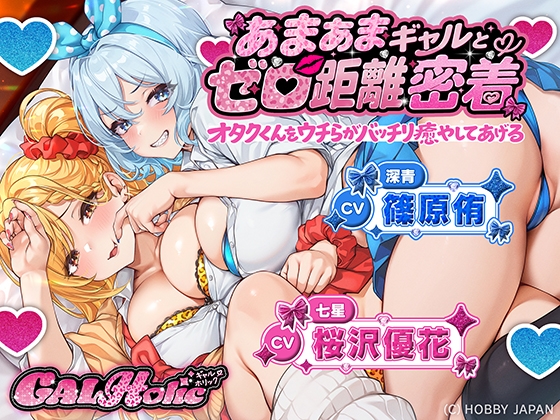
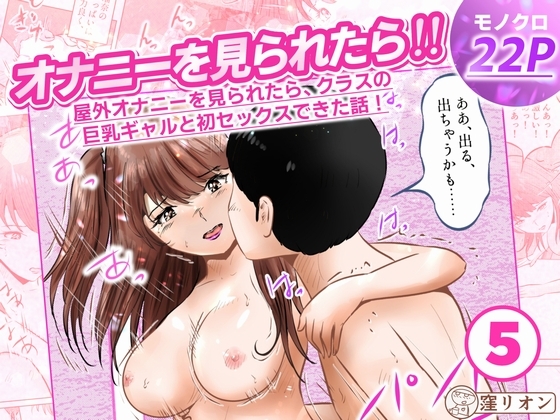

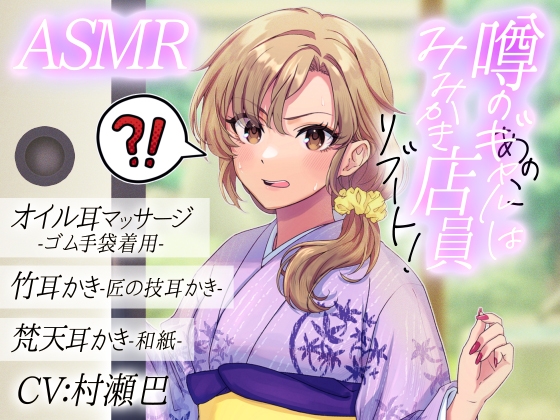
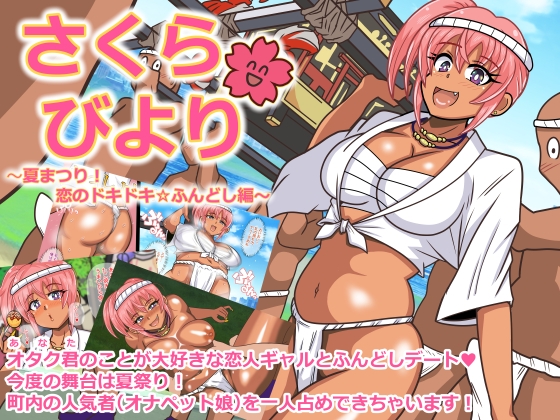

Gyaru is a subcultural type of young Japanese women that emerged from the 1980s, naming a cultural phenomenon with its own fashion, language, and behaviour.
Gyaru (ギャル, gal) is a form of Japanese street subculture centred on young women, understood as the totality of distinctive makeup, clothing, language, and attitude. The word is a katakana transcription of English gal (young woman), which acquired its own subcultural connotation through the process of Japanisation. With 1990s Shibuya as its central stage, it spread explosively and was passed on, changing form, for more than thirty years, one of the major lineages in postwar Japanese street-fashion history.
In the field of adult media, gyaru is systematised as an independent human-type genre, with a bright, sexually open image coded as the narrative appeal. This article covers both the development of gyaru as a cultural phenomenon and “gyaru works” as a genre category.
Overview
Gyaru is not a single style but a broad cultural category with diverse sub-types by era, region, and age. Common features include emphasised makeup (vivid lips, voluminous eye makeup), dyed hair, high sensitivity to trends, a distinctive language (gyaru-go), and a tendency toward group behaviour.
Sociologically, gyaru culture is positioned as a movement in which young women actively gained consumption, self-presentation, and visibility in public space. At the same time it has continuously drawn criticism from conservative discourse as a deviation from traditional female norms, an ambivalent cultural phenomenon.
Etymology
The word gyaru derives from English gal (slang for “girl”). Its katakana use in Japanese is confirmed in the 1970s, initially as a light slang term for young women in general. The 1972 advertising copy for the Wrangler jeans brand “GALS” is said to have influenced the word’s circulation. It acquired its specific subcultural meaning from the late 1980s, established through young-women’s fashion magazines and television programmes as a word naming a human type bound to a particular style.
History
Phase one: late 1980s to early 1990s
The bud of gyaru culture goes back to the disco culture and bodikon fashion of the late 1980s. The body-conscious dresses worn by young women of the period became the prototype for the sensibility of body exposure and self-presentation that gyaru culture inherited.
In the early 1990s the kogyaru, centred on high-school girls, appeared. Marked by loose socks, short skirts, tanned skin, brightly dyed hair, and gyaru-go, they spread nationwide through magazines such as egg. Shibuya’s 109 building functioned as the cultural centre, and “109 style” circulated as a style name.
Phase two: late 1990s to early 2000s
From the late 1990s into the early 2000s, the extremely tanned skin and white makeup of ganguro, yamanba, and manba appeared and drew wide media attention. Multiple sub-styles formed in parallel, such as “amura” (modelled on Namie Amuro). Gyaru culture of this period became a subject of social debate as an extreme departure from earlier female norms.
Phase three: late 2000s to 2010s
From the late 2000s, gyaru culture diversified, with multiple styles coexisting: “onee-kei”, “kuro-gyaru”, and “shiro-gyaru”. Fashion magazines such as egg, Ranzuki, and Koakuma Ageha carried each style, and diffusion into regional cities advanced. The 2014 suspension of egg (later revived) is discussed as symbolic of the end of the peak period. In the same period, the spread of social media replaced street-originated cultural formation with internet-based forms.
Phase four: the 2020s
In the 2020s, in tandem with Generation Z’s interest in Heisei-retro culture, a reappraisal of gyaru culture advanced. A “Reiwa gyaru” emerged with TikTok and Instagram as media, referencing past gyaru styles and reinterpreting them in contemporary terms. The 2019 digital revival of egg is part of this current.
Gyaru-go
The distinctive language of gyaru culture (gyaru-go) is an important subject in subculture studies. Words characteristic of each era — “chober igu / chober iba” (super-very-good / super-very-bad), “maji manji”, “agepoyo” — were produced, many of them partly entering general Japanese. Gyaru-go is marked by abbreviation, mixture with English, deformation of word endings, and heavy use of interjections. Sociolinguistically, a young women’s formation of an independent linguistic domain has been noted for its functions of in-group solidarity and differentiation from outsiders.
As an adult-content genre
In adult media, gyaru established itself as an independent genre tag from the late 1990s. Tanned skin (kuro-gyaru), brightly dyed hair, emphasised makeup, and a sexually open attitude are used as typical signs of the genre. The affinity with genres centred on an active female subject, such as chijo and reverse pickup, is high, and circulation as a compound tag is common. Internal subdivision such as “kuro-gyaru”, “shiro-gyaru”, and “gyaru office worker” has also advanced.
As a genre type, gyaru appropriates the styles of real gyaru culture as narrative signs and does not depict the actual participants of real gyaru culture, a point that bears repeated confirmation from a critical standpoint.
Cultural references
Gyaru culture has been represented across manga, novels, and television drama. In manga, works with a gyaru-type protagonist (Super Gals!, Mihona Fujii, 1998–2002) have been published continuously. In film, Kamikaze Girls (2004) placed a regional gyaru type at the centre of its story. In sociology and cultural studies, gyaru culture is a research subject for thinking about the relationship between young women’s agency and consumption and self-presentation, with several works by overseas Japan scholars such as Sharon Kinsella.
Related terms
Updated
References
- 『Gyaru and the Mysterious Girl (Gyaru to fushigi-chan ron)』 Genshobo (2012)
- 『Schoolgirls, Money and Rebellion in Japan』 Routledge (2014)
- 『Street Fashion 1945-1995』 PARCO Publishing (1995)
Also known as
- gyaru
- gal
- kogyaru
- ja: ギャル
- ja: コギャル