OL (Office Lady)
✎ 本文編集 (admin) 🖼 画像編集 (admin)“OL (Office Lady)” works on DLsite


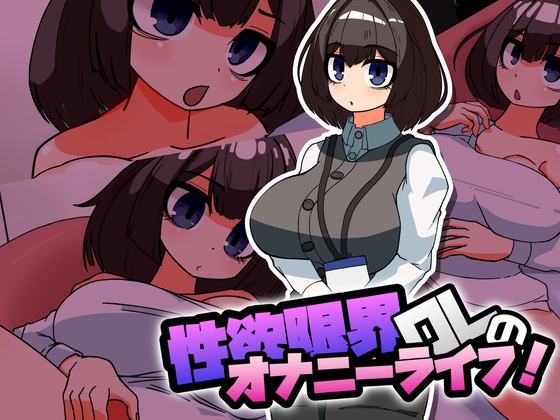
The commuting clothes of the clerical female office worker (suit, blouse, stockings, pumps) are a standard sign of the working woman in contemporary Japanese society, transferred and reconstructed into the realm of subculture as a costume type.
OL (Japanese-English office lady) is a Japan-specific occupational image for the clerical female office worker, established in the 1960s. This article treats the etymology, the establishment of the occupational image in postwar Japanese women’s labour history, the character-type formation in subculture and sexual expression, and the sign-coding of the “OL genre” as a representation of the adult working woman.
Overview
OL is a Japanese-English term that settled during the high-growth period as an occupational image for women in clerical work. It spread from the 1960s as a comprehensive label integrating older job categories such as “clerk,” “secretary,” and “general affairs,” and remains in everyday occupational use.
In subculture and sexual expression, the OL is a character type that sign-codes the contemporary working woman through (1) the commuting suit or office uniform, (2) the office lifestyle of commuting, overtime, and leave, and (3) social relations with superiors, colleagues, and clients. In eromanga, eroge, and AV, it has settled as an independent genre and character type.
Etymology
The label OL (office lady) was chosen in 1963 through a reader-submission contest run by the women’s magazine Josei Jishin (Kobunsha). Before that, clerical female office workers were commonly called “BG” (business girl), but because business girl is English slang for sex-trade work, “OL” was solicited and adopted as a replacement. OL is Japanese-English; the form office lady is not generalised as an occupational term in English-speaking countries. It became a label widely used in Japanese society for the following decades as a distinctly postwar-Japanese occupational image.
As a neutral, comprehensive occupational image, OL contrasts with related terms: “secretary” denotes a specific duty, “clerk” is a classical job term, “career woman” leans toward professional and managerial work, and OL is the female counterpart to the male “salaryman.”
History as an occupational image
During the high-growth period (1955–1973), the incorporation of female labour into clerical work advanced. Employment of female clerks expanded across manufacturing, finance, and distribution, forming the social base for the “OL” image. The OL of the 1960s–1970s was typically a young woman after high-school or junior-college graduation, employed for a few years until marriage, ending her working life with marriage-retirement (kotobuki taisha), a type reflecting postwar Japan’s traditional gendered division of labour.
The 1985 Equal Employment Opportunity Act (in force 1986), its revisions in 1995 and 1999, and the major 2007 revision gradually changed the institutional position of women’s workplace labour. The OL type shifted from a temporary occupation premised on marriage-retirement to a position within a long-term career. From the 2000s, discomfort with the very label “OL” arose, with partial replacement by more neutral terms such as “female company employee.” In subculture and sexual expression, however, the traditional OL image continues as a genre sign.
Character type in subculture
The OL character type settled from the 1980s in AV, eromanga, and eroge as an independent genre. Called the “OL genre” or “office genre,” it is one of the principal performer-type categories in contemporary Japanese subculture.
Its main components are (1) the commuting suit, blouse, and tight skirt or office uniform, (2) stockings and pumps, (3) office-life settings of overtime, business trips, client entertainment, and workplace romance, and (4) hierarchical relations with superiors, colleagues, and subordinates. These are genre-coded as signs symbolising the working life of the adult woman.
Frequently thematised settings include office relationships (with superiors, among colleagues), hotel scenes during overtime or trips, entertainment and company events, and commute troubles (crowded trains, station premises). These reconstruct, as narrative elements, the daily life of women embedded in the contemporary labour structure.
The OL type holds adjacent relations with other types: hitozuma (the OL who is also married, a double housewife-OL setting), jukujo (overlap with the OL in her thirties or older), secretary (a specific OL job category), and authority types such as “superior” and “teacher” within the workplace hierarchy.
Costume and signs
The standard costume is (1) a suit (jacket plus tight skirt), (2) blouse or cut-and-sewn top, (3) stockings (tan or black), (4) pumps (mid-heel), and (5) a commuting bag. This sign-codes the standard commuting attire of the Japanese clerical female office worker, a sign extracted from real office culture. In cosplay works, the OL costume is positioned alongside the maid, nurse, and miko as a “contemporary-society cosplay” subgenre. Unlike fantasy role costumes, the OL costume sign-codes a real-society occupational uniform directly.
The OL costume holds a close relation with adjacent fetish genres such as stockings and high heels, reflecting the stocking- and pump-wearing conventions of Japanese office culture and showing that the OL genre developed adjacently with stocking and leg fetish. citation needed
Cultural reception
The sociologist Yuko Ogasawara, in Office Ladies and Salaried Men (1998), introduced postwar Japanese OL culture to the English-speaking world from the standpoint of gender power structures within corporate organisations. Chieko Kanaya’s The World of the Office Lady (1991) and Emiko Takenaka’s A History of Women’s Labour in Postwar Japan (2010) systematically describe the historical course of OL as an occupational image. OL stands at the intersection of social history, labour history, gender studies, and subcultural research, a central occupational image of postwar Japanese women’s labour and an independently sign-coded character type.
See also
Updated
References
- 『Office Lady no Sekai (The World of the Office Lady)』 Chuokoron-sha (1991)
- 『Office Ladies and Salaried Men: Power, Gender, and Work in Japanese Companies』 University of California Press (1998)
- 『Sengo Nihon no Josei Roudou-shi (A History of Women's Labour in Postwar Japan)』 Minerva Shobo (2010)
Also known as
- OL
- office lady
- office worker