Visual novel
✎ 本文編集 (admin) 🖼 画像編集 (admin)“Visual novel” works on DLsite



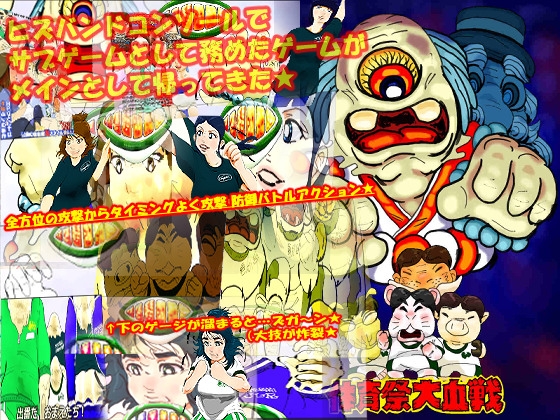


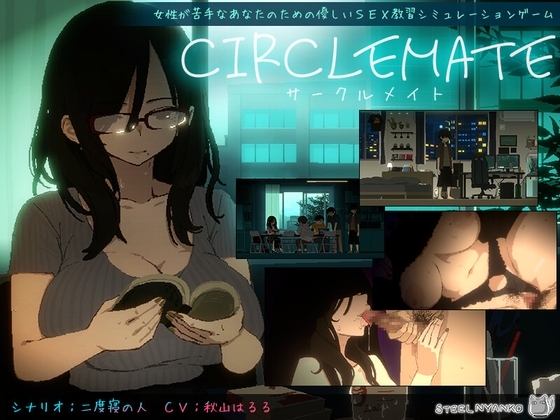
A computer-screen genre that is a third novel, a third comic, and a third musical theatre. Hours of text, paged forward by the reader, with character sprites and backgrounds and a soundtrack that swap behind the words. Decisions branch the path. The Japanese game industry built the form, and three decades on the genre has spread well beyond its origin point.
Overview
Visual novel (Japanese: ビジュアルノベル, bijuaru noberu; abbreviated VN) is the Japanese-origin game genre in which on-screen text, character sprite illustration, background imagery, BGM, and (often) voice acting combine to deliver an extended interactive story experience. The form sits at the intersection of literature, illustration, and game design: the player advances through written passages, occasional choice points branch the narrative, and the experience is structurally closer to an animated novel than to a conventional video game. The genre is largely Japanese in origin and has consolidated, since the early 1990s, as one of the recognisable formal traditions of Japanese computer games.
Four formal elements structure the genre. The first is the background — a still image of the location in which the current scene takes place. The second is the character sprite — a standing illustration of the character speaking, with facial-expression and pose variants that change with the dialogue. The third is the text window — typically displayed at the bottom of the screen or filling the whole frame, with text advanced by the reader’s input. The fourth is audio — BGM, sound effects, and (in voiced productions) full or partial character voice tracks.
Player input is constrained: clicking forward through text, choosing among presented options at branch points, and operating the standard system functions (save, load, skip-already-read text). Action and combat mechanics, when they appear at all, are limited and secondary to the reading experience. Reading and choosing are the principal player activities.
The genre runs across both adult-content and all-ages registers. Adult content is the principal output of the Japanese commercial PC market, which has historically been eroge-led; all-ages versions of the same titles are typically released for consoles, smartphones, and Steam, and an entirely all-ages strand of the genre has continued to grow internationally. This article treats both registers as parts of the same formal genre.
Etymology
The English-form phrase visual novel is a Japanese coinage rather than a native English label. It was popularised by the publisher Leaf, which used it on the packaging and marketing of its 1996–1997 titles Shizuku, Kizuato, and To Heart. The phrase set the genre’s English-cognate name. The contemporary parallel coinage sound novel, used by Chunsoft for its console titles Otogirisō (1992) and Kamaitachi no Yoru (1994), competed for genre vocabulary for some years; through the 2000s, visual novel became the dominant international label, while sound novel and novel game persist in restricted Japanese-internal usage.
By the 2000s, the term had settled internationally. Anglophone fan-translation networks, the Visual Novel Database (VNDB, founded 2007), and Steam’s category vocabulary all use visual novel as the standard genre name; the category appears in OED-adjacent reference works and in academic writing without scare quotes.
History
Adventure-game prehistory (1981–1991)
Sierra On-Line’s Mystery House (1980) and Enix’s Portopia Renzoku Satsujin Jiken (Yuji Horii, 1983) are conventionally cited as the prehistoric ancestors of the genre. Both presented illustrated text on the screen with command-input progression, anchoring the form’s combination of text, illustration, and player choice at the game’s core.
In Japanese-domestic PC markets through the 1980s and early 1990s, text-driven adventure games multiplied. Elf’s Dōkyūsei (1992) was a turning point in the adult sphere, shifting the dominant adult-adventure-game model away from immediate-erotic-content focus toward summer-vacation romance simulation. The shift established the foundational template of the eroge and romantic-adventure-game lineage.
Sound-novel period (1992–1996)
Chunsoft’s Otogirisō (Super Famicom, March 1992) was the first major title to call itself a sound novel, foregrounding the integration of full-screen text, background imagery, BGM, and sound effects. The 1994 Kamaitachi no Yoru extended the lineage as a Nagano-set mystery sound novel and grew into a series. Both were all-ages titles that brought text-driven game form to the home-console audience and broadened the form’s recognisability.
Visual-novel period (1996–2000)
Leaf’s three-title sequence — Shizuku (1996), Kizuato (1996), To Heart (1997) — anchored the genre on PC. The packaging and marketing materials used the Visual Novel label prominently, framing the combination of full-screen text and standing-character-sprites as a discrete genre proposition.
To Heart in particular became central. The slow-pace contemporary-school-life production with multiple-heroine routes was the founding work of the naki-ge (tearjerker game) tradition that consolidated through the next decade. Contemporaries — Elf’s Kakyūsei (1996), TGL’s Refrain Blue (1996), F&C’s Pia Carrot e Yōkoso!! series (1996 onward) — formed the working corpus of the late-1990s PC adult adventure-game market.
Key and TYPE-MOON (1998–2010)
The Visual Art’s-affiliated label Key released Kanon (1999), AIR (2000), and CLANNAD (2004) in close succession, consolidating the naki-ge tradition into a recognisable artistic register: emotionally heavy story content, tightly written character-relationship architecture, sexual content embedded as a narrative high point rather than as the work’s primary content. Writer Jun Maeda and illustrator Itaru Hinoue became the model for a generation of subsequent visual-novel creators.
The doujinshi-circle TYPE-MOON’s Tsukihime (2000, doujinshi version) and Fate/stay night (2004, commercial release) introduced supernatural-action elements and a heavier worldbuilding register into the form. Fate in particular grew across animation, novelisation, and the Fate/Grand Order mobile game (2015) into a major international franchise; the lineage is one of the primary cases of a visual novel scaling out into a multi-platform IP.
The diffusion period (2010–present)
From the 2010s, the centre of distribution shifted from packaged PC titles to download platforms, smartphone applications, Steam, and the doujinshi-game ecosystem. The packaged adult-PC market contracted, but the wider visual-novel ecosystem expanded considerably. Anglophone audiences found the form through both authorised and unauthorised translations of Japanese titles and, increasingly, through original Anglophone-developed productions.
The market has stratified by length, price, and content register. Long high-investment narrative titles continue to be produced for the engaged audience; short low-priced nukige supply the kink-specialised market; browser-based and smartphone-targeted shorter forms reach mass audiences; itch.io and other small-publisher platforms support an indie tradition. The genre’s formal flexibility has supported all of these without much friction.
Conventions
The standard visual-novel scenario follows a recognisable arc: a common route that introduces all the principal characters; choice-driven branching into character-specific routes; substantial individual-route content; an ending. Total play time runs from about ten hours for shorter titles to eighty hours or more for the longer high-investment productions. Long titles often divide writing among multiple scenarists, with house-style consistency held by the lead writer and the production’s editorial team.
The principal production roles — scenario writing, illustration, music composition, voice direction, programming — are typically distributed among separate specialists in commercial productions. Illustrator style functions as one of the principal brand markers of a publisher: Itaru Hinoue (Key), Takashi Takeuchi (TYPE-MOON), Kurehito Misaki (August), Noizi Itō (Kadokawa Sneaker) all anchor distinguishable studio identities through their consistent visual signature.
Eroge and the visual-novel form
The genre is formally independent of sexual content: visual novels can be all-ages or adult, and the form itself is content-neutral. Historically, however, the Japanese commercial PC market consolidated around adult content, and the principal early visual-novel publishers were eroge houses. Key’s catalogue is the standard example: titles released as adult eroge on PC, then repackaged as all-ages versions for console and smartphone audiences. The pattern — sexual content as part of the original release, removed for derivative platforms — has been a structural feature of the form since the late 1990s.
The nukige sub-genre is the visual-novel form specialised for high-density sexual content with reduced narrative architecture. It coexists with the storyline-driven mainline and shares production tools and infrastructure but is treated commercially and editorially as a distinct strand.
International reception
From the late 2000s, English-language fan-translation projects (notable cases: Mirror Moon’s Tsukihime translation, Fate/stay night English patch) made significant portions of the Japanese visual-novel corpus accessible to Anglophone readers without licence. Through the 2010s, Steam emerged as a partial legitimate distribution channel, and titles including Steins;Gate, CLANNAD, and the all-ages versions of much of the Key catalogue reached substantial English-language audiences.
Independent Anglophone visual-novel production has grown alongside this. Doki Doki Literature Club! (Team Salvato, 2017) is the highest-profile example of a Western-produced VN that reaches mass audiences; Christine Love’s earlier Digital: A Love Story (2010) had likewise demonstrated the form’s portability outside its origin culture. The contemporary visual-novel market is no longer Japan-exclusive, and the form has substantively become an international independent-game category.
In academic and critical writing
The genre is now an established subject of academic writing in subcultural studies and game studies. Bishōjo Game no Rinkaiten (Sarashina et al., Hajōgenron, 2004) is the standard Japanese-language reference for the early-2000s state of the genre. Tamaki Saitō’s Beautiful Fighting Girl (Japanese 2000; English translation 2011) provides a psychoanalytic reading of visual-novel character archetypes. Daichi Nakagawa’s Computer Game Mythology (PLANETS, 2016) places the form in the wider history of Japanese computer-game development.
The visual novel sits at the intersection of three media — text, illustration, and game system — and has built, over thirty years, a working tradition that has spread well past its country of origin. The contemporary form is one of the more recognisable Japanese contributions to the international computer-game vocabulary.
See also
Updated
References
- 『美少女ゲームの臨界点』 Hajōgenron (2004)
- 『Beautiful Fighting Girl』 University of Minnesota Press (2011)
- 『Otaku: Japan's Database Animals』 University of Minnesota Press (2009)
- 『コンピュータゲームの神話学』 PLANETS (2016)
Also known as
- VN
- novel game
- sound novel
- ja: ビジュアルノベル
- ja: ノベルゲーム