“Ishukan” works on DLsite
A fisherman’s wife dreams of an octopus. The print is from 1814; the artist is Hokusai; the image has organised the iconography of one corner of Japanese fiction for two hundred years. Ishukan — the modern genre name for sexual encounters between humans and non-humans in fiction — has its deep root in pre-modern Japanese visual culture, and a long parallel lineage in the world’s other narrative traditions, but as a contemporary fictional genre it is an artefact of late-twentieth-century Japanese subculture.
Overview
Ishukan (Japanese: 異種姦) is the Japanese-language genre name for fictional sexual encounters between humans and non-human beings, covering a wide range of fictional categories: monsters, fantasy creatures, mythological figures, ghosts and spirits, machines and AIs, and aliens. The category functions as a Japanese-subculture umbrella for what English-language fan vocabulary distributes across several adjacent genres: monster girl, monster sex, fictional xenophilia, cross-species fiction (in fictional contexts).
It is essential to read the entire category as fictional from the start. Ishukan is the name of a genre of fictional creative work in doujinshi, eromanga, eroge, and adjacent subculture media. The category’s depicted partners — fantasy monsters, oni, succubi, slimes, dragon-kin, mecha, AI characters, fictional alien biomes — do not exist outside fiction. Real-world sexual contact with animals is a different question entirely, falling under animal-welfare law in Japan (the Act on Welfare and Management of Animals) and under criminal statute in many other jurisdictions; the fictional ishukan genre is structurally and ethically separate from that question, and contemporary genre conventions handle the distinction explicitly through fantasy-setting framings.
The genre as it operates contemporarily is dominated by fantasy-creature and monster-girl sub-categories. The depicted partners are fictional creatures — orcs, goblins, dragons, slimes, succubi, kemonomimi (animal-eared) characters, oni — operating within fantasy or supernatural fictional worlds. The narrative apparatus of ishukan exists, in part, precisely to put non-human partners onto a working-through-consent narrative footing, with the sentience of the fictional creatures explicit and the fictional setting providing the frame.
Etymology
The compound 異種姦 reads as 異 (i, “different”) + 種 (shu, “species, kind”) + 姦 (kan, the older Sino-Japanese morpheme used in Japanese for sexual contact, found in compounds such as kankan and kyō-kan). The contemporary genre term emerged from Japanese subculture vocabulary, and its consolidation as an established genre name dates from the late 1990s and early 2000s in doujinshi and adult-game cataloguing.
In English-language fan and academic vocabulary, no single term covers the same range. The closest English-language genre labels are monster girl (for the sub-genre depicting humanoid monstrous female partners), monster sex and fictional xenophilia (for the broader category), and the loanword ishukan itself, which is increasingly used in English-language academic writing on Japanese hentai for cases where the specifically Japanese categorisation is the relevant one.
Pre-modern lineage
Cross-species erotic motifs are old and distributed widely across world cultures. The Greek myths of Leda and the Swan, of Pasiphaë and the bull, the European mediaeval succubi and incubi, the East Asian fox-spirit traditions (Liaozhai Zhiyi in China, Konjaku Monogatarishū in Japan), the snake-husband and snake-wife folklore of Japan, and the broader animal-spouse tales of folkloric tradition worldwide all form a deep pre-modern backdrop.
The Edo-period Japanese print The Dream of the Fisherman’s Wife (Tako to Ama, in Hokusai’s Kinoe no Komatsu, 1814) is the most often cited pre-modern Japanese source for the contemporary tentacle-and-creature lineage. The print depicts a diving fisherwoman and an octopus in an erotic encounter and has been the subject of repeated study from the late nineteenth century onward. Its reception in twentieth-century Japanese subculture and in late-twentieth-century Western art history is one of the longer-running cases of a single image organising a substantial visual genealogy.
Twentieth-century consolidation
The genre as a contemporary fictional category consolidated in the late twentieth century alongside the broader Japanese adult-manga and adult-game industries.
Shokushu (tentacle imagery) developed as a distinct sub-genre through the 1980s, with Maeda Toshio’s Urotsukidōji (1986) supplying the definitive contemporary template. Shokushu is closely related to ishukan but is sometimes treated as a separate genre in Japanese-subculture cataloguing — partly because the tentacle-creature encounter has its own Hokusai-anchored iconographic specificity, partly because the structural relations of the encounter (binding, multiple-contact, automated motion) are characteristic of shokushu rather than ishukan more broadly.
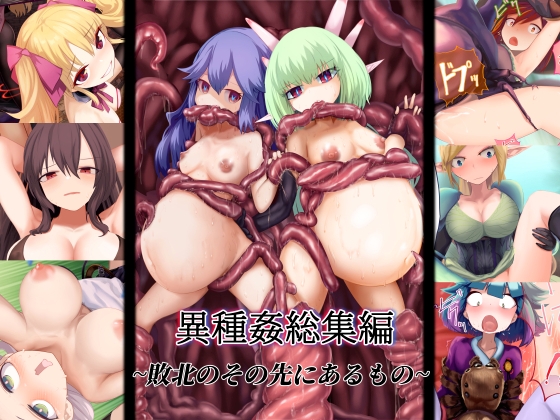
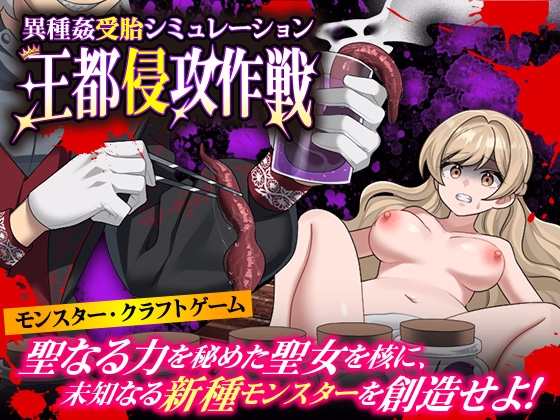
The 1980s and 1990s saw monster and fantasy-creature encounters emerge as a recurring sub-genre in adult-game RPGs and fantasy-setting eroge. The combination of Western-fantasy worldbuilding (orcs, goblins, dragons, elves) with Japanese erotic-content conventions produced a dense set of recurring archetypes, and by the 2000s ishukan was a stable genre tag at major distribution platforms. The character-archetype convention mesu-X (メス + X, “female X” — mesu-goblin, mesu-orc, etc.) emerged as one of the most productive within the genre.
Twenty-first-century development
Through the 2000s and 2010s the ishukan category expanded substantially in commercial adult games, eromanga, and doujinshi. Three major sub-currents organise the contemporary catalogue.
The fantasy-RPG sub-current embeds the encounters in Western-fantasy or wuxia-style settings, where the worldbuilding logic of the surrounding fiction motivates the cross-species relationships. The genre’s depiction is structured by the surrounding fiction’s narrative apparatus.
The isekai sub-current — works in the broader transferred-to-another-world genre, popular through the 2010s — has produced its own substantial sub-stream of ishukan content, with the fantasy-world setting providing the narrative frame for cross-species relationships.
The monster-girl sub-current is the most internationally visible. Centred on humanoid female monstrous characters (succubi, slimes, dragon-girls, oni, lamia), the sub-genre has developed extensive parallel international monster-girl fan communities, with contemporary Japanese works and Western works in active mutual circulation.
Western reception and its tensions
In English-language fan and adult-content distribution, the monster girl and monster sex sub-genres have established themselves as recognisable categories. Translation, doujinshi import, English-language original work in the same idioms, and the cross-cultural circulation of artists and works through online platforms have produced sustained communities. Western fantasy and gaming conventions (D&D’s monster manuals, the Witcher franchise’s succubi and vampires, the Final Fantasy series’ moogles and other recurring fantasy creatures) provide a parallel cultural infrastructure that makes the genre’s logic generally legible to Western audiences.
The reception is not without friction. The Japanese-subculture distinction between fictional ishukan and real-world animal-welfare questions is not always carried over cleanly into English-language reception, and platforms such as Pixiv, Twitter, and Patreon have at various points implemented restrictions on related content that Japanese-platform conventions would not apply in the same way. The English-language fan vocabulary has, over the 2010s and 2020s, increasingly settled on the monster-girl label as the primary category for the same fictional content, in part to manage the linguistic-and-platform reception.
Sub-genres
The contemporary ishukan catalogue divides into recognisable sub-genres.
Monster type — orcs, goblins, slimes, dragons, minotaurs, lamia, harpies, oni, succubi, and the wider RPG-fantasy bestiary. The largest sub-genre by volume.
Mythological type — gods, demons, angels, yōkai, ghosts, spirits. Often draws on East Asian folklore and Buddhist demonology, with significant overlap with horror and fantasy genres adjacent to ishukan.
Tentacle type — see shokushu. Treated as a sister genre.
Mecha and AI type — robots, cyborgs, artificial intelligences, electronic beings. Frequent in SF-setting works.
Alien type — extraterrestrial fictional species. Frequent in SF-fantasy hybrid settings.
Fantasy-animal type — fictional anthropomorphic creatures including the kemonomimi and broader furry traditions. The boundary with adjacent categories (kemonomimi as character-type, kemono / furry as a separate genealogy) is a matter of community-level convention rather than strict definition.
Reception and ethics
The reception of ishukan within Japanese subculture follows several recurring readings. The otherness reading — the fictional non-human partner as the maximally-other other against which conventional human relationships can be defamiliarised. The body-form asymmetry reading — the genre’s interest in fictional bodily configurations and the experiences they produce. The consent-and-narrative-frame reading — the genre’s specific use of fantasy-setting fiction to handle questions about the structure of relationships under non-standard biological conditions.
The ethical perimeter is well-established within the genre’s own working culture. The fictional-character status of the depicted partners is a precondition for the genre’s operation; depictions that involve real-world animals as actual subjects of fictional violence, depictions that involve minors, and depictions that promote real-world non-consensual conduct all fall outside the genre’s working norms and outside the legal frame in which the wider Japanese adult-content ecosystem operates.
A note on the wider field
Ishukan is one of the more long-standing fictional genres in Japanese adult subculture, with deep roots in pre-modern Japanese and world traditions of cross-species fiction and a substantial contemporary international circulation. Its handling of consent, bodily difference, and fictional otherness has been a persistent topic in Japanese-subculture critical writing, and the category’s continued vitality reflects the productive role the fictional non-human partner has played in twentieth- and twenty-first-century Japanese adult fiction.
Related Terms
Updated
References
- 『Eros in Hell: Sex, Blood and Madness in Japanese Cinema』 Creation Books (1998)
- 『Manga and the Representation of Japanese History』 Routledge (2013)
- 『Erotic Comics in Japan: An Introduction to Eromanga』 Fakku Books (2021) — Includes treatment of monster and cross-species sub-genres.
- 『海女と蛸 春画における異種接触』 Shinchōsha (2002) — On Hokusai's 'The Dream of the Fisherman's Wife' (1814).
Also known as
- interspecies (fictional)
- monster sex (genre)
- cross-species erotica (fictional)
- monster girl
- ja: 異種姦
- ja: 異種交配