Nonke (Straight Man)
✎ 本文編集 (admin) 🖼 画像編集 (admin)“Nonke (Straight Man)” works on DLsite
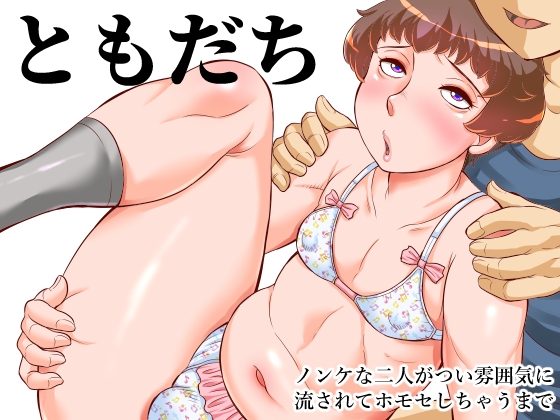
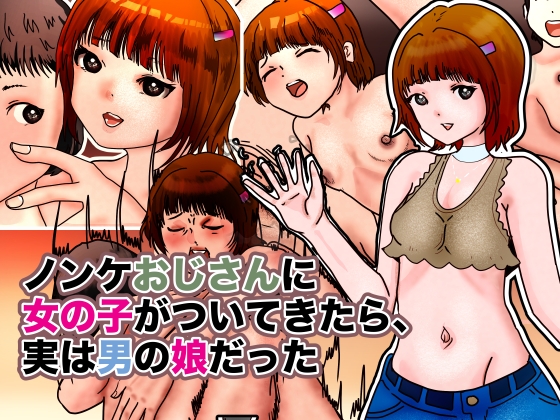
A regular at a gay bar laughs, “he’s nonke”, then adds, “which makes him all the better”. A distinctive sense of language, cultivated over half a century by Japanese gay culture, dividing “us” from “the other side”. Nonke is Japanese gay-culture (male same-sex culture) slang for a heterosexual man. It is said to derive from the colloquial contraction noke of “(its) inclination is absent”, that is, having no same-sex orientation, rendered in katakana, and to have settled as an in-group term for distinguishing self from other within postwar Japanese gay communities. The English counterpart is straight; while Japanese also uses “straight” outside gay culture with the same meaning, the nonke form has a strong character of in-group language within gay communities and related subcultural fields.
Overview
The nonke form functions to draw a distinction between self and other within the gay community. The speaker is tacitly presumed to be gay (or a sexual minority such as bisexual or transgender), and the person called nonke is outside that community, namely a heterosexual man. Its registers of use divide broadly into three: everyday conversation in community spaces such as gay bars; written usage in gay magazines, books, and doujinshi; and use on gay internet forums and social media.
As a register, it sits between neutrality and exclusivity, carries both a light familiarity and a measured distance, and does not directly include a value judgment. Unlike the academically neutral “heterosexual”, nonke has the character of insider language and carries the function of confirming self-identity within gay culture. At the same time, it is conventionally used as a relatively neutral term, not an explicit slur like the English breeder (a derogatory term for heterosexuals within gay culture). In subculture, the term connects with the formation of “turning a straight man”, “straight man’s fall”, and “straight man’s first time” as independent genre categories in gay doujinshi, gay adult video, and gay fiction, in which a heterosexual man experiences a change in his own sexuality through same-sex experience.
Etymology and formation
The origin is generally read as a coinage in which the English prefix non- was associatively layered onto the contraction noke of “having no (same-sex) inclination”. The form established itself as in-group language in postwar Japanese gay communities and was later fixed in katakana as nonke. The romanised transcription nonke of noke, through its chance phonetic proximity to the negating English prefix non-, may have become an even more settled form.
The period of formation is hard to pin down for want of solid documentation, and identifying its first colloquial appearance is difficult. Usage in postwar gay magazines such as Barazoku (1971-2008, edited by Bungaku Ito) and oral usage in community spaces such as gay bars are presumed to have constituted the term’s circulation base. With the increasing visibility of gay communities from the 1980s and the progress of HIV/AIDS measures and sexual-minority rights movements from the 1990s, the form generalised as in-group language. The English counterparts in gay communities include straight, str8 (text abbreviation), and het; where nonke is rooted strongly in the gay-targeted register, the English straight is a general term widely used outside sexual-minority communities as well.
Derived terms and adjacent fields
“Turning a straight man” (nonke kouryaku, nonke kuzushi) names a narrative type in gay doujinshi and fiction, in which a person who self-identified as heterosexual is led to a same-sex experience through a male protagonist’s approach. The type conventionally has a three-part structure: the setting of a person with a firm heterosexual self-identity, the introduction of a trigger that shakes that self-recognition, and the establishment of a relationship through a final sexual experience. As a fictional device, the type requires, in any application to real relationships, the partner’s consent and self-determination as an absolute premise; a one-sided approach to a real heterosexual man can amount to sexual pressure that infringes the partner’s right of self-determination, and a responsible reading does not confuse the narrative type with real relationships.
“Straight-identifying host” and “straight-type” appear in the nightlife and sex-industry register, sometimes used for staff at male-targeted gay establishments who serve gay-oriented services while self-identifying as heterosexual; the actual sexuality of such staff is complex, and the nonke self-label often carries an aspect of occupational performance. “Gay-leaning straight” and “grey zone” name, colloquially, a person who self-identifies as heterosexual while holding some degree of sexual interest in the same sex, positioned around the concept of bisexuality.
Cultural reference and social change
From the perspective of gay studies, the nonke concept is discussed as a linguistic practice presupposing the binary classification of sexual orientation (homosexual/heterosexual). Contemporary theoretical frameworks on orientation (the Kinsey scale, the concept of sexual fluidity, queer theory) have advanced a critical examination of the fixity of that binary, and the binary use of nonke/gay falls under that critical current. In terms of social change, the progress of recognition of sexual diversity from the 2010s, the increasing visibility of intermediate and fluid categories such as transgender and bisexuality, and the refinement of self-identification in social-media culture have been noted to unsettle the conceptual simplicity of nonke.
The development of the nonke narrative type runs alongside the formation of Japanese gay doujinshi, BL (Boys’ Love), and yaoi. Beginning with male-male romance in 1970s-80s shoujo manga (Keiko Takemiya, Moto Hagio), through 1990s doujinshi culture and the development of commercial BL publishing from the 2000s, the field established itself as a major component of Japanese subculture. Internationally, through the circulation of Japanese BL and gay subcultural works into English- and Chinese-speaking markets, cases of the loanword nonke circulating among Anglophone BL communities and yaoi fans have been observed, a case of a Japan-specific gay-culture slang term becoming international in-group language via subculture.
See also
Updated
References
- 『Gay Studies』 Seidosha (1997) — Systematic examination of Japanese gay cultural history.
- 『Queer Japan from the Pacific War to the Internet Age』 Rowman & Littlefield (2005)
- 『Shinjuku Nichome』 Shinchosha (2019)
Also known as
- straight man (gay slang)
- non-gay
- heterosexual male
- ja: ノンケ
Related
- Mind Break (Hentai Tag and Narrative Type)
- Neko (Bottom Role)
- Tachi (active role in same-sex relationships)
- Dosukebe (Super-Lewd Character Type)
- Ishukan
- Netorase (consensual cuckolding)
- Saimin (Hypnosis Genre)
- Netorare (NTR)
- Ojiichan (Older-Man Genre)
- Mind Control (Brainwashing Genre)
- Ecchi (Japanese Softcore Erotic Genre)
- Time-Stop Series (Japanese AV Genre)