Fantasy setting (J-eroge and adult game genre)
✎ 本文編集 (admin) 🖼 画像編集 (admin)“Fantasy setting (J-eroge and adult game genre)” works on DLsite


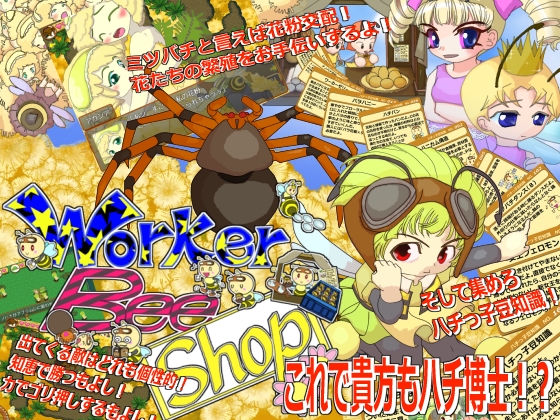
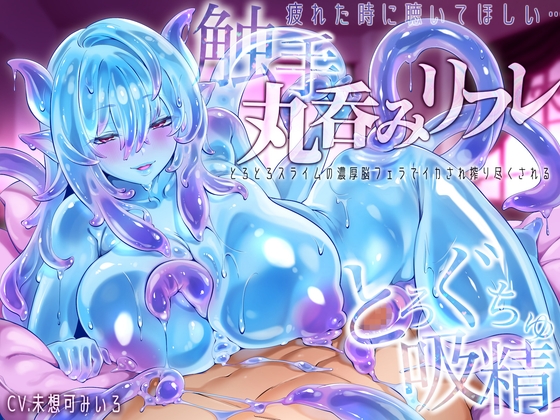
The fantasy world (an Active fictional setting framed entirely as fictional) has been a stable setting class for Japanese adult content for three decades. Fictional fantasy works deal exclusively with fictional adult characters in invented worlds; the genre carries no representational claim about real persons or real-world situations. Elves, dragons, dungeons, guilds, adventurers: the assembly of standard high-fantasy signifiers has functioned as the principal alternative setting for adult work to the urban-school-workplace cluster that dominates live-action adult video.
Overview
Fantasy setting (Japanese: ファンタジーもの, fantajii-mono) is the umbrella term for fictional Japanese adult-content works set in a high-fantasy world: a world independent of real-world history and geography, populated by magical and species-distinct beings, organised around adventurer guilds and quasi-medieval social structures. The category developed in the late 1980s through AliceSoft’s Rance and Elf’s Dragon Knight series and has remained a principal genre in eroge and doujin game production through the present. The category operates across eromanga, doujinshi, doujin audio, and narou-kei online novels with a substantially shared world-vocabulary.
The genre’s structural features include: a high-fantasy world independent of real history and geography; the presence of magical and supernatural beings (elves, dwarves, beastfolk, demons, dragons, gods); the standard adventuring-and-quest social organisation (guilds, parties, dungeons); the standard quasi-medieval social institutions (kingdoms, churches, taverns, brothels). On this base, the adult sub-class adds species, social-class, and supernatural-status differentials as the dramatic-justification layer for intimate scenes, with the principal narrative locations (dungeons, taverns, inns, brothels) functioning as scene-stage configurations.
All depicted characters within fantasy-setting adult content are fictional and depicted as adult. The setting’s distance from real-world geography and the all-fictional character base are the principal reasons the form has remained a stable home for content configurations that the realistic registers cannot easily stage.
Etymology
Fantasy (English) entered Japanese subcultural vocabulary from the late 1970s through the parallel adoption of Dungeons & Dragons (1974) and the wave of Western fantasy literature (Tolkien, Howard) that the TRPG configuration drew on. The standardised genre-vocabulary consolidation that followed the Dragon Quest (1986) and Final Fantasy (1987) console RPG releases established the working signifier-cluster within Japanese mass subcultural production. Fantajii-mono as the umbrella-genre label consolidated in the 2000s.
The phrase ken to mahou (swords and sorcery) is the Japanese translation of the English subgenre label sword and sorcery, originally referring in the 1960s English-language context to the Howard-derived heroic-fantasy adventure register. In Japanese usage the phrase tends to serve as a synonym for the wider high-fantasy register rather than as the narrower subgenre label it remained in English.
History
1980s: RPG boom and early eroge
Fantasy-setting eroge traces from the late-1980s Japanese personal-computer fantasy-RPG eroge cluster, anchored on the NEC PC-88, PC-98, and Sharp X68000 platforms. Elf’s Dragon Knight (from 1989) and AliceSoft’s Rance (from 1989) consolidated the format and supported substantially long series runs that continued into the following decades. AliceSoft’s Rance in particular ran for thirty years, with the final volume of the series concluding in 2018, and the series functioned as the principal name-recognition anchor of the fantasy adult-game category through that period.
1990s: genre consolidation
Through the 1990s, the fantasy-setting category consolidated as one of the central segments of the eroge industry. Elf, AliceSoft, JAST, Giga, and Shadewear all developed and continued individual world-building lines, with RPG, simulation, and adventure game-system combinations producing a substantial proliferation of configurations within the shared world-vocabulary.
2000s: doujin game expansion
The 2000s saw the spread of free game-development tools (RPG Maker 2000 and XP, Wolf RPG Editor) and the consolidation of DLsite as the principal doujin game distribution platform. Fantasy-setting adult doujin games became a substantial sub-segment, with RPG Maker fantasy RPG titles at the 1,000-2,500 yen price point supplying continuous distribution volume. Mephisto’s Kunoichi Ninpouchou (2006) and similar early titles anchored the wider segment.
2010s: narou-kei isekai convergence
The mid-and-late 2010s expansion of the Shousetsuka ni Narou online-novel platform and its isekai (other-world transmigration) sub-genre produced a substantial point of convergence with the fantasy-setting category. Although the two categories are formally distinct, contemporary work routinely combines isekai-transmigration framing with high-fantasy world-vocabulary, and the resulting combined form dominates contemporary fantasy-adjacent adult content production. The Naro-derived isekai work typically incorporates status-and-skill mechanical layers drawn from console RPG conventions, extending the high-fantasy world-vocabulary in the direction of explicit game-mechanical signification.
2020s: cross-medium expansion
The 2020s have seen the fantasy-setting category established across eromanga, eroge, doujin games, doujin audio, and online-novel adult work as a principal cross-medium setting class. The medium-specific differentiation operates on theme, tone, and target audience rather than on world-vocabulary, which remains substantially shared.
Standard configuration
World-vocabulary
The standard fantasy-setting world-vocabulary includes: quasi-medieval European social structure (kingdoms, lords, villages, churches, adventurer guilds); inter-species presence (elves, dwarves, beastfolk, demons, monsters); magical-system classification (offensive, restorative, summoning magic and similar); a good-evil-axis cosmology with gods and demon lords; and dungeon-monster-quest game-derived structural elements. The configuration consolidates the inherited Tolkien-derived high-fantasy literary background, the D&D tabletop tradition, and the Dragon Quest and Final Fantasy console-RPG conventions into a single shared signifier-cluster used across the wider subcultural production.
Character types
The principal character-type set comprises: protagonists (adventurer, hero, sister, mage, swordfighter) and heroine clusters (elf, beastfolk, human princess, female knight, sister, demon-lord’s daughter). The standard cast configurations recur across works in patterns recognisable to the audience, supporting fast scene-establishment and clear genre signalling.
Adult content integration
In fantasy-setting adult works, the intimate scenes are configured as integrated with the world-vocabulary and narrative flow. Standard configurations include: adventure-and-quest-completion rewards; specific-location-bound scenes (dungeon, inn, brothel, guild-hall); and the species-relation framing that consolidates inter-species pairings (elf, beastfolk, demon-and-human, divine) as a category-internal possibility.
Harem structures
The harem configuration is widely deployed in fantasy-setting adult work. The cross-species harem (one protagonist surrounded by elven, beastfolk, human, and demon-lineage partners) and the cross-occupation harem (princess, knight, sister, adventurer, courtesan) both function as standard configurations, with the world-vocabulary providing the in-world justification for the resulting party composition.
Sub-forms and adjacent concepts
Relation to isekai
The isekai (other-world transmigration) category is best understood as a sub-genre of the wider fantasy-setting category. Both share the high-fantasy world-vocabulary; isekai additionally requires the contemporary-Japan-to-other-world transmigration framing, while fantasy in general includes pure-fantasy work without the transmigration requirement.
Relation to RPG adult work
The RPG-adult-game category is the game-system axis of classification, while fantasy-setting is the world-vocabulary axis. The two are formally independent layers of categorisation. Works combining fantasy world-vocabulary with RPG game-system constitute the central segment of both categories, while works combining fantasy world-vocabulary with non-RPG game-system (visual novel, adventure) and works combining non-fantasy world-vocabulary (SF, modern) with RPG game-system populate the cross-cells of the matrix.
Subgenres
Recognised fantasy-setting subgenres include: dungeon-exploration (focused on subterranean labyrinth and monster combat); adventurer-guild (focused on town-base and quest-acceptance); hero-and-demon-lord (focused on the good-evil narrative axis); dark fantasy (with grimmer or decayed world-vocabulary); sister-and-clergy (focused on church-and-religion themes); and species-specialist (centred on a specific inter-species pairing).
Defeat-class subgenres
A distinct sub-category within fantasy-setting adult work centres on configurations in which a protagonist or heroine is overcome by enemies and subjected to non-consenting scenes within the fictional setting. The narrative configuration is treated as an exclusively fictional scenario presentation, with no extension to or endorsement of real-world non-consent; platform guidelines and editorial conventions explicitly mark the configuration as fictional. Adjacent to the kichiku-kei and ryoujoku-kei sub-clusters, these works form a recognised but bounded category within fantasy-adult work.
Cultural reception
Industry-anchor status
The fantasy-setting category has functioned as one of the principal genre anchors of the eroge and doujin game sectors across thirty years of continuous production. The conventions of character configuration, world-vocabulary, and game-system integration that the category has consolidated function as a substantial part of the industry’s working production grammar.
Parallel international development
The English-language fantasy-adult content sector developed substantially in parallel on dedicated platforms (TFGames, FurAffinity, and similar), with distinct subgenre clusters (furry, transformation, muscle) that operate outside the Japanese category’s principal range. The two streams operate as adjacent but separately-organised territories, with cross-translation of Japanese fantasy doujin games into the English-language audience supporting continuing inter-stream circulation.
Influence on the wider subculture
The world-vocabulary and signifier system that the fantasy-setting category consolidated has spread well beyond adult-content production into light novels, anime, console games, and mobile games. The shared understandings (“elves have long ears”, “adventurer guilds accept quests”, “dungeons have layered floors”) function as a base layer of contemporary Japanese subcultural communication.
See also
Updated
References
- 『The Critical Point of Bishoujo Games』 Hajou Genron (2004)
- 『Beautiful Fighting Girl』 University of Minnesota Press (2011)
- 『The Mythology of Computer Games』 PLANETS (2016)
- 『The World of Hentai: A Cultural History of Sexual Anime』 Routledge (2019)
Also known as
- fantasy-setting genre
- sword and sorcery adult content
- high fantasy hentai games
- ja: ファンタジーもの
Related
- Haramase-mono (impregnation genre)
- Training/development eroge
- Isekai genre (Japanese fantasy/adult setting)
- Vampire erotica genre (J-adult media)
- Mahou-mono (Magic-Themed Genre)
- Action Eroge
- Harem genre (Japanese fictional configuration)
- Nukige
- Majime-Mono (Earnest Genre)
- Erotic RPG
- Workplace Genre (Shokuba-mono)
- Gakuen-mono (School-Setting Genre)