“Teeth (ha)” works on DLsite
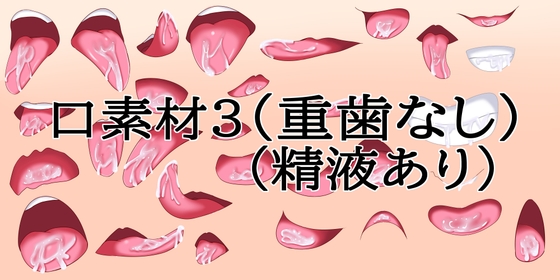
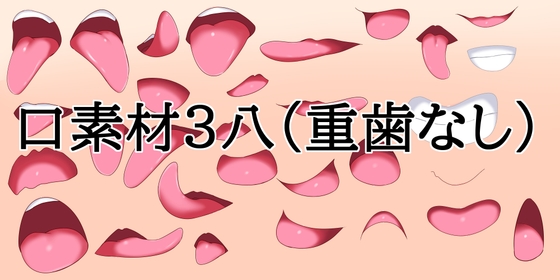





Teeth (ha) preserve more biological individuality than any other part of the body, by virtue of their hardness, and are at the same time the oldest object of culturally-directed body-modification. Across cultures, the hardest tissue of the body has paradoxically been the most subject to deliberate alteration since prehistoric times.
Ha (Japanese: 歯, ha; English: teeth, tooth, dentition) refers to the hard-tissue organs implanted in the upper and lower jaws. Anatomically composed of enamel, dentine, dental pulp, and periodontal ligament, teeth contain the hardest tissue in the human body as the result of an embryological collaboration between ectodermal and mesodermal tissue. Teeth serve mastication, articulation, and facial-form maintenance as functional organs, while simultaneously functioning as visual elements of the face along with the mouth and lips.
Anatomy
Adult dentition typically comprises 28-32 teeth (including third molars), classified into incisors, canines, premolars, and molars. The tooth-crown is enamel-covered, constituting the body’s hardest tissue. The interior dentine has a yellow-white colouration that, combined with enamel’s translucency, determines the tooth’s visible colour. The dental pulp contains nerves and blood vessels and carries the sensory function. The gingiva (gums) covers the surrounding tissue, with a healthy pale-pink appearance in normal condition.
Dental alignment varies substantially across individuals on genetic, developmental, and trauma-history axes. The Japanese vocabulary “ha-narabi” (歯並び, dental arrangement) covers the population of individual-variation patterns, including yaeba (canine displacement to the labial position), ran-gui-ba (crowded teeth), dappa (protruding teeth), and uke-guchi (reverse bite). Occlusion (bite) status affects mastication efficiency, articulation, and facial-form balance.
Teeth as visual sign
Teeth function strongly as components of facial-form. The whiteness and alignment of teeth revealed during smiling are read as signs of health, age, and social class. Aligned-and-white dentition is associated with youth and wealth, and Anglophone-and-Western beauty markets have long centred teeth-whitening and orthodontic treatment as principal commercial product categories. In Japan, the post-1990s spread of orthodontic treatment and teeth-whitening procedures has produced a rapid rise in dental-aesthetic awareness.
The Japanese-distinctive yaeba aesthetic has, however, long operated in parallel and partial-contrast to the Anglophone alignment-as-aesthetic-default. Canine-displacement that would be a target of orthodontic correction in the Anglophone register operates in the Japanese register as yaeba, read as a sign of cuteness and youthfulness. Idol and voice-actress careers have sometimes foregrounded the yaeba as a personal-aesthetic-marker. In the 1990s-onward loli and JK (sailor-uniform) sub-genre adult-content production, yaeba character-design appears as a recurring sign of youthful-innocence character-coding. In a notable mid-2010s development, an artificial-yaeba cosmetic-dental procedure was offered at salons in Tokyo’s Shibuya district, indicating the commercial implementation of the aesthetic preference.
Historically, the Edo-period married-women’s ohaguro practice of blackening the teeth marked the married-and-mature aesthetic register, with white teeth carrying the opposite sign (unmarried-or-immature register). The practice ended through Meiji-government prohibition in the late 19th century, but the cultural memory survives in Edo-period art and literature. From the contemporary perspective, the practice may appear unusual, but it operated coherently within the broader Edo dignity-and-faithfulness aesthetic system.
Role in sexual practice
Teeth themselves have limited inherent erogenous sensation but operate in several functions in sexual practice.
First, the facial-and-mouth visual sign function. The yaeba, the alignment-pattern, and the whiteness of teeth all carry strong weight in impression-formation toward a partner. A smile that reveals teeth conveys a substantial part of the personal aesthetic-information that initial-impression-formation operates on.
Second, the biting-action function. Soft biting on the lips during kissing, soft bites on the neck or earlobe, light bite-marks on the shoulder or chest — these have been observed cross-historically as expressions of possessiveness and affection. In the BDSM context, stronger biting may operate, with limits set by the trauma-risk that strong biting carries. (Responsible practice operates within the consent-and-safety framework that the broader BDSM literature articulates.)
Third, the teeth-control during oral-contact function. In fellatio and oral-genital contact, the management of teeth-contact with the genital area is one of the technical skill-elements that distinguishes pleasurable from painful execution. Industry vocabulary references “ha-ga-ataru” (teeth-contact-occurs) and “ha-wo-tateru” (set-teeth-against) as recognised technique-vocabulary.
Cultural history
Aesthetic-and-functional intervention on teeth has a long cross-cultural history. Ancient Maya practice embedded jade inlays in teeth; Southeast-Asian regional practices included tooth-filing as part of coming-of-age rites; the Japanese ohaguro practice operated as a married-women’s identity-marker; Anglophone-and-Western teeth-whitening has developed across the 20th century as a major commercial-and-medical cosmetic intervention. Teeth, the hardest and least-modifiable body part by everyday means, paradoxically have been one of the oldest objects of deliberate cultural intervention.
In contemporary practice, dental orthodontics, teeth-whitening, dental implants, and ceramic restoration have merged dental medicine with cosmetic markets, with teeth functioning as a body-part planned-and-shaped through cosmetic-medical intervention. In the AV industry, the alignment of female performers’ teeth functions as one of the casting-evaluation criteria, alongside other facial-visual-features.
Derivative usage
- Yaeba: canine-displacement to the labial position; in Japanese context, a sign of cuteness
- Ha-narabi-ga-ii: positive evaluation of aligned dentition
- Ha-wo-tateru: to set-teeth-against; light biting as an expression of affection or possession
- Ha-ga-ataru: industry vocabulary for tooth-contact during fellatio
Related Terms
- Mouth (kuchi)
- Lips (kuchibiru)
- Facial-form (kao-dachi)
- Ohaguro
- Fellatio
Updated
References
- 『Oral Anatomy』 Ishiyaku Publishers (2010)
- 『The Dental Record』 Quintessence Publishing (2008)
- 『Body Modification』 Sage Publications (2000)
- 『A Brief History of the Smile』 Basic Books (2004)
Also known as
- teeth
- tooth
- dentition
- dental aesthetics
- ha
- ja: 歯
- ja: 歯列
- ja: 歯並び