Kyōei-mizugi (competitive swimsuit fetish)
✎ 本文編集 (admin) 🖼 画像編集 (admin)“Kyōei-mizugi (competitive swimsuit fetish)” works on DLsite
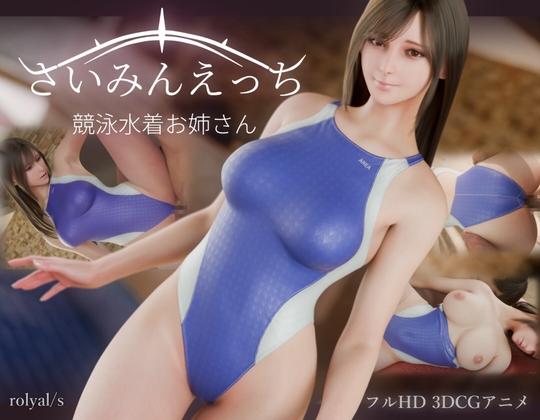
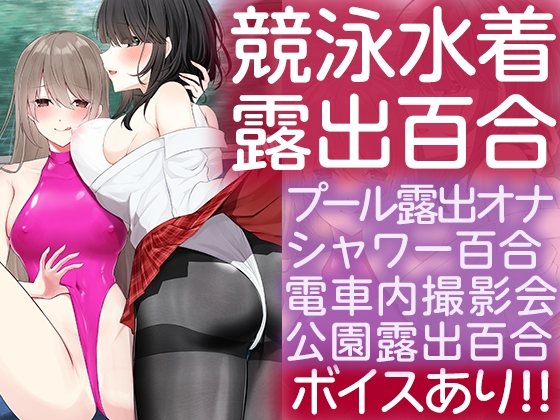

A single piece of fabric, engineered to cut through water with minimum drag, doing something entirely different on the body than it does in the pool. The technical features that make a competitive swimsuit fast — close-fit synthetic stretch fabric, high-cut leg openings, smooth coverage — also create the visual register that kyōei-mizugi aesthetics build on. All discussion concerns adult-content representation; this entry does not cover any underage configurations.
Kyōei-mizugi (Japanese: 競泳水着, kyōei-mizugi; English: competitive swimsuit, racing swimsuit) names the women’s competitive racing swimsuit and, in the kink sense addressed here, the specifically Japanese costume-fetish configuration that has built around it from the late 1980s onward. The standard form is one-piece, with high-cut leg openings, narrow shoulder straps, and a snug fit through the torso and hips, manufactured in chlorine-resistant nylon-polyester synthetic with a Lycra/spandex stretch element. The technical specification has been roughly stable across the past four decades; the fetish-aesthetic register has built on top of it.
Overview
The competitive racing swimsuit was developed for performance swimming and standardised through the 1970s and 1980s as the body-hugging high-leg form familiar from international competition. Within Japanese adult media from the late 1980s onward, the costume became one of the recognisable costume-fetish categories under the chakui / chakuero (clothed-erotic) umbrella, with productions, photo books, and cosplay-aesthetic costumes centred on the costume rather than on its removal.
The kink configuration is specifically Japanese. The same costume, in Western adult-content vocabulary, is read primarily as athletic-wear and is not associated with a comparable named fetish category. The Japanese reading attaches a layered set of associations — athletic body, summer-pool setting, the senpai (older female peer) character archetype, sun-tan lines that the high-cut leg opening produces — that have no direct parallel in Western swimwear-aesthetic vocabulary.
The variant kyōpan (競パン, “competitive-shorts”) refers to the swimsuit’s brief-only variant, sold as a separate item and used in costume-aesthetic photography. Kyōei-mizugi belongs to a wider Japanese sportswear-aesthetic family that includes the school swimsuit (suku-mizu) and bloomers.
Etymology
Kyōei-mizugi combines kyōei (競泳, “competitive swimming”) and mizugi (水着, “swimsuit”). The compound stabilised in late-Meiji to Showa-era Japanese as competitive swimming became distinguished from leisure swimming, and as the swimsuit specifications for competition were standardised separately from leisure swimwear.
The slang kyōpan (競パン) is an industry- and doujinshi-coinage of the late 1980s and 1990s, contracting kyōei-mizugi + pan(tsu) to refer to the swimsuit’s brief-cut shorts variant.
History
Competitive swimwear standards
Synthetic-fibre swimwear became the competitive standard through the 1950s and 1960s, with Lycra/spandex stretch (DuPont, 1958) opening the way to true body-hugging racing swimsuits. By the 1972 Munich Olympics the synthetic high-leg one-piece was the international competition standard, and the Australian manufacturer Speedo had become the dominant brand. Through the 1980s and 1990s, leg-opening positions rose progressively higher, drag-reducing fabrics were refined, and the silhouette familiar from late-twentieth-century competition stabilised.
The 2008 introduction of full-body polyurethane racing suits (Speedo LZR Racer, etc.) produced a brief record-setting era and prompted regulatory tightening; from 2010 onward, the international competitive standard reverted to lower-coverage forms with material restrictions. The contemporary competitive form sits within the post-2010 restricted envelope.
Entry into adult-media iconography
The costume’s appearance in Japanese adult-media iconography traces from the late 1980s gravure boom. Photography centred on idol models in competitive racing swimwear — at the pool, post-swim, in poolside settings — gave the costume a visual register independent of its competitive-sports context. Across the 1990s and 2000s, the kyōei-mizugi category stabilised as one of the recognised sub-categories of the broader chakuero (clothed-erotic) genre, with dedicated production lines, cosplay-aesthetic costumes (which approximate the competitive form but are optimised for visual rather than competitive use), and tagging conventions across AV and eromanga distribution channels.
By the 2000s and 2010s, the racing swimsuit had become a stable costume-archetype across several adjacent character types: the “senior at the school swim club” (water-club senpai), the swimming-school coach, the older sister figure, and — in more fantastical productions — characters in science-fiction settings where the racing swimsuit’s clean-line form fits a functional-aesthetic register. The persistent association with the “older female swim-club senior” archetype distinguishes it from the school swimsuit (suku-mizu), which carries the “younger female student” reading.
Distribution and market
In contemporary Japanese adult media, kyōei-mizugi is a stable mid-volume sub-category of the chakuero market. Production-side labels continue to release dedicated kyōei-mizugi-themed lines; cosplay-costume manufacturers maintain non-competitive variants tuned for visual effect; major streaming platforms (FANZA/DMM and others) maintain category tags. The market has remained substantially stable across the past two decades, with periodic refreshes tied to the broader fashion-aesthetic cycle.
Visual elements
The features that the kink-aesthetic reads as charged are several.
The high-leg cut, set well above the hip bone, exposes a substantial portion of the upper thigh and pelvic region in a configuration that ordinary swimwear does not. The visual line follows the iliac crest and creates a distinct hip-frame effect.
The fabric’s body-hugging tension renders the body’s surface topology visibly — the contour of the torso, the silhouette of the chest, the line of the pelvis. The wet-state translucency that the thin synthetic fabric develops when wet produces a further visual register that dry fabric does not.
The sun-tan-line effect — the strict boundary between the area covered by the swimsuit and the area exposed to sun — is a recurring sub-element, particularly within the swim-club-senpai archetype, where the tanned body with the white-bordered swimsuit-shaped area is a recognised visual code.
The competitive-context signalling (the swim club, the lap pool, the early-morning training, the older female senior figure giving instruction) supplies the narrative envelope that the costume operates within.
Character archetypes
Several character types have stabilised as the costume’s primary bearers.
The suiei-bu no senpai (swim-club senior) is the most canonical: an older female student at the protagonist’s school, member of the swimming club, with a tanned body and an authoritative-but-warm position toward the protagonist. The archetype draws on the broader Japanese senpai-kōhai cultural framework and uses the swimsuit as the costume signature.
The suiei kōchi (swimming coach) extends the archetype to instructor-student configurations, with the additional dimension of age- and authority-difference. The coach archetype frequently appears in titles centred on instructor-pupil character dynamics.
The science-fiction or fantasy variant, in which the racing swimsuit’s clean-line silhouette is used as a functional-aesthetic costume in non-pool settings, is a third type, exploring the costume’s visual register independent of its swim-context narrative envelope.
Variants
Kyōpan (competitive shorts) is the swimsuit’s brief variant, often paired with topless or non-swimsuit upper-body coverage as a costume-aesthetic combination.
High-leg leotard shares the high-leg cut and body-hugging fit but transposes the form to land-based athletic settings (gymnastics, dance), producing a parallel costume-aesthetic category.
Full-body racing swimsuit, modelled on the late-2000s competitive standard before the regulatory rollback, occupies a niche aesthetic sub-form.
Sheer-fabric variants are costume-aesthetic-only productions, manufactured for visual effect rather than competition, in which a thinner or partially-translucent fabric is substituted for the standard chlorine-resistant nylon-polyester.
School-and-team-embroidered variants, with embroidered school crests or team identifiers, anchor the costume in narrative-specific identifications (the costume of a particular fictional school’s swim club).
Western parallels
In Western swimwear-aesthetic vocabulary, the same competitive racing swimsuit is read primarily as athletic-wear, with the sub-cultural niche fetish-attachment less developed as a named category. Speedo fetish exists in Western kink-vocabulary as a recognised but smaller category, generally framed around male racing-brief swimwear rather than the women’s one-piece that kyōei-mizugi picks out. The two cultures differ in the gender-axis of the racing-swimwear kink (women’s one-piece in Japan; men’s racing-brief in the Western form), in the named-category visibility (a recognised sub-category in Japan; a less-formalised niche in the West), and in the surrounding archetype framework (the senpai-archetype anchor in Japan; the less-narrative-bound aesthetic in the West).
Related Terms
- Chakui (clothed sex) — broader clothed-erotic umbrella
- Chakuero (clothed-erotic genre) — the immediate market category
- School swimsuit (suku-mizu) — adjacent age-coded swimsuit category
- Bloomers — adjacent sportswear-aesthetic category
- Cosplay (kosupure) — the broader costume practice
- Sailor seifuku — adjacent school-uniform category
Updated
References
- 『Speedo: An Australian Icon』 Hardie Grant (2014)
- 『Splash! 10,000 Years of Swimming』 Hachette Books (2020)
- 『Sport and the Body: A Philosophical Symposium』 Lea & Febiger (1972)
Also known as
- competitive swimsuit fetish
- racing swimsuit fetish
- high-leg athletic swimsuit kink
- Japanese racing swimwear fetish
- ja: 競泳水着
- ja: きょうえいみずぎ
- ja: 競パン