Bob-hair fetish
✎ 本文編集 (admin) 🖼 画像編集 (admin)“Bob-hair fetish” works on DLsite
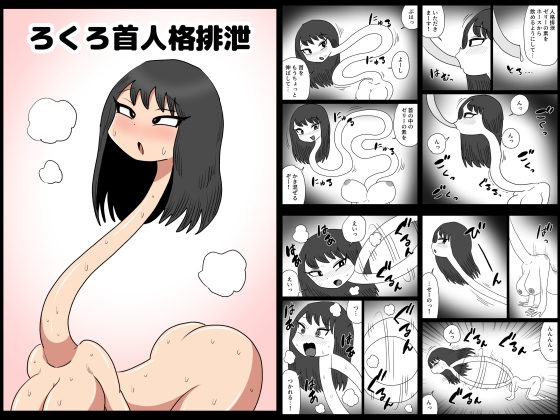
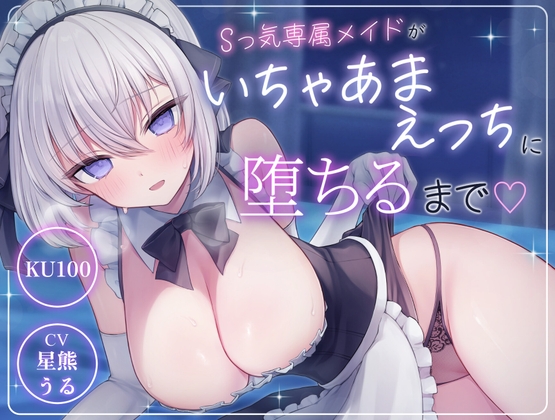
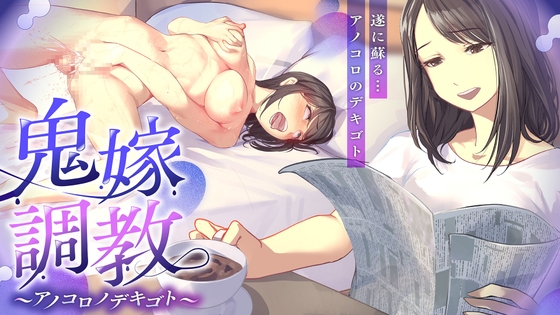
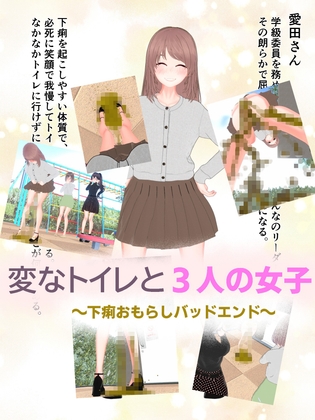
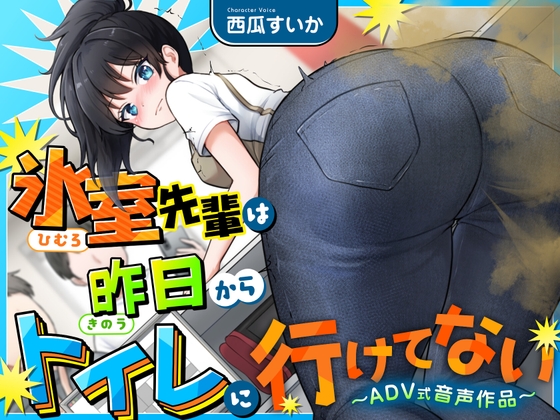
A hairstyle whose horizontal cut-line traces the contour of the face like a frame. The bob-cut is, in fetish-aesthetic terms, the hairstyle that gives the face most directly to view, with the cut-line and the jaw-line interacting in a single compositional event.
Bob-hair (Japanese: ボブヘア, bobu-hea; English: bob, bob cut) refers to a hairstyle of shoulder-or-above length with horizontal-or-gently-curved blunt cut, and by extension, the fetish category of sustained sexual interest in women wearing the hairstyle. The style emerged in 1920s Western modern-women’s-symbol culture, spread globally, and in contemporary Japanese context operates as a hairstyle-fetish category coupled with intellectual / clean / contemporary / refined female-character types.
Distinction in vocabulary
English bob derives from the verb bob (“to cut short”, “to crop off”), originally used for horse-tail trimming. The semantic-etymological inversion with ponytail (which extends the tail rather than cutting it) is a small but characteristic feature of the vocabulary. The Japanese-language vocabulary loans the English term directly as bobu, bobu-hea, or bobu-katto.
The English-language hair-vocabulary register is broadly neutral-and-aesthetic with limited fetish-specific marking; bob fetish operates as a recognised but somewhat specialised vocabulary item, frequently incorporated into the broader short hair fetish / pixie cut fetish / crop fetish category. The Japanese-language hair-fetish vocabulary articulates more finely, with bobu operating as a recognised independent category, kuro-kami bobu (黒髪ボブ, “black-hair bob”) as a recognised sub-form, and shōto-bobu (short bob), rongu-bobu (long bob), and similar sub-variants operating as further-articulated categories.
The Japanese-language kuro-kami bobu compound has no direct English-language counterpart at the same level of specificity; “Asian black-bob” or “Japanese clean-cut bob” function as approximate English-language paraphrases, but the specific aesthetic-and-character-type-association of the Japanese compound (intellectual / clean / unassuming / traditional Japanese-beauty) requires its own cultural-context translation.
Definition
The bob-hair is defined as a hairstyle cutting the side and back hair to approximately the same length, with a horizontal or gently-curved blunt cut. The length range is approximately from below-the-ear to above-the-shoulder; longer than this is the “long bob” or “medium”; shorter is the “short bob” or “short cut”. Sub-variation derives from fringe-presence / absence, cut-end inward-curl / outward-flip, side-layer presence, and similar.
History
The bob’s emergence as a contemporary women’s hairstyle traces to the late 1910s and 1920s Western contexts. In parallel with World War I women’s-social-mobilisation, the post-war women’s-suffrage movement, and Modernist culture, the convention “women’s hair should be long” was overturned. American social figure Irene Castle’s 1915 bob adoption, French designer Coco Chanel’s 1916 bob adoption, and American actress Louise Brooks’s heavy-fringe black-bob — operating within the 1920s “flapper” culture — circulated as the period’s symbolic instances.
In the period’s social context, women cutting their hair was read as an explicit-and-controversial break with convention, with sustained social-conservative backlash. F. Scott Fitzgerald’s 1920 short story “Bernice Bobs Her Hair” treated the social conflict surrounding the hair-cutting practice as its central theme, providing a literary-canonical window onto the period’s cultural impact.
In Japan, the late-Taishō and early-Shōwa period circulation of the same style under the name danpatsu (“cut hair”) or danpatsu-bijin (“cut-hair beauty”) positioned the bob as the symbolic hairstyle of moga (modan-gāru, “modern girl”) culture. The post-war Japanese context has seen recurring bob-cycle waves, with British designer Vidal Sassoon’s geometric-cut “Five-Point Cut” (1963) and the “Greta Garbo cut” providing the modern bob’s reference forms.
The 2000s-2010s Japanese context saw the “kuro-kami bobu” (black-hair bob) wave anchored by actresses including Kagawa Teruyuki (sic; see contemporary actress reference base), Yoshitaka Yuriko, and Kiritani Mirei; the 2020s saw the “handsome short” and Korean tanbal-meori waves. The bob has retained a stable position as a representative women’s hairstyle across this period.
Structure of attraction
Bob-hair fetish attraction is composed of four structural elements:
First, the proportional relationship with face contour. The bob’s cut-line position directly frames the wearer’s face-contour, jaw-line, and cheek shape. With the cut-line at the jaw-line, the face shape becomes literally incorporated into the structure of the hairstyle. Among hairstyles, the bob has the strongest face-and-hair integration.
Second, the half-visible nape and neck. With the cut-line stopping above the shoulder, the nape and neck are half-hidden, half-visible. Unlike long hair (which conceals the neck) or short cut (which fully exposes it), the bob creates a distinctive “glimpse” register. With each turn of the head, hair-tucking-behind-ear, or laugh-induced tilt, the previously-hidden neck momentarily appears.
Third, the intellectual / clean-aesthetic character-type association. Since the 1920s-onward circulation of the bob, the style has been associated with “modern”, “independent”, “refined”, and “educated” personality types. The literary editor, teacher, office colleague, and older-intellectual-woman character types are essentially automatically given the bob in visual character-design. The “black-hair bob + glasses” compound is the standard intellectual-female-type visual code.
Fourth, the cut-end motion lightness. Long hair falls in gravity-driven downward-pendant motion; the short bob’s cut-end moves lightly with head-motion, with light bounces during walking, head-tilting, and laughing. The motion is closely-coupled with the wearer’s expression and personality, contributing to the bob’s distinctive animation-and-character-coupling.
Variants
- Kuro-kami bob: Japanese traditional-clean-aesthetic standard form
- Short bob: shorter than jaw-line, boyish-leaning
- Long bob (lob): near-shoulder, more feminine
- One-length bob: classical even-cut form
- Graduated bob: longer-back, shorter-front
- Inward-curl bob: feminine cut-end-curled form
- Outward-flip bob: contemporary cut-end-outward-flipped form
- Fringe-bob: with forehead-covering fringe
- Centre-part bob: middle-parted, intellectual-refined-leaning
- Mushroom bob: rounded-crown, cute-leaning
- Korean tanbal-meori: Korean-aesthetic heavy-cut-end form
Cultural and adult-content references
In adult production, the bob is paired with “earnest girlfriend”, “OL” (office-lady), “teacher”, “married woman”, and “older intellectual woman” character-types. The “black-hair bob + glasses + OL suit” combination operates as the AV-industry standard intellectual-woman visual code, with stable repeated deployment. The “earnest-appearance-versus-behaviour-contrast” narrative-construction relies on the bob’s “ordered / restrained” sign-character as foundation for the contrast.
In 2D representation, the bob signals “cool-type”, “honor-student-type”, “literary-type”, “reading-lover”, and “introverted-but-strong-willed” character-types as standard visual code. The “black-hair + bob + neat-eyebrows + heavy-fringe” combination is the cross-work standard for a specific character archetype.
In fashion and salon-culture contexts, the bob operates as “the hairstyle a woman first selects when wanting to go short” and “the natural transition from long hair”, with the decision tied to life-stage transitions. “Cutting long hair to a bob” continues to be widely-recognised as a symbolic act marking personal or social transition.
English-language fetish-vocabulary recognises bob fetish as an established category, though usually within the broader continuum of short hair fetish / pixie cut fetish discussion. The Japanese kuro-kami bobu specifically-coupled-position (clean / intellectual / traditional-aesthetic-coupling) is a Japanese-cultural-specific elaboration that does not have a directly-equivalent Western counterpart.
Related Terms
Updated
References
- 『Bobbed Hair and Bathtub Gin: Writers Running Wild in the Twenties』 Harcourt (2004)
- 『Hair: A Human History』 Pegasus Books (2016)
- 『Vidal: The Autobiography』 Pan Macmillan (2010)
- 『Bernice Bobs Her Hair』 The Saturday Evening Post (1920)
- 『Cutting Edge: Hair and the Public』 Berg Publishers (2008)
Also known as
- bob hair fetish
- bob cut fetish
- bob hairstyle attraction
- ja: ボブヘアフェチ
- ja: ボブカット
- ja: 黒髪ボブ