Onee-san Attribute
✎ 本文編集 (admin) 🖼 画像編集 (admin)“Onee-san Attribute” works on DLsite
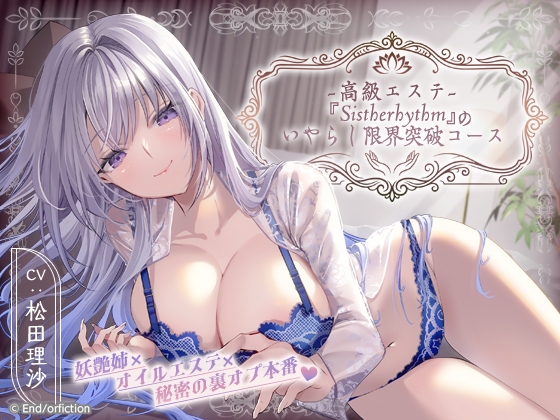
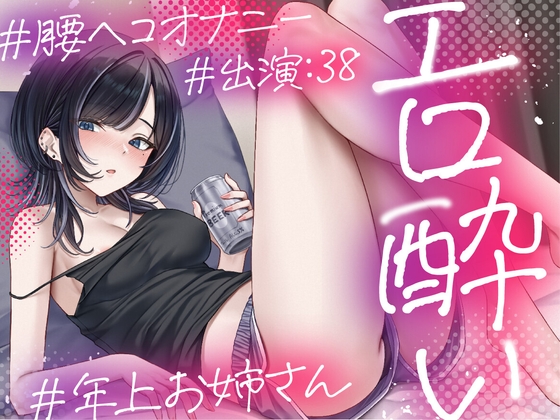


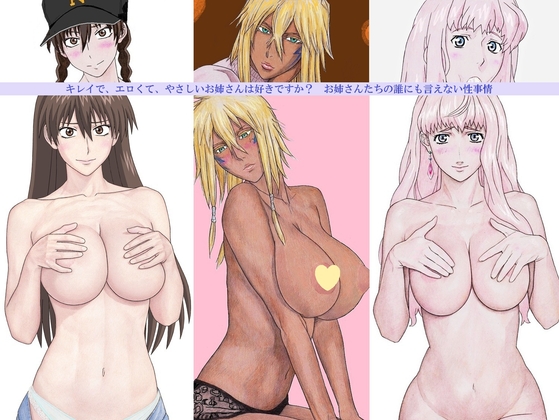


When you are laid up unwell, the neighbourhood onee-san brings rice balls, saying “are you eating properly?”. The age gap is only a few years, but she is far more self-reliant, and without scolding your helplessness she quietly gives you a lap pillow. The address “onee-san” opens a special register, different from an equal “older woman”. The ease of being placed on the protected side, a near care-taking distinct in kind from a mother’s: this forms the core of the onee-san attribute.
Onee-san attribute (お姉さん属性) is a character type for a female character a few years older than the protagonist (the reader’s proxy), whose core appeal is care-taking, embrace, and the indulgence of doting; it is also the taste for people holding that attribute. Within older-woman tastes, it specialises in the direction of the “being protected, being doted on” relationship.
Overview
The core of the definition is an older woman in a relatively small age range (roughly 2-7 years older), carrying maternal signs while keeping a nearness distinct from a mother. Where the married-woman and mature-woman types centre on social and age signs (“marriage”, “thirties and up”), the onee-san attribute centres on the very mode of the relationship, “care-taking” and “embrace”. The onee-san appears to the protagonist as a neighbourhood older woman, a sister (blood or pseudo), a club senior, a senior at work, a tutor, or a neighbour. The relationship is built within a comfortable distance that is neither class-asymmetric nor extreme in generational gap, and that distance forms the intimate domain supporting the attribute’s appeal.
The function of the “onee-san” address
The most important linguistic sign is the address “onee-san” or “onee-chan” itself, a powerful device specifying the relationship’s direction in a single word. To call the same older woman “senpai” or “onee-san” carries very different implications: “senpai” emphasises a hierarchical order, while “onee-san” implies an intimate care-taking relation. Variations, onee-sama (with some distance), onee-chan (from a younger sibling’s side), nee-san and nee-chan (more casual), and proper-name-plus-onee-san, each finely specify the temperature of the relationship, enabling the attribute’s detailed internal differentiation.
Origin and historical premises
A literary prehistory of the “onee-san” figure includes the older-woman figures in the I-novel and modern literature, such as Katai Tayama’s Futon (1907) and Soseki Natsume’s Sanshiro (1908), where the older woman functions as a mediator of a young man’s sexual and intellectual growth, a catalyst of self-formation rather than a mere sexual object. The systematic organisation of the attribute in postwar subculture begins with 1970s shoujo manga, where protective older women were drawn as an independent character type. From the late 1990s, the attribute was organised as a core type in eroge: heroines in the onee-san position were templated in works by major studios of the period, sharing behaviour patterns of care-taking, embrace, teasing, and indulgence, and establishing the standard design.
Behaviour patterns
The onee-san character often shares certain patterns. As care-taking, she provides meals, looks after clothing, manages the protagonist’s health, and advises on life in general, drawn as the expression of voluntary goodwill rather than servant-like service. As teasing, she engages in intimate teasing and light mockery of the younger protagonist, both recovering the relation’s equality and staging intimacy. As indulgence, she generously accepts the protagonist’s wishes, without hesitation performing physical contact such as the lap pillow, head-patting, and embrace. As scolding, she clearly admonishes when the protagonist is about to go astray, the duality of care-taking and scolding functioning as a device expressing the depth of the relationship.
Development in sexual expression
When the attribute connects to sexual expression, the central staging is one in which the intimacy of the relationship develops naturally into sexual contact. A structure is templated in which, within a long intimate relation, care-taking acts gradually shift into sexual contact; sexual initiative is often on the onee-san’s side, with the protagonist placed in a passive, led position. In eroge and eromanga, the representative onee-san route is the “first night” type, in which the onee-san gently leads a virgin protagonist’s first experience; the gap between the onee-san’s experience and the protagonist’s innocence functions as the attribute’s core emotional device. In the AV industry, projects such as “neighbourhood onee-san”, “tutor onee-san”, and “onee-san-type dominatrix” have settled as representative commercial forms, placing actresses in their late twenties to early thirties in the “onee-san” slot with a shooting policy emphasising a youthful face, gentle air, and embrace.
A derived form is one-shota (onee-san x shotacon), the pairing of an older woman with a younger boy, with an age gap usually of 5-15 years. As expression on fictional characters rather than real children, it forms an independent genre in eromanga and doujinshi, and considerations of ethical and legal boundary require care over the younger side’s age setting in commercial distribution.
Reception psychology
The core of the reception psychology lies in the dilution and distancing of maternal signs. To avoid the taboo of directly desiring the maternal, the age gap is reduced and the social position relocated to a more approachable relation, “sister”, “senior”, “neighbourhood”. Tamaki Saito, in writings from Beautiful Fighting Girl (2000) onward, discusses the onee-san attribute as an ambivalent attribute that “expects maternal protection while preferring a level relation distinct from the mother”, seeking a relation resembling the maternal in secular positions such as neighbour, kin, and workplace. By the sociologist Masami Ohinata’s argument, the contemporary overload of maternal signs in Japan generates a distancing from the maternal itself and strengthens demand for the “onee-san” middle-distance relation as its substitute, a social context tied to the attribute’s lasting popularity.
See also
Updated
References
- 『Beautiful Fighting Girl』 University of Minnesota Press (Eng. ed.) (2011)
- 『Otaku: Japan's Database Animals』 University of Minnesota Press (Eng. ed.) (2009)
- 『The Myth of Maternal Love』 Nihon Hyoronsha (2000)
Also known as
- older-sister character type
- onee-san fetish
- protective older woman archetype
- ja: お姉さん属性
Related
- Twins Moe (Futago Moe)
- Onee-chan Attribute
- Onii-chan Attribute
- Childhood-Friend Scenario
- Otouto-kei (Younger-Brother Type)
- Dark Elf (Fantasy Character Archetype)
- Demon Girl Moe (Akuma Chara)
- Bakajoshi (Airhead Girl Archetype)
- Dosukebe (Super-Lewd Character Type)
- Step-Parent Theme (Giri no Oya-kei)
- Haraguro Moe (Two-Faced Character Appeal)
- Hikikomori Character Moe