Masochism
✎ 本文編集 (admin) 🖼 画像編集 (admin)“Masochism” works on DLsite
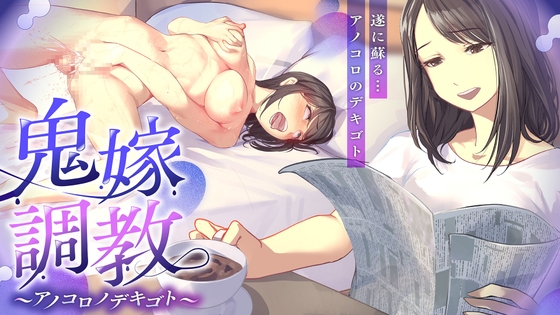


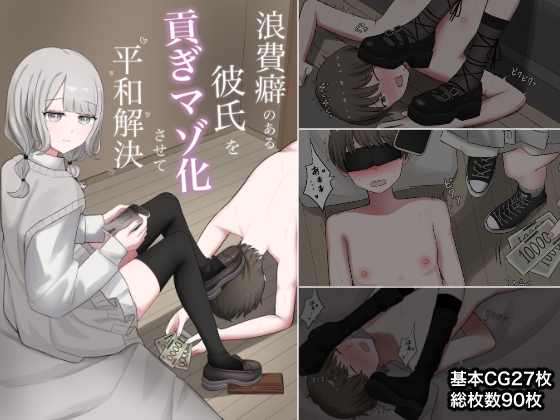
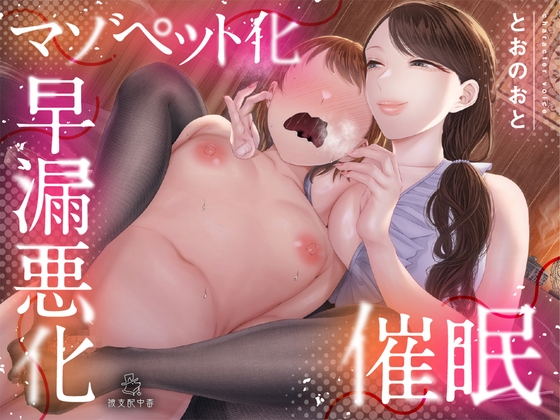


To be bound, to be trampled, to be cursed at. There is an arousal that rises only when one places oneself low and hands oneself over to the other. People have long called this paradox, where pain and humiliation turn to pleasure, masochism. It was named by a psychiatrist, and the name was lent by a novelist.
Masochism is the term for binding sexual pleasure to pain, humiliation, restraint, and being dominated. It forms a pair with sadism, which actively inflicts pain, and the two together are called SM (sadomasochism).
Overview
The core of masochism lies in finding pleasure in standing on the receiving side and taking on pain, shame, and being rendered powerless. Its targets range widely, from physical pain such as beating or restraint by kinbaku to mental submission such as abuse, command, and domination. What matters is not the intensity of the act itself but that pleasure arises in the configuration of the relation, “entrusting oneself to and being dominated by the other”.
Those with masochistic tendencies are colloquially called M, distinguished by sex as M-male and M-female. In Japanese SM culture the abbreviations are widely settled: S (sadist) for the one who acts, M (masochist) for the one acted upon.
Origin of the word
“Masochism” was coined by the Austrian psychiatrist Richard von Krafft-Ebing in his 1886 work Psychopathia Sexualis. There he classified 238 cases as “sexual abnormality”, and in doing so first used the two terms “sadism” and “masochism”.
The source of the word “masochism” is the Austrian writer Leopold von Sacher-Masoch. His representative work Venus in Furs (1870), with a protagonist who wishes to be enslaved to a beautiful woman, drew masochistic sexuality in literary form. Krafft-Ebing took the method of naming conditions after literary and historical figures, taking “masochism” from Sacher-Masoch just as he took “sadism” from the Marquis de Sade.
The shifting psychiatric position
After Krafft-Ebing described masochism as pathology, psychiatry long treated it as a perversion (paraphilia) for treatment. From the later twentieth century, however, the framework that treated consensual sexual tastes uniformly as pathology was greatly revised.
In the diagnostic criteria of the American Psychiatric Association’s DSM, this turn is reflected edition by edition. In the current DSM-5 (2013), a sexual taste involving pain is not in itself a disorder; it is positioned as a clinical problem, “sexual masochism disorder”, only where it brings the person marked distress or functional impairment, or where it is carried out against a non-consenting partner. In other words, so long as the person does not suffer and it is conducted within consent, masochism is treated not as an illness but as one of the diversities of sexual orientation.
Reception psychology
The pleasure of masochism is often explained as “release from responsibility”. By handing the right of decision and the initiative to the other, one temporarily lets go of the everyday ego and social role and becomes purely a receiving being. That high-status people sometimes seek intense submission in private is argued to be because this pleasure of “handing over” forms the front-and-back of the weight of responsibility they usually carry.
On the mechanism by which pain itself turns to pleasure, the involvement of endogenous analgesic substances (endorphins and the like) secreted in response to strong stimulus is noted. The overlap of the neural pathways of pain and pleasure is held to form part of the physiological basis of masochistic arousal.
Masochism in adult expression has formed a stable major genre through themes of kinbaku, training, and verbal domination. Staging that focuses on the expression and reaction of the receiving side has a structure that makes the viewer relive “the pleasure of being dominated”. In real SM practice, however, norms stressing safety, consent, and aftercare (Safe, Sane, Consensual and the like) are shared, and the exaggerated depictions of fiction are distinguished from practice.
See also
Updated
References
- 『Psychopathia Sexualis』 Ferdinand Enke (1886)
- 『Venus in Furs』 Various (1870)
- 『Diagnostic and Statistical Manual of Mental Disorders, Fifth Edition (DSM-5)』 American Psychiatric Association (2013)
Also known as
- masochism
- sexual masochism
- ja: マゾヒズム
- ja: マゾ
Related
- Piercing Fetish
- M-Seikan (Female-Led Pleasure Service)
- Fetishism
- Hazukashi Play (Embarrassment Play)
- Whipping Training (Muchi-Uchi Choukyou)
- Boots fetish
- Chōkyō (training)
- Kichiku-zeme (intense fictional kink)
- Kinbaku
- Kousoku (restraint / bondage)
- Latex fetish (latex_kink)
- Mekakushi (blindfold play)