Desire to Be Restrained (Shibarareru)
✎ 本文編集 (admin) 🖼 画像編集 (admin)“Desire to Be Restrained (Shibarareru)” works on DLsite
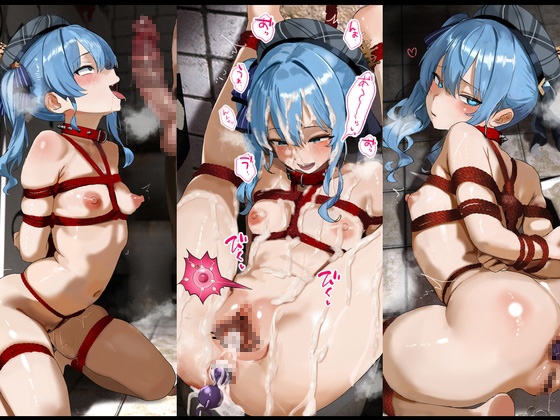
In a hotel room she undressed and brought her wrists together behind her back. He wrapped hemp rope, folded the elbows, circled above and below the chest, and ran the knot to the centre of her back. For the first dozen seconds she let out a small breath at the friction of skin and rope; then she went suddenly quiet. “I can’t move,” she said, and laughed, and added, “I never knew that not being able to move could feel this good.”
The desire to be restrained is the umbrella term for arousal at having one’s own body bound by another with rope, leather, or fabric. It has a psychological mechanism independent of the active taste for tying others, organised around surrendering one’s will, helplessness, and the safety of yielding.
Etymology and the Japanese lineage
The Japanese verb shibaru (to tie) has a dual origin: the kinbaku context derived from rope-capture arts, and the SM context derived from the loanword “bondage.” What was practical, part of the criminal-restraint arts before the Meiji period, was rebuilt as an aesthetic of suffering by figures such as Ito Seiu and Dan Oniroku from the Taisho into the early Showa era. Much of their work was theory from the tying side, yet the reader memoirs sent to postwar SM magazines such as Kitan Club and Uramado already contained many confessions of desire from the bound side, so the desire to be restrained existed early as a self-aware genre.
The desire to be tied is positioned as one expression of masochism, but within masochism as a whole it is a fairly particular group oriented toward static passivity. Unlike masochism that actively receives pain, such as flogging or verbal humiliation, here the very state of being bound and immobile becomes the reward.
Break with the active taste for tying
In the rope-bondage SM scene, the persons of the rigger and the bound are wholly separate. The rigger places technique, sculptural form, and a sense of control as the main motives; the bound places yielding, helplessness, and the transformation of bodily sensation as the motive. The two meet within one scene, but the cores of their desire are different things, and crossover from rigger to bound, or the reverse, happens less than one might expect. For that reason “to tie” and “to be tied” must be argued separately, and this article focuses only on the psychology of the bound side.
Reception psychology
First, release from the responsibility of choice. For the modern person, constantly required to make decisions, temporarily surrendering one’s bodily freedom and being placed in a state of being able to do nothing becomes a strong psychological rest, as clinical psychology notes. Observations that the desire is seen among people who carry heavy responsibility at work are long-standing.
Second, the awakening of skin sensation. Rope biting into the skin and a knot maintaining pressure force into the foreground sensations of skin and muscle usually unnoticed. Combined with a blindfold or a fixed posture, the topography of sensation is repainted into something entirely different from the ordinary, and this repainting of perception is itself a source of intoxication.
Third, the height of trust. To place oneself in an immobile state is also a declaration of fully trusting the other. Accepting bondage within a relationship with a safe rigger functions as a mark of intimacy stronger than words.
Fourth, the pleasure of becoming an object that is seen. The rope marks accentuate the body’s outline, and arousal at being displayed like a work of art is an important component. A type of restraint-desire that only ignites once the bound person is shown their own image in a mirror or on camera exists as a separate lineage from the pure orientation toward helplessness.
Derived forms
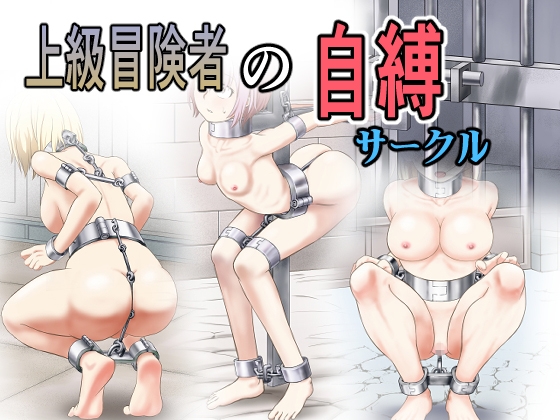
Hemp-rope bondage is restraint in the traditional Japanese style, with the bite into the skin and the beauty of the rope pattern at its core. Leather-belt bondage uses Western leather restraints, the hardness of the leather and the click of the buckle setting the mood. Fabric or stocking bondage is simple restraint with everyday items, low in psychological threshold and serving as an entry form. Chair-bondage and bed-bondage fix the person to furniture, favoured in combination with long periods of being left. Suspension lifts the body fully off the floor, a high-difficulty form where release from gravity and load on the body arrive together.
Related fields and cultural references
Kinbaku is the article centred on the rigger’s technique and aesthetic, and forms a pair with this one. In relation to masochism, being bound is positioned in the lineage that chooses helplessness over pain. Within SM as a whole, bondage is placed on a different axis from flogging and verbal humiliation, as a static, relaxation-leaning practice.
In adult works, self-narration by actresses on the theme of being bound has been produced continuously as interview extras on SM-label releases. Accounts such as “I needed time to surrender myself” and “I had myself tied to escape from daily life” are recorded repeatedly, showing that the desire cannot be reduced to simple masochism but is a distinct psychological genre. In adult manga, works built around the inner monologue of a bound heroine advance the story from the perspective of the one being acted upon, appealing strongly to readers of the pure restraint-desire, with an audience cleanly separate from works centred on the active tying side.
See also
Updated
References
- 『Bound: A Bondage Sex Sourcebook』 Cleis Press (2018) — Standard Anglophone text on the bottom's psychology and safety.
- 『Different Loving: An Exploration of the World of Sexual Dominance and Submission』 Villard Books (1993) — Systematic survey of the submissive side of BDSM.
- 『The New Bottoming Book』 Greenery Press (2001)
Also known as
- bondage bottom desire
- submissive restraint fantasy
- ja: 縛られたい願望
- ja: 被縛願望
Related
- Kinbaku
- Masochism
- Piercing Fetish
- M-Seikan (Female-Led Pleasure Service)
- Hazukashi Play (Embarrassment Play)
- Whipping Training (Muchi-Uchi Choukyou)
- Boots fetish
- Chōkyō (training)
- Kichiku-zeme (intense fictional kink)
- Kousoku (restraint / bondage)
- Latex fetish (latex_kink)
- Mekakushi (blindfold play)