Rope Bondage Fundamentals (Shibari Basics)
✎ 本文編集 (admin) 🖼 画像編集 (admin)“Rope Bondage Fundamentals (Shibari Basics)” works on DLsite



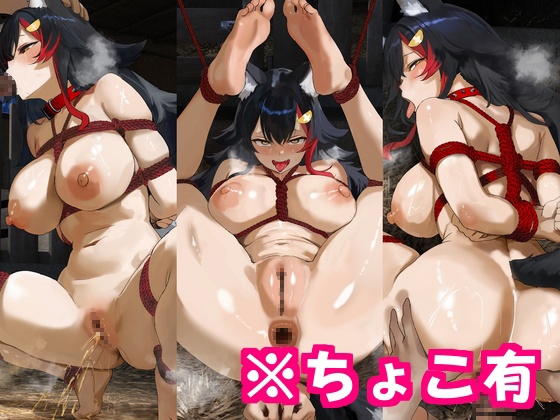
The technical body that the aesthetic of kinbaku rests on: a small set of standard knots, a practical understanding of nerve anatomy, and a consent protocol that runs continuously through every minute of a scene.
Overview
Rope bondage fundamentals (Japanese: 縄縛り基礎, nawa-shibari kiso) is the foundational technical body of contemporary kinbaku practice. It encompasses the canonical entry-level knots, the materials and tools, the anatomical safety knowledge required for responsible practice, and the consent infrastructure that frames the practice as a whole.
The vocabulary distinction matters in Japanese practice. Kinbaku (緊縛) names the formal Sino-Japanese term with strong aesthetic and literary connotations: the term used in stage performance, photographic publication, and the more formal community register. Nawa-shibari (縄縛り) and the abbreviated shibari (縛り) are the more everyday Yamato-Japanese vocabulary, used for the practical-skill side of the same tradition. In international BDSM communities, the loanword shibari covers the wider field with the formal kinbaku reserved for the most aesthetically marked work.
Rope and tools
The standard material for traditional Japanese practice is jute (Japanese: 黄麻, koma) rope of approximately 6 mm diameter, in 7-8 metre lengths, with two pieces used together as the working unit. Jute is preferred for its balance of grip and friction; new jute requires preparation (light flame-singeing, boiling, or beeswax treatment) to remove oils and loose fibres before use.
Synthetic ropes (nylon, polypropylene) are durable but more slippery, with knots requiring additional securing. Cotton rope is soft and forgiving for beginners but stretches and is unsuitable for extended hold. The choice of material depends on practice purpose, the bottom’s skin sensitivity, and ambient conditions.
The single essential safety tool is a pair of EMT shears (emergency-medical-technician trauma shears), which can cut rope rapidly in an emergency if a tie tightens unexpectedly or if the bottom experiences neurological or circulatory complications. The international community standard is that no one handles rope without shears within reach.
Foundational tie types
The conventional progression through the foundational tie types begins with simple wrist binding and proceeds through progressively more complex forms.
The single-column tie (handcuff knot) binds the wrists together as a single unit. The behind-the-back version is the most-used basic form; the front version permits a different positional grammar and is sometimes preferred when chest access is needed.
The takate-kote (高手小手, “high-hand, small-hand”) is the canonical Japanese behind-the-back tie. It begins with wrist binding behind the back and extends upward to incorporate the upper arms, with characteristic horizontal wraps across the front and back of the chest. The tie is the single most-cited classical shibari form and is the foundational tie that further work generally builds on.
The kikkou-shibari (亀甲縛り, “tortoise-shell tie”) creates a hexagonal lattice pattern across the chest and torso, with rope passing around and between the breasts to produce a striking visual decoration. The tie is one of the most photographed and stage-performed Japanese ties and is a visual reference point for the tradition.
The chou-shibari (蝶縛り, “butterfly tie”) binds the arms behind the back in a way that opens them to a butterfly-wing shape. The position requires substantial shoulder flexibility and is treated as an intermediate-level rather than introductory tie.
Single-leg and double-leg ties extend the basic grammar to the lower body.
Tsuri (吊り, suspension), in which the bottom is partially or fully lifted from the ground, is the technically and safety-wise most demanding category. The conventional teaching is that suspension is the highest-risk form of the practice and that practitioners should not attempt it without extensive supervised training. Akechi Denki’s Kinbaku Nyumon (2003) is one of several Japanese reference texts that recommend at least thirty hours of supervised practice in the takate-kote before any consideration of suspension.
Nerve safety
The most operationally important safety knowledge in shibari is the anatomy of the upper-limb peripheral nerves. The radial, median, and ulnar nerves run along well-defined courses through the arm, and inappropriate rope placement can compress them and produce sensory loss, motor weakness, or in serious cases extended nerve damage.
The single highest-risk location is the lateral aspect of the upper arm, where the radial nerve runs around the humerus in a position that is directly under the standard takate-kote upper-arm wraps. Sustained compression here can produce wrist-drop (radial-nerve palsy), an immediate functional impairment with recovery times ranging from days to months depending on the severity of compression.
The standard practice is therefore to check the bottom’s hand and finger function continuously throughout a scene: “Can you move your fingers? Can you feel sensation in this finger?” Skin colour changes (cyanosis), coldness, or numbness all indicate that rope should be loosened or cut immediately. The Master “K” Beauty of Kinbaku (2008) provides a detailed anatomical treatment of the relevant nerve-injury risks and has become a standard reference in the international community.
The avoidance principles are well established: knots should not be placed directly over the radial-nerve compression point on the upper arm, load should be distributed across multiple wraps rather than concentrated on a single line, and the brachial plexus (the nerve bundle in the shoulder region), the ulnar nerve at the inner elbow, and the femoral artery in the groin are all to be avoided as load-bearing points.
Consent and safewords
Shibari follows the broader BDSM consent infrastructure. Both the SSC (Safe, Sane, Consensual) and the RACK (Risk-Aware Consensual Kink) frameworks are widely used; they share the requirement that participants enter the practice with full information about its risks and freely consent to those risks.
Pre-scene negotiation covers the duration of the tie, the kinds of stimulation that are acceptable, any physical contraindications (previous injuries, joint problems, circulatory issues), and the safeword. The bottom’s continuous self-monitoring (numbness, coldness, difficulty breathing) is a key element, but the rope-top carries the structural responsibility for active observation, because the bottom’s awareness of these symptoms can degrade during extended scenes.
When the bottom’s mouth is gagged or speech is otherwise restricted, a drop sign (the bottom holds an object that they will drop to end the scene) is the standard alternative to a spoken safeword.
Aftercare
The post-scene return to default identity is structurally important to safe shibari practice, particularly for the bottom. Extended rope work produces both physical effects (rope marks, muscle stiffness, occasional numbness as circulation returns) and emotional effects (sub drop, the post-scene emotional recovery that some bottoms experience). The conventional aftercare practice includes warm covering, gentle movement, hydration, and time for both participants to debrief on the scene before separating.
Practice environment in contemporary Japan
Major Japanese cities have multiple nawa-kai (rope circles) and dedicated practice spaces where beginners can learn under supervision. Training tends to emphasise the takate-kote as the structurally important entry-level tie and progress slowly through the standard sequence. International instructors regularly visit Japan, and Japanese instructors travel to teach in London, Berlin, New York, and other major BDSM-community centres.
Master “K“‘s Beauty of Kinbaku (2008), Lee Harrington’s Shibari You Can Use (2010), and various Japanese-language reference texts have built up a substantial published literature. Online video instruction has proliferated since the mid-2010s. The standard advice in every responsible source is that text and video are supplements to, not substitutes for, supervised practice with experienced teachers.
Adjacent practices
Several adjacent practices share vocabulary or technical infrastructure with shibari.
Kotobuki-shibari (寿縛り) and other positional ties hold the bottom in a particular posture using rope as a fixative.
Kousoku (拘束) is the broader Japanese term for restraint, including non-rope forms (cuffs, belts, fabric).
Western rope bondage traditions exist alongside shibari and have produced their own technical conventions. The two traditions exchange knowledge in international workshops, with the Japanese tradition contributing the more developed aesthetic vocabulary and the Western tradition contributing some adjacent material-science and safety practice.
See also
Updated
References
- 『The Beauty of Kinbaku』 King Cat Ink (2008) — Standard English-language reference text on shibari, with anatomical safety detail.
- 『Kinbaku Nyumon (An Introduction to Kinbaku)』 Futami Shobo (2003)
- 『Shibari You Can Use: Japanese Rope Bondage and Erotic Macramé』 Mystic Productions (2010)
- 『Nihon Kinbaku-shi (Japanese Kinbaku History)』 Kawade Shobo Shinsha (1995)
- 『Different Loving』 Villard Books (1993)
Also known as
- shibari basics
- rope bondage fundamentals
- takate-kote
- kikkou-shibari
- ja: 縄縛り基礎
Related
- Kinbaku
- Desire to Be Restrained (Shibarareru)
- Wax Play (Rousoku Play)
- Kotobuki-shibari (auspicious-kanji shibari)
- Dark Elf (Fantasy Character Archetype)
- Mind Break (Hentai Tag and Narrative Type)
- Oyakodon (Mother-Daughter Threesome Trope)
- CBT (Cock and Ball Torture)
- Gothic Lolita
- Leotard
- Masochism
- Piercing Fetish