“CG Collection (CG-shu)” works on DLsite
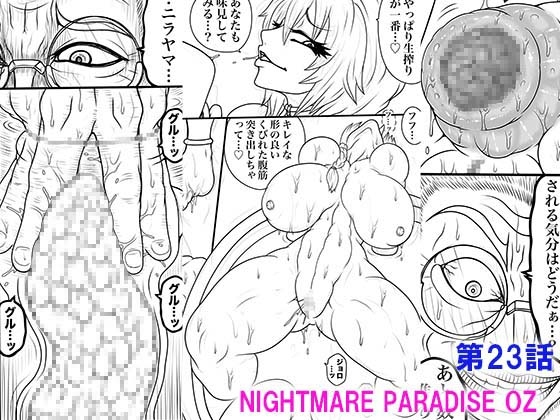
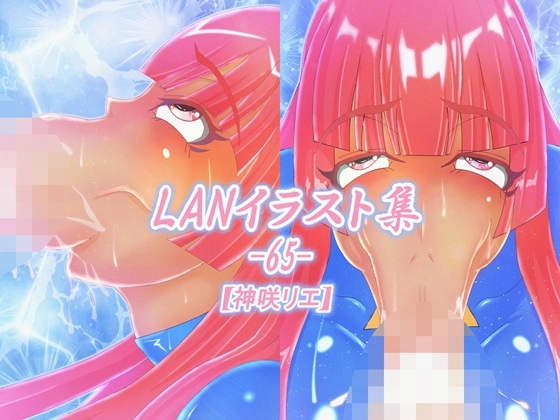
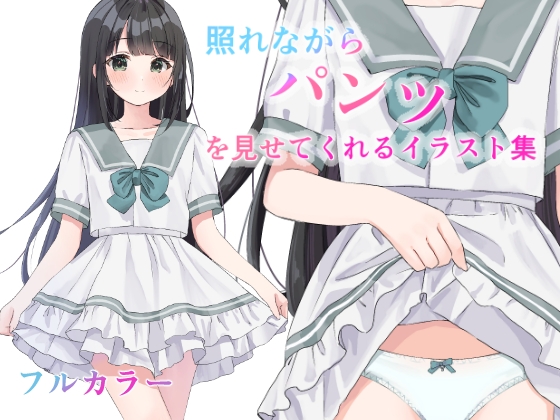
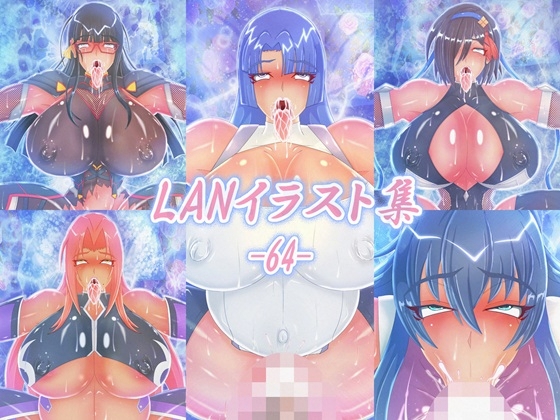

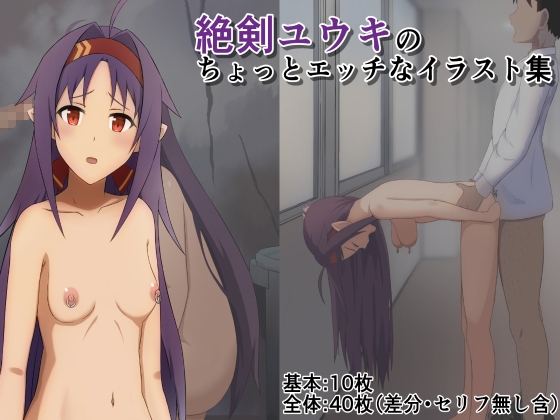
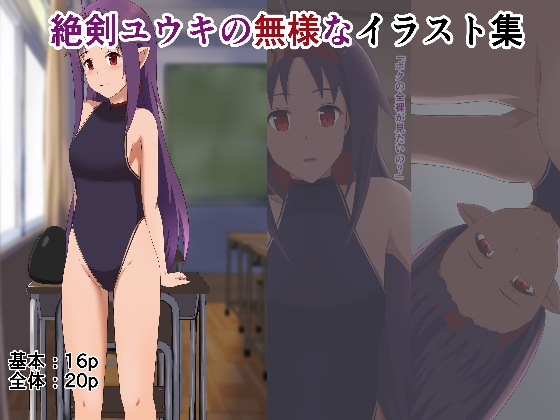

Several dozen CG illustrations with short captions, packed into a ZIP file and distributed: no panel layout, no balloon, just a sequence of finished pictures carrying a story or a scene. The form grew, in step with digital painting and download distribution, into one of the principal work-formats of contemporary Japanese doujin culture.
Overview
CG-shū (CG 集, CG-shū; English: CG collection, CG set, illustration set) is the doujin work-format that compiles several dozen computer-graphics illustrations with brief accompanying text into a single product. The article treats it as a digital-era principal work-format alongside doujinshi and eromanga, with DLsite, FANZA, pixiv FANBOX, and Fantia as the principal distribution infrastructure. The article covers the contemporary Japanese CG-shu form and the post-2022 surge of AI-generated CG-shu.
A CG-shu is, in its base configuration: (1) a set of several dozen illustrations (typically 20–100); (2) accompanied by brief text — caption, dialogue, monologue; (3) presented as a continuous sequence; (4) distributed in electronic-file format (ZIP, PDF). Adult-content sets are termed adult CG-shu or R-18 CG-shu and are the principal subject of the article.
The compositional feature of the form is that it does not use the panel layout, speech balloons, and tone work of manga. Each illustration is in principle a complete picture (a standing figure, a full-body image, a situation image), and the text — several lines to a dozen-plus — sits below or on a separate page. The reader proceeds through the illustrations in order, with the text supplying the situation, the psychology, and the dialogue.
The narrative density varies considerably by circle. Some configurations are close to a pure illustration collection with thin captions; others place a short-story-grade text quantity alongside; and at the upper end of the gradient manga-style CG-shu and dialogue-rich CG-shu approach the verge of panel-style layout. The latter end blurs with eromanga.
Etymology
CG is the abbreviation of computer graphics, in wide use across art, video, and game industries from the 1980s. The form-name CG-shu settled in doujin culture during the late 1990s and early 2000s, when illustrations digitally coloured on PC-9801 and Windows platforms began to be distributed on CD-R.
The term was used to distinguish the digitally produced work from earlier illustration collections and art books produced from hand-drawn originals. With most current illustration produced digitally, CG-shu is now a designation of the work-format (illustration sequence with text) rather than the production technique.
In international usage, CG set, illustration set, and artbook coexist; in some cases the Japanese-language-origin CG-shū is used directly in English-language fan and platform vocabulary.
History
Foundation period (late 1990s)
In the late 1990s the spread of digital-colouring tools (Photoshop, Painter) and the price-drop of CD-R drives produced a distribution style in which makers burned their CG onto CD-R for circulation at Comiket. The early sets were small — a handful or a dozen-plus illustrations with sparse text.
From the late 1990s through the early 2000s, three parallel forms coexisted: website public release of self-produced CG, sale of digital originals, and CD-R doujin distribution. The CG-shu of the period concentrated on (1) doujin / fan-art of popular works and characters and (2) original short-form situation sets.
2000s: the DLsite and FANZA distribution era
In the 2000s, the establishment of download-distribution platforms — DLsite (1996), DMM (now FANZA), Toranoana, Melonbooks — moved the primary distribution from physical CD-R to ZIP-file download sales.
A standard work-design optimised for the DLsite distribution form consolidated: (1) cover image plus four-to-six sample images; (2) thirty-to-eighty illustrations in the main body; (3) a text quantity of several thousand to several tens of thousands of characters; (4) a ZIP file of several tens to several hundred megabytes. Pricing converged on the ¥500–¥2,000 band. The form was recognised, work-by-work, as higher in revenue-per-unit-of-effort than panel-style doujinshi.
The principal adult-CG-shu sub-categories that emerged were: (1) fan-art-side work derived from popular anime, game, and VTuber characters; (2) original-situation-side work specialising in particular preferences (NTR, training, tentacle, family-themed); (3) novel-and-game-leaning work with branching and multiple heroines.
2010s: pixiv FANBOX and Fantia
In the late 2010s the establishment of monthly-subscription creator-support platforms — pixiv FANBOX (2018), Fantia (2017), Patreon — added new options to the CG-shu distribution model.
On these platforms (1) monthly supporters in the few hundred to few thousand yen range receive (2) in-progress CG, differential variations, and advance releases on a continuous basis, while (3) the completed version is sold as a one-shot CG-shu on DLsite or FANZA. The hybrid model supports the production of large CG-shu — half-year to one-year production cycles — through stable monthly revenue.
2020s: the surge of AI-generated CG-shu
From 2022, the general release of image-generation AI (Stable Diffusion, NovelAI Diffusion) substantially transformed the CG-shu production environment. With generative AI, an illustration that once took several hours to several days to produce by hand can be generated in tens of seconds to a few minutes, in volume.
Through 2023 and 2024 the AI-generated CG-shu category was injected onto DLsite and FANZA in volume and came to account for a substantial share of monthly upload volume. The reactions that followed: (1) opposition from hand-drawing artists; (2) copyright dispute around the inclusion of existing work in AI training data; (3) platform-side responses, including mandatory AI-tag display and category separation.
DLsite introduced an AI-generated tag policy in 2023 with explicit AI labelling. Fantia and pixiv FANBOX followed similar policies. The market separation between hand-drawn and AI-generated work continues to evolve in flow.
Distinction from eromanga
CG-shu and eromanga both express sexual subject matter through still images plus text, but the compositional principles are different at root.
| Item | CG-shu | Eromanga |
|---|---|---|
| Base unit | Single illustration | Panel |
| Page composition | One picture per page | Multiple panels per page |
| Text | Caption / monologue weighted | Balloon / SFX weighted |
| Time progression | Each picture an independent moment | Inter-panel continuity |
| Production effort | High per-picture finish | Panel-and-tone load |
CG-shu weights the finish of the single image over temporal continuity; eromanga weights inter-panel continuity and rhythm. The same artists frequently work in both forms, and the choice between the forms is made by subject and structural intent.
Distinction from commercial CG collections
The commercial publication line — CG collection, art book, artbook — differs from the doujin CG-shu in several ways. Commercial CG collections are issued as (1) official setting-material books for games and anime, original-art books, character collections, and (2) individual-illustrator original collections, in A4 full-colour format, 100–200 pages, in the ¥3,000–¥8,000 price band. Adult subject matter is limited; the line is primarily all-ages.
Doujin CG-shu, by contrast, are (1) individual or small-circle productions; (2) primarily adult; (3) primarily DL-distributed; (4) ZIP- or PDF-formatted. Hybrids exist (reprints of commercial work, commercial artists’ individual activity), and the boundary remains fluid.
Copyright and legal points
Fan-art-side CG-shu carries the relation to original-work copyright as translation right and reproduction right; the broad pattern in Japan has been original-side toleration / guideline regulation through which a large body of work is permitted in practice. CG-shu work derived from VTuber and streamer subjects raises separate image-rights and publicity-rights questions.
For adult CG-shu the Penal Code Article 175 obscenity-distribution offence determines distribution-platform mosaic obligations. International distribution (English-language, uncensored versions) raises separate questions of compatibility with the destination jurisdictions.
AI-generated CG-shu raises (1) copyright-infringement questions around the training data, (2) authorship questions about the generated images themselves, (3) rights-violation questions when real persons or existing characters are reproduced. Case law and platform guidelines are currently being assembled.
Cultural notes
CG-shu is positioned in doujin-culture research — Nagayama Kaoru’s Eromanga Studies (2006) and others — as one of the principal digital-era work-formats alongside panel-style eromanga, doujinshi, and doujin games.
In the DLsite and FANZA distribution statistics, CG-shu sits alongside manga, voice, and game as one of the principal categories; thousands of new sets per month continue to be added. The AI-generation technology has fluidised the landscape, but the demand for high-quality hand-drawn work has continued.
Related terms
Updated
References
- 『Eromanga Studies』 East Press (2006)
- 『Erotic Comics in Japan: An Introduction to Eromanga』 Amsterdam University Press (2021)
- 『The World of Hentai: A Cultural History of Sexual Anime』 Routledge (2019)
Also known as
- CG collection
- CG set
- CG pack
- illustration set
- ja: CG集
Related
- Doujinshi
- Eromanga
- Comiket (Comic Market)
- Dakimakura cover
- DLsite
- FANZA
- Illustration collection (doujin art book)
- AI-Generated Erotica
- Doujin video (independent adult video)
- Doujin game (Japanese self-published video games)
- Doujin audio (Japanese independent audio works)
- Nijisousaku (Derivative Fanwork)