“Dakimakura cover” works on DLsite
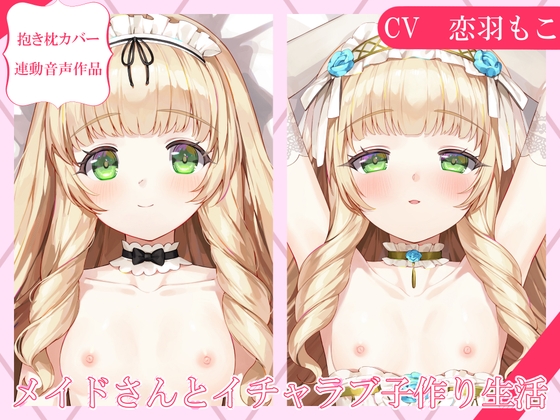
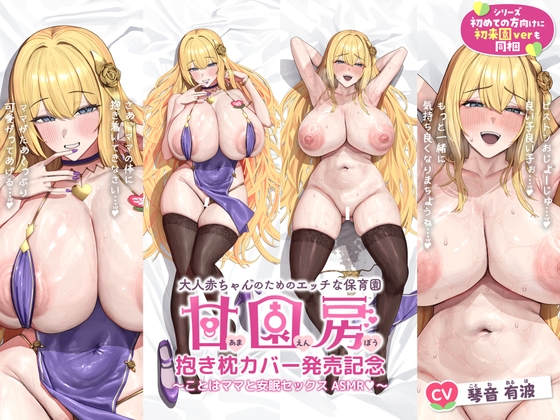
A 160 cm rectangle of cloth, printed on both sides with a life-size character. Folded on a circle’s table at a convention, sold by sequence number, returned home tightly rolled. The dakimakura cover is one of the few merchandise categories the doujinshi economy invented entirely on its own, and the romanised Japanese name has become the international standard for it.
Overview
A dakimakura cover (Japanese: 抱き枕カバー, dakimakura kabā) is a fabric pillowcase, roughly 150–160 cm by 50 cm, printed on both sides with a life-size illustration of a single character. The case is sold separately from the pillow insert that fits inside it; users buy the inserts once and the covers repeatedly, swapping them as they would swap shirts. The two-sided printing is part of the form’s logic: one side typically faces the world, the other is concealed against the bed.
The four constitutive elements of a dakimakura cover are a life-size or near-life-size character illustration, a long-rectangular cloth of approximately 150–160 cm × 50 cm, an independent printed image on each face, and a design that presupposes an internal pillow insert. These conventions have been stable since the form’s mid-2000s consolidation.
The product comes in four broad commercial registers. Doujinshi-circle covers carry fan-derivative characters from existing commercial works. Official covers are licensed merchandise for an anime, eroge, or game. Original-character covers carry an independent designer’s own characters. Live-action covers, finally, carry photographed gravure or AV performers. At Comic Market and other circuit conventions, dakimakura covers are now a primary merchandise category alongside printed booklets — often distributed in small print runs and acquiring a secondary-market premium afterward. The supply chain is supported by a layer of specialist printers — Pixiv FACTORY, Character Maker, Kansai Bijutsu Insatsu, and others — who run small batches for individual creators.
Etymology
The Japanese noun dakimakura (抱き枕) literally compounds 抱き (“embracing”) and 枕 (“pillow”); it is the everyday Japanese word for a long-form body pillow used for sleep posture and warmth, an item of bedding that has been a normal household product since the late twentieth century. Dakimakura kabā (抱き枕カバー, “body-pillow cover”) is the case slipped over the pillow.
The shift from generic bedding to anime merchandise sits in the cover, not the pillow. The pillow itself is unchanged. What is new is the printing of a particular character on the cover, and the fact that buyers acquire the cover for the character and not for the pillow. The wider Japanese vocabulary of doll-pillow (ドール枕) reflects the same logic: the cover treats the character as a kind of two-dimensional body-double that can be embraced.
In English-speaking fandom the standard noun is dakimakura, used both for the cover alone and for the cover-and-pillow combination. Body pillow is current as a more general English term but does not carry the specifically anime-merchandise sense. The Japanese name has held in international usage because the kink-and-aesthetic content it indexes is structurally specific, and the loanword carries that specificity better than any pre-existing English vocabulary.
History
The 1990s: prehistory in character merchandise
Through the 1990s, Japanese character merchandise diversified rapidly: posters, telephone cards, wall scrolls, mouse pads, and limited-edition tankobon obi all carried two-dimensional characters into physical objects, and a handful of eroge and anime productions experimented with full-body printed cloth as an extension of that category. The first dakimakura covers proper, both as official merchandise from a small number of adult publishers and as low-print-run doujinshi-circle products, date from the very end of the 1990s and the early 2000s.
Early-to-mid 2000s: the form consolidates
The form’s institutional consolidation came at the convention circuit. Through the early 2000s, dakimakura covers became a regular component of doujinshi-circle merchandise tables at Comic Market and other conventions, alongside the printed booklets and CG sets the same circles distributed. The supply-side enabler was a fall in printing costs: high-resolution dye-sublimation transfer printing onto stretch fabric became commercially viable for small print runs through the early 2000s, and a new generation of printers — by the mid-decade including Kansai Bijutsu Insatsu, Pixiv FACTORY, and Character Maker — began offering full-colour double-sided fabric printing on quantities as low as a single piece. This matched the doujinshi economy’s distribution shape, and the category expanded quickly.
Late 2000s: the moe boom and merchandise economics
The late 2000s saw dakimakura cover sales accelerate as the wider moe boom made character-attachment merchandise mainstream within otaku culture. The cover provides a particularly direct material expression of the relationship the moe vocabulary names: a specific character, life-size, two-dimensional, present in the bedroom. CESA’s industry surveys of the period folded character-attachment products into their accounts of the otaku-content economy, and dakimakura covers were one of the more prominent examples cited.
2010s: online ordering and the international market
In the 2010s, online print-on-demand services lowered the cost of cover production further. Pixiv FACTORY, Character Maker, SUZURI, and similar platforms allowed individual creators to order single-piece covers in full colour with a choice of fabrics, and the form expanded outward from doujinshi circles to original-character covers, single-fan custom covers, and life-action photographic covers. In parallel, official merchandise programmes from anime studios, eroge publishers, and gravure agencies expanded the legitimate market.
The English-language dakimakura market emerged as an independent ecosystem in the same period. Anglophone independent creators began producing covers, English-language convention dealers stocked them, and platforms like Etsy and Redbubble carried both licensed and unlicensed designs. Reimport effects appeared in both directions: aesthetic conventions developed in Anglophone Western fan-art communities crossed back into Japanese circle output, and vice versa.
2020s: VTubers, subscription platforms, and continued growth
Through the 2020s, the form has extended into VTuber merchandise, streamer merchandise, and rewards on subscription platforms (OnlyFans, myfans, and similar). Limited-run cover drops are now a stable component of fan-club perks and live-event merchandise across both two-dimensional and live-action sectors.
Specifications
Sizes and fabrics
Three size categories are standard. The Japanese reference size is 160 cm × 50 cm, fitted to the standard domestic dakimakura insert. A reduced 150 cm × 50 cm version is also widespread. Smaller forms (100–120 cm × 35 cm) circulate under the labels mini or medium and are typically sold for desktop use rather than as bedding. The size is determined by the supply of available pillow inserts, which means national markets with different sleeping-product ecosystems sometimes have different default sizes.
Fabric choice falls into four standard registers. Two-sided sheeting (cotton-based) is absorbent and breathable. Two-sided peach-skin (synthetic) gives a smooth touch. Two-sided nylon-treshe gives the strongest colour reproduction. Two-sided tricot offers stretch. Different artists and circles have settled preferences, and the fabric choice is part of the product’s identity.
Printing
The standard production chain runs: original artwork commissioned and prepared in the long-rectangular layout, with separate front and back compositions; high-resolution data submitted to a specialist printer; printing by dye-sublimation transfer or direct digital onto the chosen fabric; sewing into a finished case (zippered, envelope-style, or with side-tie closures); inspection and packaging. Dye-sublimation transfer onto synthetic fabric is the dominant method for high-quality covers and offers strong colour reproduction with good wash durability.
Pricing
Doujinshi-circle covers sell for roughly ¥7,000–15,000 (around USD 50–100) for limited print runs. Official licensed covers sit in a similar range. Print-on-demand single-piece orders through Pixiv FACTORY and similar services tend to cost ¥5,000–10,000. Limited editions, special fabrics, and specialty processes can push the price considerably higher.
Adjacent forms
Illustration sets and CG sets
Many of the same circles producing dakimakura covers also produce printed illustration sets and CG sets — collections of the artist’s character work in printed-album or digital form. Convention tables routinely carry all three product types side by side, and fans treat them as integrated collection objects.
Cosplay parallels
Cosplayers occasionally produce live-action recreations of a character’s dakimakura-cover pose or costume, sometimes for cosplay photo books and sometimes as solo portraits. The crossover is small but recurrent, and the cover and the cosplay frequently share the same source illustration.
Tapestries
Long-form character tapestries — wall-mounted printed cloth in the same long-rectangular shape — are a parallel format that often shares illustration assets with the dakimakura cover. Many circles release a wall-tapestry version and a pillow-cover version of the same character drawing as a paired pair.
Live-action and VTuber covers
Photo-based covers for gravure idols, voice actors, AV performers, and OnlyFans / myfans creators are produced under broadly the same logic as illustrated covers, and have become a stable element of fan-club merchandise programmes. VTuber covers — using Live2D, 3D-rigged, or standalone illustrations of streamer avatars — became a major product category in the 2020s.
Cultural framing
As material moe
In Japanese-language criticism of moe culture and character consumption (Hiroki Azuma’s Otaku: Japan’s Database Animals, the Moe Manifesto interviews collected by Patrick Galbraith, and others), the dakimakura cover figures as a particularly concrete example of moe attachment translating into material form. The structure the cover makes explicit — that the relationship to the character can be realised, in modest measure, through a household object — has been read both as a critique of contemporary fan-consumption patterns and as a productive feature of them, depending on the analyst.
Convention-economy role
At Comic Market and other circuit conventions, dakimakura covers occupy the same hallowed slot as new printed booklets in the structural sense — that is, they are typically distributed in limited print runs, regularly sell out, and acquire secondary-market value after the event. Mid-tier circles can use a single cover release as a primary income source for a season.
Visibility and disagreement
Each surge of mainstream visibility for otaku culture has produced a recurrent round of public commentary on the dakimakura cover, ranging from human-interest curiosity to sharper objections grounded in arguments about character objectification, gender representation, or the framing of two-dimensional intimacy. Those conversations are unresolved, and they tend to recur with each generation that encounters the form for the first time.
See also
Updated
References
- 『Otaku: Japan's Database Animals』 University of Minnesota Press (2009) — Originally published in Japanese as 動物化するポストモダン (2001); foundational on character-database consumption.
- 『The Moé Manifesto: An Insider's Look at the Worlds of Manga, Anime, and Gaming』 Tuttle Publishing (2014)
- 『エロマンガ・スタディーズ』 East Press (2006)
- 『コミックマーケット 30's ファイル』 Comiket (2005)
Also known as
- body pillow cover
- character body pillow
- anime body pillow
- dakimakura case
- ja: 抱き枕カバー
- ja: だきまくらかばー