Adult Anime (Broad-Sense Animated Erotica)
✎ 本文編集 (admin) 🖼 画像編集 (admin)“Adult Anime (Broad-Sense Animated Erotica)” works on DLsite



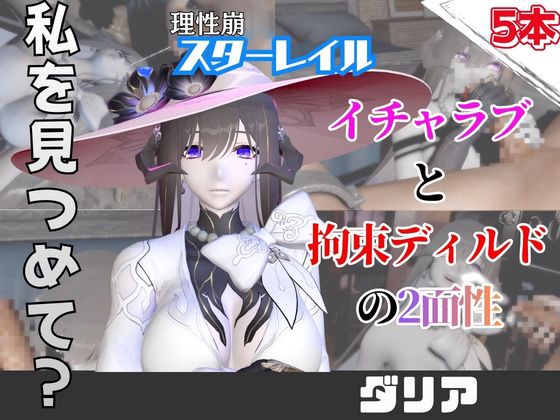
A category in Japanese animation that exists alongside, but not identical with, the international loanword hentai. Adult anime in the broad Japanese sense covers everything from R-15 late-night television to explicit R-18 original video productions; the international term hentai tends to denote only the explicit pole. The article uses adult anime in the broader Japanese sense.
Overview
Adult anime (アダルトアニメ, adaruto anime) is the broad-sense Japanese category of animated works whose principal subject is sexual or erotic content. Domestic terminology uses erotic anime (エロアニメ, ero anime), adult-targeted anime (成人向けアニメ), and 18-restricted anime (18 禁アニメ) interchangeably, with finer gradations for the R-15 and R-18 tiers. In English-language fan discourse the body of work is most often subsumed under the loanword hentai anime, although that term in English usage tends to denote a narrower, more explicit subset than the Japanese parent category.
The medium-defining feature is that adult anime is animation rather than live action. Drawn or computed motion does not require physical subjects, so the work can depict situations, body morphologies, or fantastical settings that live-action production cannot reach. This medium specificity is the principal reason the category developed as a distinct industrial branch rather than as a sub-line of live-action adult video production.
Position within Japanese adult media
Adult anime sits alongside three neighbouring categories in the working classification of Japanese adult media: live-action AV, erotic manga, and adult video games including visual novels. Animation occupies a particular niche within this landscape: it shares the drawn-image aesthetic and freedom from physical subjects with erotic manga, but adds the temporal and acoustic dimensions of moving image and voice.
The category is regulated under Penal Code Article 175 in the same manner as live-action adult video, with industry-standard genital obscuration at the production stage. The application of the Child Pornography Act to drawn animated images of fictional minors has been a continuing point of legal and international debate; Japanese law currently treats wholly drawn imagery as outside the criminal statute, while several other jurisdictions extend their child-protection statutes to drawn material.
The OVA origins (1980s)
The institutional emergence of adult anime as a distinct industrial category is bound to the rise of the original video animation (OVA) format in the early 1980s. OVA refers to animation produced for direct release on consumer video media (VHS, LaserDisc), bypassing the terrestrial-television self-regulation regime. The OVA format is conventionally dated from the 1983 release of Dallos (Studio Pierrot), and the format’s freedom from television-broadcast constraints made it the technical and commercial substrate for adult animation.
The first major commercial success in adult OVA was the Cream Lemon (Kuriimu Remon) series, whose first volume Bi Imouto Baby was released in August 1984 by Fairy Dust. The series ran for more than thirty volumes across the 1980s and 1990s, with substantial internal genre variation (the POP CHASER SF entry, the Kuroneko-kan fantasy entry, others). The commercial viability of Cream Lemon drew further entrants — AIC, Japan Home Video, and others — and the late 1980s saw the consolidation of the OVA adult-animation industry.
By the late 1980s and early 1990s, the category had begun to differentiate internally. The La Blue Girl (Injuu Gakuen La Blue Girl) series, adapted from Toshio Maeda’s manga and released as OVAs from 1992 by Daiki, made tentacle imagery a foregrounded element and went on to become a defining international reference for the perception of Japanese adult animation abroad. Maeda’s earlier Urotsukidoji OVA series (1987–1995) preceded it in the international circulation pattern.
Genre fragmentation (1990s–2000s)
The 1990s and 2000s saw two parallel developments in adult anime. First, OVA adaptations of eroge PC visual novels became a standard sub-line, exploiting the existing readership of the source games. Pink Pineapple, Milky, and PIXY emerged as the principal labels in this segment. Second, the genre-fragmentation pattern observable in live-action adult video — by performer type, by kink, by act — propagated into adult animation. The result is a category whose internal taxonomy now closely mirrors that of live-action AV, with additional sub-categories that are specific to drawn media (the more fantastical and morphologically extreme genres that live action cannot reach).
The medium-specific advantages of animation — fantastical settings, body morphologies that exceed live-action range, supernatural or transformative scenarios — remain the principal reason adult animation continues as a distinct category rather than being absorbed into adult video. Genre clusters such as tentacle, transformation, and fantasy roleplay remain identifiably adult-anime-specific even where their kink content has live-action counterparts.
International reception under “hentai”
The international reception of Japanese adult animation is structured by the loanword hentai. The Japanese term hentai (変態), in its standard Japanese meaning, denotes sexual perversion in a broad sense, often used colloquially as a pejorative. In English-language usage from the 1990s onward, hentai narrowed to denote Japanese-origin sexually explicit drawn media — animated, manga, and game — collectively. This semantic narrowing of a loanword is documented by Galbraith and others.
The distribution channels for the international reception developed in three phases. First, North American specialist publishers — Anime 18, Critical Mass Communications, Central Park Media — produced licensed translations of OVA titles for VHS and (later) DVD release, beginning in the mid-1990s. Central Park Media’s English release of La Blue Girl from 1995 was a particularly visible early case. Second, fan translation and unofficial circulation operated alongside the licensed channel, especially for titles not commercially released abroad. Third, online streaming and download services have become the dominant distribution form since the late 2000s.
The reception has produced its own derivative cultural production. Hentai as understood in the English-language fan community is now a recognised genre rather than a borrowed term, with English-language criticism, fan production, and commercial publication operating around the category.
Current production and distribution
The 2010s and 2020s have seen the shift from physical media (DVD, Blu-ray) to streaming and download distribution. Domestic distribution centres on DMM (now FANZA) and DLsite; international distribution operates through dedicated English-language streaming sites. The physical-package market has contracted while the download and streaming markets have continued to grow.
Production remains concentrated among specialist labels — Pink Pineapple, Milky, Peter Pan, PIXY, Mary Films — though crossover between mainstream animation production staff and the adult sub-industry is widely acknowledged as a working pattern within the broader Japanese animation labour market.
Legal and regulatory context
Article 175 obscuration
Adult anime is subject to Article 175 obscenity regulation in the same way as live-action adult video. Industry self-regulation operates the mosaic obscuration standard, with platform-specific variations in the application of the standard.
Child Pornography Act and drawn imagery
Japanese law’s Child Pornography Act (enacted 1999, amended 2014) regulates depictions of real children. Drawn or animated depictions of fictional minors, which lack a real subject, fall outside the criminal statute under the current interpretation. International criticism — from the UN human-rights bodies and child-protection organisations in several jurisdictions — has been a long-running source of pressure for the extension of the statute to drawn imagery. The 2010 Tokyo Metropolitan Youth Healthy Development Ordinance proposal (the non-existent youth regulation proposal) drew industry-wide opposition and is a recurring reference point in the regulatory debate.
Zoning
The category is subject to the standard adult-content zoning regime: physical retail distribution operates within the adult-content zone of stores and is restricted from general retail; online platforms operate separate adult-tier domains or applications with age-gating.
Cultural reception
Within Japanese anime studies, adult animation is treated as an integrated part of the postwar animation industry rather than as a separate phenomenon. Tsugata Nobuyuki’s industrial-history work positions adult OVA within the wider OVA development trajectory. In English-language scholarship, Patrick W. Galbraith’s The World of Hentai (2019) is the principal scholarly treatment of the subject, alongside Mark McLelland’s work on postwar Japanese sexual culture. Kaoru Nagayama’s Eromanga Studies (2006), though focused on manga, treats animation as an adjacent and overlapping category.
See also
Updated
References
- 『The World of Hentai: A Cultural History of Sexual Anime』 Routledge (2019)
- 『Erotic Comics in Japan: An Introduction to Eromanga』 Amsterdam University Press (2021)
- 『Love, Sex and Democracy in Japan during the American Occupation』 Palgrave Macmillan (2012)
- 『Anime: A History』 British Film Institute (2013)
- 『OVA Daizen 1983-1999』 Tatsumi Publishing (2000)
- 『Eromanga Studies』 East Press (2006)
Also known as
- adult-targeted anime
- erotic anime (broad sense)
- R-18 anime
- R-15 anime
- OVA erotica
- 18-restricted anime