Ase (sweat)
✎ 本文編集 (admin) 🖼 画像編集 (admin)“Ase (sweat)” works on DLsite
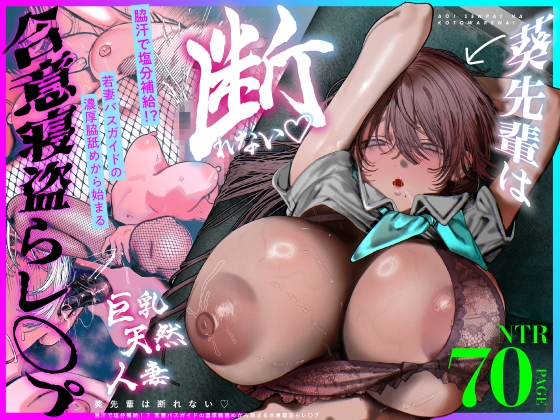
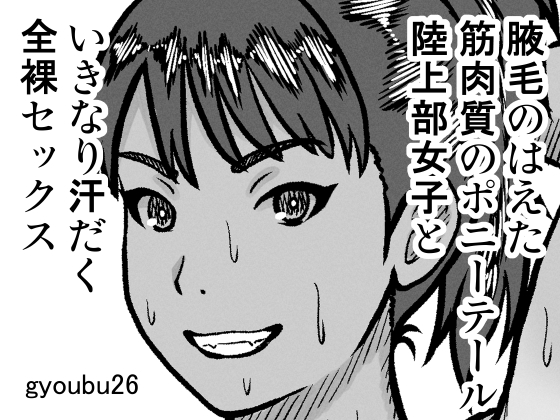




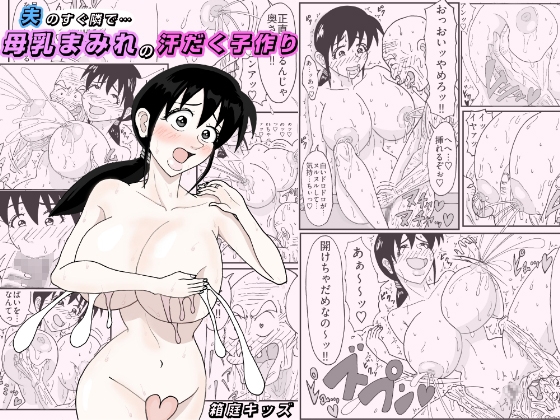

After a summer workout, in a sauna, during a tense interview. Sweat is the body’s most everyday fluid, translating internal temperature and emotional state onto the surface of the skin. In sexual contexts, however, sweat carries more than its excretory role. A damp skin reads as a sign of arousal, a soaked garment lifts the body’s contour to visibility, and a partner’s scent is imprinted as long-term emotional memory.
Ase (Japanese: 汗, ase; English: sweat / perspiration; Latin: sudor) is the bodily fluid secreted by sweat glands (glandulae sudoriferae), functioning primarily as a thermoregulatory and emotional-response medium. In sexual contexts, sweat appears as: (1) a secondary product of arousal-related sympathetic activation and heat production; (2) the direct consequence of physical contact and motion; and (3) a sign that operates simultaneously as visual sheen, olfactory cue, and tactile signature.
Distinction in vocabulary
The English vocabulary divides the fluid across register. Perspiration operates in clinical and polite contexts (“excessive perspiration” in clinical descriptions), sweat operates as the everyday vernacular term, and diaphoresis operates in medical-formal writing. Glow exists as an evasive euphemism in some social registers (“women glow, men perspire, beasts sweat”).
The Japanese vocabulary’s ase (汗) covers all these registers in a single neutral word, with hakkan (発汗) as the Sino-Japanese medical compound. The Japanese term lacks the English vocabulary’s polite-register avoidance, and direct reference to sweat in everyday speech is not socially marked. Related Japanese vocabulary includes tama-no-ase (玉の汗, “bead-of-sweat”), ase-daku (汗だく, “soaked in sweat”), and ase-bamu (汗ばむ, “to begin to sweat slightly”). The first of these is a poetic-literary expression with long classical-Japanese literary use.
In sexual-aesthetic vocabulary, the Japanese nure-hada (濡れ肌, “wet skin”) and kagayaku-hada (輝く肌, “glistening skin”) are established aesthetic compounds tying surface moisture to visual appeal. English-language adult-content vocabulary uses glistening, slick, and sheened in roughly the same aesthetic register.
Overview
Human sweat is approximately 99% water, with the remaining 1% comprising sodium chloride, urea, lactate, ammonia, fatty acids, proteins, and trace pheromone-candidate compounds. Sweat-gland density per body-surface-area is exceptionally high in humans relative to other mammals, and the human lineage’s high-capacity perspiration was an evolutionary acquisition supporting endurance locomotion. The endurance running hypothesis (Bramble and Lieberman, 2004) frames high-capacity human sweating as a key enabler of persistence-hunting in human evolutionary history.
In sexual contexts, sweat operates simultaneously as: a byproduct of arousal-related sympathetic activation and heat production; the direct consequence of physical contact and motion; and a sign operating across visual, olfactory, and tactile modalities. Japanese culture has a particularly extensive vocabulary and visual-aesthetic tradition around sweat in this third sense.
Physiology
Two sweat-gland systems
Human sweat glands divide functionally and distributively into two systems.
Eccrine sweat glands (glandulae sudoriferae eccrinae) are distributed across approximately 2-4 million sites across the body surface, secreting clear low-viscosity sweat. The glands develop as embryologically-independent exocrine glands, with full function by early childhood. Eccrine sweat’s principal function is thermoregulation via evaporative cooling, under autonomic control from the anterior hypothalamic thermoregulatory centre.
Apocrine sweat glands (glandulae sudoriferae apocrinae) are distributed in restricted regions: axillary, areolar, anogenital, external auditory canal, and similar. Apocrine glands activate at puberty under androgenic control. The glands connect to hair follicles and secrete a more-viscous milky fluid containing lipids and proteins. Apocrine secretion is itself essentially odourless; the characteristic body-odour develops through skin-flora (corynebacteria, staphylococci) metabolism of secretion components into volatile short-chain fatty acids and thiols.
Recent literature has reported the existence of an intermediate apoeccrine gland type, with the classification of sweat-glands under continuing taxonomic review.
Three forms of sweating
Sweating divides by triggering input into three forms.
Thermal sweating is the response to elevated body temperature, with whole-body eccrine activation. It is the core thermoregulatory mechanism. Emotional sweating is the response to emotional input (anxiety, tension, sexual arousal), with restricted-region activation across palms, soles, axillae, and forehead. Both eccrine and apocrine glands contribute. Gustatory sweating is the response to gustatory input (spicy food), with facial and cervical region activation.
Sweating during sexual arousal is a complex compound response of thermal sweating (sympathetic activation and metabolic-rate elevation drive body-temperature rise) and emotional sweating (the emotional response itself). The Masters and Johnson (1966) four-stage sexual response model describes whole-body sweating (sweating reaction) as one of the recognised physiological indicators of the resolution phase.
Hormonal regulation
Sex hormones influence sweating capacity. Androgens (principally testosterone) drive apocrine-gland development, contributing to axillary and anogenital body-odour formation from puberty onward. Estrogens modulate the body-temperature setpoint, with the menstrual-cycle luteal phase (progesterone-dominant) raising basal body-temperature approximately 0.3-0.5°C. Pregnancy and menopause involve substantial autonomic-system fluctuation with corresponding sweating-pattern variation.
Sexual arousal activates hypothalamic oxytocin and vasopressin release, combined with adrenal-medullary adrenaline and noradrenaline release. The combined effect raises heart rate, blood pressure, and body temperature simultaneously, with the cascade terminating in cutaneous vasodilation and sweating-mediated heat dissipation.
Olfaction and sex
Sweat’s olfactory signature derives from skin-flora metabolism of secretion components. Axillary chemistry includes 3-methyl-2-hexenoic acid, 3-hydroxy-3-methylhexanoic acid (short-chain fatty acids), and 3-methyl-3-sulfanylhexan-1-ol (thiols). Component profile varies quantitatively and qualitatively with sex, genetic background, and dietary habits.
Human pheromone reception remains an academically-contested area, with debate over whether the vomeronasal organ (organum vomeronasale) is functionally active in adults. Reports of male-axillary-derived androstenone and androstenol affecting female menstrual-cycle synchronisation (McClintock effect, 1971) and emotional response have been published, though replication remains inconsistent.
Charles Spence’s Sensehacking (2021) treats olfactory input’s influence on memory, emotion, and partner-attraction-judgment from a multisensory-integration framework. The Wedekind et al. 1995 sweaty T-shirt experiment demonstrated correlation between MHC-genetic heterozygosity and partner-body-odour preference, supporting the view that sweat odour functions as an evolutionary partner-selection cue. The finding has been treated as a classical reference in the field, though subsequent replication has been variable.
Cultural representation
Shunga and ukiyo-e
In Edo-period shunga, sweat is used as a dynamic-tension element in sexual-scene depiction. Katsushika Hokusai, Utagawa Kunisada, and Kitagawa Utamaro’s shunga corpus includes sweat-saturated couples, dripping sweat, and steam-rising-from-skin depictions. The convention couples sweat with seasonal contexts (summer scenes, bathhouse settings) and intense physical motion.
Shirakura Yoshihiko’s Shunga (2002) reads the convention as a semiotic device for viewer-immersion: sweat ink-lines and light-wash technique inject moisture and warmth into the visual field. The reading frames sweat depiction not as realism but as participatory aesthetic.
Post-war wet-scene aesthetic
Post-war adult magazine and dramatic-comic nure-ba (wet-scene) aesthetic uses sweating skin to convey sexual-scene intensity. 1970s-onward dramatic comic magazines, erotic novels, and the Roman Porno film tradition established sweat-through-clothing, forehead-dripping sweat, and hair-stuck-to-skin as standard rhetoric of sexual-tension visualisation.
AV production
In AV production, sweat-glistening skin is treated as a key production-effect element conveying the reality of the body. Production-techniques include studio-air-conditioning manipulation to promote sweating, pre-shoot physical-exertion to elevate body temperature, and artificial sweating via spray-bottle application of glycerine-water solution.
Close-up wet-skin shots, sweat-running-across-breast tracking, partner-licking-forehead-sweat depiction, and similar sweat-centred set-pieces appear across AV genres. The 1990s-onward proliferation of high-resolution cameras enabled droplet-level sweat-rendering, with the resulting visual density a substantive elevation of the aesthetic.
Manga symbolism
Adult manga and doujinshi have developed an extremely articulated symbolic system around sweat depiction. The conventions include forehead, neck, between-breasts, and inner-thigh black-ink water-droplets; tightened-cloth contour-line treatment; and steam-and-sweat-vapour combined rendering. The conventions accumulate across decades of genre-tradition.
Specific genres deploy increased sweat-rendering as a high-arousal correlate: tentacle genre, sports-club genre, and confinement-genre productions all show sweat-rendering-density as direct correlate of scene-intensity. Exaggerated forms (sweat-splash, full-body sweat-sheen) operate as symbolic-amplification beyond the physiological reality of sweating.
Sweat-targeted preferences
Preferences with sweat as the central object of sexual interest operate as a recognised sub-category of fetish vocabulary. The category sub-divides by body-region, secretion-source, and contact-modality.
Axillary sweat preferences focus on apocrine-derived dense body-odour, with armpit-exposing garments, post-exercise axillae, and close-contact axillary access as central subject matter. Foot sweat preferences operate as a sub-category of foot-fetishism more broadly, with sock-and-stocking-trapped foot-moisture and damp-footprint imagery as central content. Whole-body sweat preferences focus on full-body post-exertion-or-coital sweat-state as a total aesthetic, integrating visual, tactile, and olfactory cues.
Within the broader category of body-fluid-focused preferences (saliva, breast milk), sweat is the most everyday and most accessible object, with the threshold for self-acknowledgement of the preference correspondingly low.
Cultural-anthropological framing
Karen Stollznow’s On the Offensive (2020) treats body-fluid linguistic-and-social taboo from the perspective of discrimination-discourse history. Sweat and body-odour-related avoidance has compounded with class, race, and gender markers historically, with the late-19th-century European deodorization hygiene-norm redefining sweat as something to be concealed and controlled. The norm formed the cultural foundation for the contemporary antiperspirant industry.
In sexual contexts, however, sweat operates as a recognised exception to deodorization norms. The phenomenon of a fluid normally avoided becoming positively-valenced as an emotional-evocative element in intimate scenes is structurally analogous to Mary Douglas’s Purity and Danger (1966) framework, in which “dirt is matter out of place” and category-inversion produces meaning.
The Japanese subcultural region has developed a distinctive vocabulary and visual-art tradition around sweat (“sweat-prone”, “wet skin”, “summer woman”) that bridges sexuality and seasonal-sensibility. The humid climate and the literary-tradition of treating sweat as a seasonal cue (the summer kigo in haiku) form the cultural foundation supporting the visual-art stylisation of sweat depiction.
Related Terms
Updated
References
- 『Guyton and Hall Textbook of Medical Physiology』 Elsevier (2020)
- 『Endurance running and the evolution of Homo』 Nature (2004) https://www.nature.com/articles/nature03052
- 『MHC-dependent mate preferences in humans』 Proceedings of the Royal Society B (1995)
- 『Sensehacking: How to Use the Power of Your Senses for Happier, Healthier Living』 Viking (2021)
- 『Human Sexual Response』 Little, Brown and Company (1966)
Also known as
- sweat
- perspiration
- diaphoresis
- ase
- ja: 汗
- ja: 発汗