Paizuri
✎ 本文編集 (admin) 🖼 画像編集 (admin)“Paizuri” works on DLsite
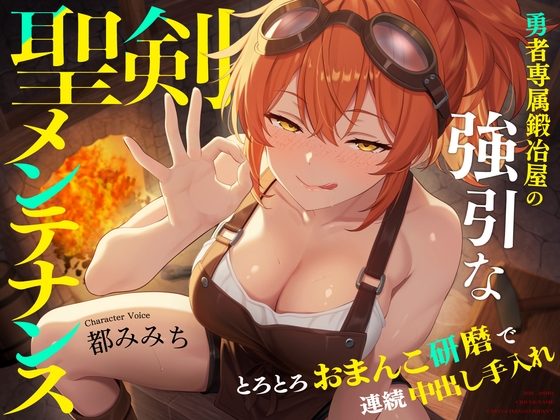
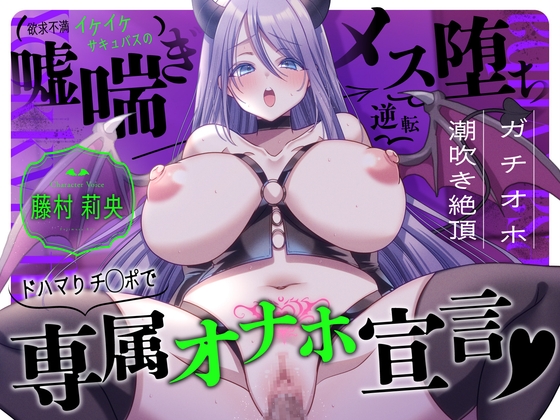

A trade-language word native to the Japanese adult-video industry, paizuri names a sexual act so closely tied to the country’s kyonyuu (big-breasts) economy that the two grew up together. The act exists in many cultures; the genre — and the loanword — is Japanese.
Overview
Paizuri (Japanese: パイズリ, pai-zuri) is the Japanese term for sexual stimulation of the penis between the partner’s breasts. The act appears in the adult media of every country with a developed adult-publishing economy, and English has its own vocabulary for it — titty fuck (vulgar), titjob (industry shorthand), boob job (broadcast-acceptable), mammary intercourse (clinical). What is specifically Japanese is the codification of the act as a named genre category — with its own packaging line, its own dedicated performers, its own subgenre conventions — and the loanword paizuri, which has travelled into international adult vocabulary alongside bukkake and nakadashi.
Paizuri belongs to the family of Japanese AV-industry vocabulary for body-part-mediated indirect contact, alongside tekoki (handjob) and ashikoki (footjob). All three categories grew under the same regulatory pressure: Japanese self-regulation prohibits direct depiction of penetration, and the trade has therefore developed a richly differentiated language for what surrounds, accompanies, or substitutes for it. Paizuri’s particular contribution to that language is that it ties the act to a body-type — the kyonyuu and bakunyu categories — and so functions as both an act-label and a body-type-label simultaneously.
Etymology
Paizuri is a colloquial compound: pai — a clipping of the everyday Japanese word oppai (“breasts”) — combined with zuri, the -masu stem of the verb suru / kosuru (“to rub, to chafe”). The whole reads, transparently, “breast-rubbing”, and the construction is parallel to other adult-industry coinages of the form body-part + zuri / koki (e.g. tekoki “hand-job”, ashikoki “foot-job”). The word is colloquial throughout — in Japanese, paizuri is a slang word, not a polite or technical one — and its register matches the industry packaging from which it took its modern, fixed sense.
The fixed industry-genre sense emerged through the 1980s alongside the consolidation of the AV trade. With the 1989 debut of Kimiko Matsuzaka — Japan’s first AV performer to be marketed primarily as a kyonyuu star, and the watershed for the genre’s commercial visibility — paizuri scenes became a near-mandatory element of kyonyuu titles, and the word paizuri stabilised in trade vocabulary as the standard category label.
In English, the act has its own native vocabulary, and paizuri arrived not by displacement but by addition. Through 2000s anime-and-manga fandom, the romanised loanword entered English-language usage particularly in contexts inflected by Japanese subculture — adult anime, doujinshi, hentai games — where paizuri picks out specifically the Japanese-style staging (and, often, the exaggerated drawn breasts that go with it) rather than the act in the abstract.
History
Pre-modern background
Sexual contact mediated by the breasts is documented in adult and erotic art across many cultures. Greek and Roman pottery, the Indian Kāmasūtra (compiled c. 4th century CE), early-modern European miniatures, and Japan’s late-Edo shunga all include relevant imagery. Shunga artists from Utamaro, Hokusai, and Suzuki Harunobu onward composed scenes in which the breast occupies the visual focus of the print, although the act’s modern codification as a genre category did not arrive until the post-war commercial adult-media economy.
1980s: the kyonyuu boom and the rise of paizuri staging
The decisive period is 1989 onward. The promotion of Kimiko Matsuzaka by Diamond Eizō — public bust 110.7 cm (a figure now generally read as a marketing exaggeration), explicit framing as a “kyonyuu” star, monthly release schedule themed around her — established the breast-as-marketing-anchor model that the AV trade has since followed. Paizuri staging is structurally well-suited to that model: the breast is the camera’s centre, the action is straightforwardly depictable under the self-regulatory mosaic regime (no genital-area focus is required), and the scene length can be paced flexibly. The genre staging and the body-type marketing scaled together.
By the late 1980s and through the 1990s, paizuri had crystallised as the signature visual beat of kyonyuu titles. Yasuda’s Kyonyū no Tanjō (“The Birth of Kyonyū”, 2017) tracks this consolidation in trade-press and packaging archives, and identifies the late 1980s as the period in which paizuri moved from one act among many to the genre’s near-mandatory marker. The fit between the act’s depictability and the regulatory regime — paizuri staging produces visual content that the mosaic does not need to obscure — was, on Yasuda’s reading, decisive in the act’s institutionalisation.
1990s onward: subgenre formation
Through the 1990s and 2000s, the paizuri category proliferated. Dedicated kyonyuu and bakunyu labels — Hibino, Big Morkal, Kawaii*, JET Eizō, and others over time — programmed paizuri as a default scene type, and a small constellation of subgenres formed around it: paizuri-fera (paizuri combined with fellatio); lotion-paizuri; POV (subjective) paizuri; cowgirl paizuri (woman straddling a supine man, leaning down to use her breasts); and bakunyu paizuri, in which the body type itself is the genre’s organising point. Each of these subgenres has its own conventions of camera angle, pacing, and visual finish, and the genre as a whole has settled into a stable repertoire that consumers can reliably navigate.
International circulation
From the 2000s onward, English-language adult-content audiences exposed to Japanese AV — through hentai-anime imports, doujinshi scanlation, and online distribution channels — picked up the loanword paizuri alongside the existing English vocabulary. In specifically subculture-inflected usage (hentai, doujinshi, eroge), paizuri has become standard; in general English-language adult vocabulary, titty fuck and titjob still dominate, with paizuri available as the more particular term.
The genre’s connection to drawn / animated media — where the body type can be exaggerated beyond physiological possibility — has further reinforced the loanword’s specifically Japanese flavour. The “anime paizuri” of eromanga and adult anime is by stipulation an art-style category as much as an act category, and in that register the romanised Japanese word is the natural label.
Forms and variants
Paizuri-fera
Paizuri combined with oral stimulation, in alternation or simultaneously. One of the genre’s most heavily reused composite types, in part because it doubles the camera’s working area: the breasts and the mouth are both available as foci within the same sustained shot.
Lotion paizuri
Paizuri staged with cosmetic-grade lubricant, foregrounding the visual surface (gloss, droplets, motion blur) and easing the physical demand of long takes. A characteristic example of how a practical adjustment of shooting conditions becomes its own subgenre marker.
POV (subjective) paizuri
Paizuri shot from the perspective of the receiving partner, with the breasts and the camera occupying the centre of the frame. A 2000s and 2010s development driven by the broader migration of POV staging across AV genres.
Cowgirl-style paizuri
The receiving partner supine, the active partner leaning down from above. The configuration shifts initiative onto the woman and is therefore overrepresented in chijo (sexually aggressive woman) titles.
Bakunyu paizuri
The version that takes the body type itself as the genre’s organising point, drawing from bakunyu performers and emphasising the sheer volume of the breasts as the visual content. A continuous through-line in dedicated bakunyu labels since the 1990s.
Cultural reception
Paizuri is one of the standard examples in writing on the international export of Japanese adult-vocabulary. Together with bukkake, gokkun, futanari, and a small handful of others, paizuri is cited as a Japanese-origin adult-genre term that has entered international circulation without being displaced by an existing English-language equivalent. The pattern in each case is similar: the Japanese trade developed a dedicated genre category around the act, codified it under a single short word, and shipped both the category and the word out together.
In doujinshi and eromanga, paizuri is the near-default visual climax for kyonyuu and bakunyu storylines, with the act’s prominence growing roughly in step with the breast-size inflation that has marked Japanese adult drawn media since the 1990s. The exaggerated body-types of those traditions and the act’s visual logic reinforce each other: the more the breasts are foregrounded as the scene’s focus, the more readily paizuri organises the page.
In gender-criticism writing, paizuri is sometimes discussed as a case in which the active/passive distribution between partners is unusually flexible. Versions in which the woman drives the action (cowgirl-style, chijo-flavoured), versions in which the man drives the action, and versions in which both move together all coexist as standard subgenres, and the body-type’s iconographic prominence does not, in practice, fix the agency-distribution of the scene.
See also
Updated
References
- 『巨乳の誕生―大きいおっぱいはどう発見されたか』 Ohta Publishing (2017)
- 『日本エロ本全史』 Ohta Publishing (2019)
- 『AV 産業 30 年史』 Bungeishunjū (2009)
Also known as
- Titty fuck
- Titjob
- Boob job
- Mammary intercourse
- ja: パイズリ