Haiboku (Defeat-Themed Genre)
✎ 本文編集 (admin) 🖼 画像編集 (admin)“Haiboku (Defeat-Themed Genre)” works on DLsite
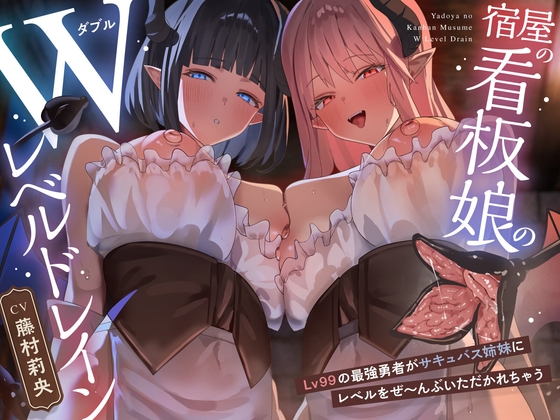
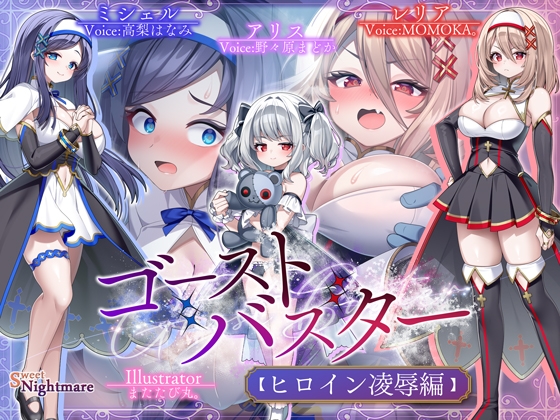
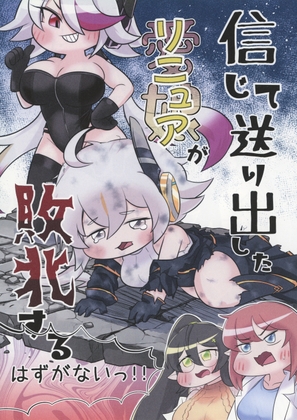
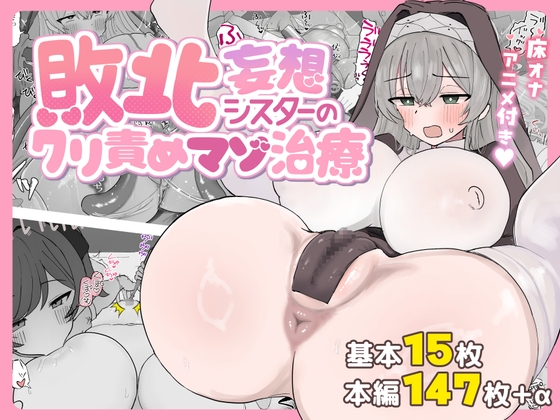

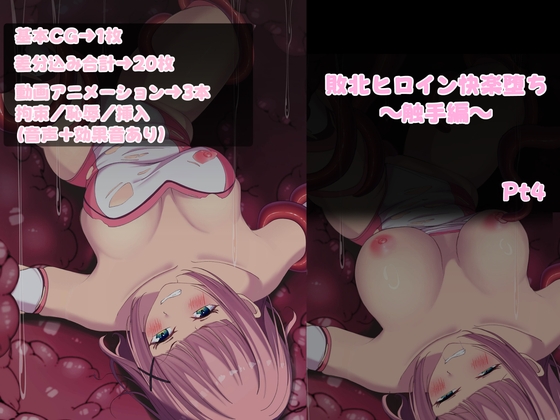
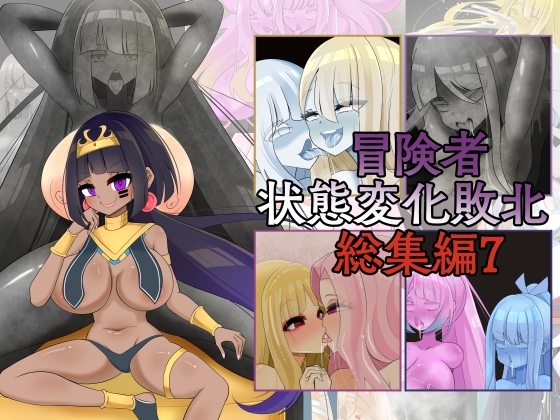
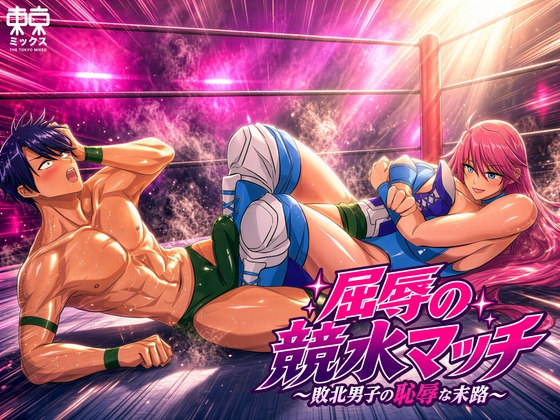
The fight ends; the heroine loses. The narrative that follows is what haiboku names: a defeated battle-heroine whose loss is followed by a sexual-subjugation arc. The genre’s structural contract is the contrast between the heroine’s prior framed strength and her post-defeat condition.
Overview
Haiboku (Japanese: 敗北) and its compound haiboku-kan (敗北姦) are the Japanese adult-fiction terms for narrative types in which a female character marked at the work’s opening as a combatant (a battle-heroine, magical girl, female knight, female soldier, female agent) is defeated in combat and subjected to sexual treatment as the consequence of the defeat. The genre is most extensively developed in adult doujinshi, where it provides a substantial fraction of the derivative-work output set against popular battle-heroine and magical-girl source-works, and in adult eroge, where the bad-end convention of choice-driven games supplies an institutional space for the narrative type.
The structural core is the contrast principle: the heroine’s pre-defeat framing as a strong, capable, dignified figure must be established in order for the post-defeat narrative material to deliver. Heroines whose pre-defeat status is most thoroughly established, in source-works built around their invincibility, are typically the targets of the largest derivative haiboku output.
Etymology
Haiboku (敗北) is a standard Japanese word for defeat in battle or competition, of Chinese origin and in continuous use across the literary and popular registers of Japanese. The compound haiboku-kan (敗北姦, “defeat-sexual-violation”) is a derivative coinage that emerged as adult-fiction tag vocabulary in the 1990s, marking the specific subset of defeat-narrative in which sexual subjugation follows the defeat.
Derivative compounds include haiboku-end (敗北エンド, the bad-end-by-defeat structure in adult games), haiboku-bad (a more colloquial register of the same), and haiboku-heroine (敗北ヒロイン, the character role of the defeated heroine). In English-language fandom, defeat scenario, loss to villain, bad end, and the loanword haiboku circulate as parallel terms.
Long-historical context
The narrative type of defeat-followed-by-sexual-subjugation has deep historical precedent across world fiction. The treatment of captured women as the spoils of war is recorded in Mediterranean and East Asian historical sources; Homer’s Iliad contains the captive-slave material as part of its narrative substance; the Old Testament records the disposition of women of conquered peoples; the Japanese Sengoku-era shiro-otoshi (castle-fall) practices have a documentary record. The premodern fictional material that builds on these historical materials is voluminous.
The modern fictional development of the defeat-narrative as a structurally-organised subgenre, however, is a postwar Japanese-subculture phenomenon. The genre’s modern shape draws on the visual vocabulary of postwar war-fiction and adventure-fiction, but its organisation as a named, tag-tracked, market-segment category is specific to the Japanese adult doujinshi and adult eroge systems.
Development
The genre’s modern shape consolidated in the late 1980s and 1990s with the rise of battle-heroine fiction in Japanese mainstream entertainment. The popularity of Cutie Honey, Sailor Moon, and similar battle-heroine works supplied the source-side of the derivative-work ecology, and the doujinshi market produced a substantial supply of derivative haiboku works set against these properties. By the early 1990s, haiboku had stabilised as an independent recognisable sub-genre at Tokyo’s Comiket and the wider doujin event ecology.
The eroge sector institutionalised the genre through the bad-end convention. Choice-driven adult games introduced bad-end branches that triggered when the player-controlled heroine failed in combat; the bad-end branch routed the narrative into a sexual-subjugation arc. Producers including Elf and AliceSoft developed the convention through the 1990s; later eroge producers inherited and refined the structure.
The 2010s saw the genre develop through combination with adjacent narrative types. Wakarase (corrective humiliation), mesu-ochi (becoming animal-female), and kichiku-kei (brutal-treatment) all combine with haiboku in particular configurations, and the resulting combined-genre subtypes constitute a substantial part of contemporary adult doujinshi supply.
Sub-formats
The battle-heroine sub-format is the canonical form: a magical-girl, female-knight, female-soldier, or female-agent character is defeated in combat and the post-defeat narrative follows. The clarity of the heroine’s pre-defeat strength-framing in the source-work governs the work’s contrast-magnitude.
The bad-end-route sub-format is the eroge-native version. The narrative arrives at the haiboku configuration through a branching player-choice failure rather than through a continuous narrative arc, and the bad-end structure functions as a discrete textual unit within the larger work.
The sport-and-competition sub-format substitutes athletic or game competition for combat as the defeat-triggering condition. Wrestling, martial-arts, and similar competition formats supply the structural defeat-condition while operating outside the battle-heroine framing.
The monster-encounter sub-format pairs the defeated heroine with a non-human or fantasy-creature antagonist. RPG-derived source-works supply much of this sub-format’s source material, and the configuration intersects with the broader monster-girl and fantasy-encounter fictions of the adult-doujin sector.
Reception
The genre’s draw is conventionally described in terms of dignity-deconstruction. The heroine’s pre-defeat framing as a figure of dignity, agency, and combat-capability is one of the work’s structural assets; the post-defeat narrative is, in a structural sense, the expenditure of that asset. The genre’s investment is in the transition from one framing to the other rather than in either framing in isolation.
The contrast with adjacent narrative types is useful for understanding the genre’s particular position. Wakarase fictions are typically built on a low-status pre-condition (the haughty, the arrogant, the smug-faced character) and operate on the correction of that pre-condition; haiboku fictions are typically built on a high-status pre-condition (the strong, the capable, the dignified character) and operate on the fall from that pre-condition. The two narrative types have substantially different shapes despite their surface similarity.
A further structural function of the defeat framing is narrative justification. Adult-fiction conventions require justification for the events the work depicts; haiboku supplies the justification through the in-fiction defeat, framing the subsequent material as the consequence of an in-narrative event rather than as an arbitrary scene transition. The role of the defeat-justification in the genre’s working logic has been noted in critical writing on the genre and on adjacent adult-doujinshi narrative architectures.
Gender-studies criticism of the genre has produced a substantial body of work. The structural relationship between battle-heroine genre’s strong-woman representations and haiboku’s systematic-deconstruction of those representations has been one of the productive points of intervention. The conversation is ongoing.
See also
- Choukyou (training)
- Mesu-ochi face (mes-kao)
- Wakarase (corrective humiliation)
- Kichiku seme
- SM culture
- Eromanga
Updated
References
- 『Erotic Comics in Japan: An Introduction to Eromanga』 Amsterdam University Press (2021)
- 『Beautiful Fighting Girl』 University of Minnesota Press (2011) — Critical analysis of battle-heroine fiction and its subversions.
- 『Adult Manga: Culture and Power in Contemporary Japanese Society』 Curzon Press (2000)
Also known as
- haiboku
- defeat scenario
- female-defeat fiction
- loss-to-villain genre
- ja: 敗北
- ja: 敗北姦
Related
- Body Possession (Hyoui)
- Netorare (NTR)
- Rule 34 (If It Exists, There Is Porn of It)
- Doujinshi
- Yaoi
- Mind Break (Hentai Tag and Narrative Type)
- Gothic Lolita
- Menhera (Emotionally Unstable Archetype)
- Neko (Bottom Role)
- Tachi (active role in same-sex relationships)
- Demon Girl Moe (Akuma Chara)
- Sisters Threesome (Ane-Imouto Don)