Kusuguri (tickling)
✎ 本文編集 (admin) 🖼 画像編集 (admin)“Kusuguri (tickling)” works on DLsite
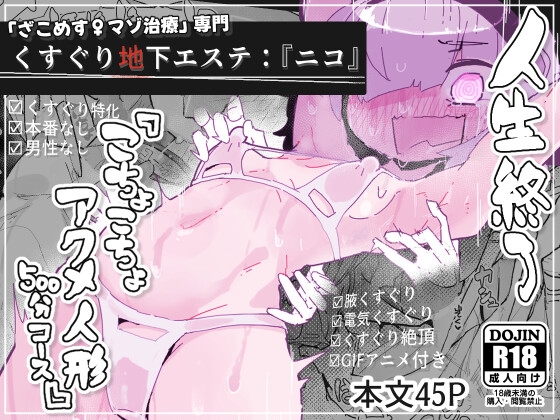
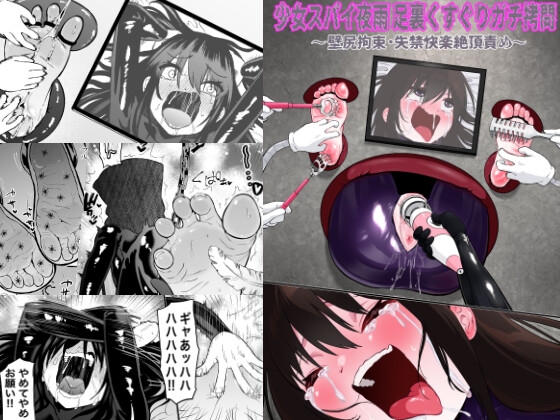



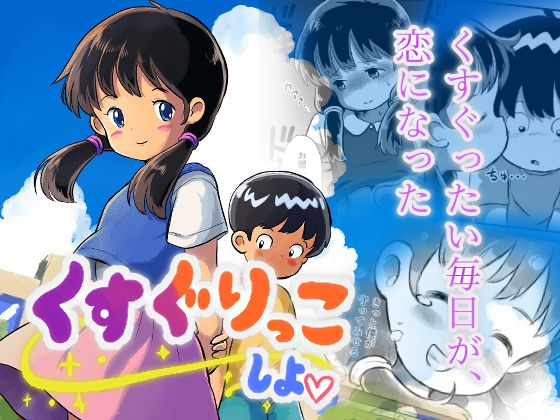
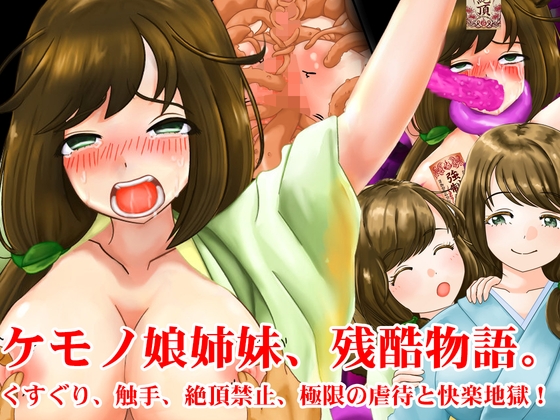
The reaction that crosses the laughter-and-suffering boundary at high speed. The vibrational-quality of the response is itself what allows tickling to function as a kink. Kusuguri (Japanese: くすぐり, kusuguri; English: tickling, tickle play; sexology term: knismolagnia) names both the everyday sensation of tickling and the kink-aesthetic configuration in which tickling functions as a sexual focus. The configuration operates within consent-and-safety frameworks adjacent to but distinct from full SM practice. All discussion in this entry concerns fictional-and-consensual practice between adults.
Overview
Kusuguri is the noun-form of the Japanese verb kusuguru (to tickle), and the Japanese register covers both the everyday-non-sexual sensation of tickling and the specific kink-aesthetic. In the kink-aesthetic register, kusuguri-fetishi (tickling-fetish) is the standard category-name, and the international sexology vocabulary uses knismolagnia (Greek knismós “tickling” + lagneía “sexual desire”) as the clinical term.
The kink-aesthetic configuration positions the laughter-and-discomfort mixed reaction itself as the sexual focus. The tickled partner’s body-reaction, facial expression, vocalisation, and body-motion become the visual-and-aural focus of the staging, in a consenting-adult role-play context. The configuration sits within the broader category of mild SM, with shared consent-and-safety vocabulary but distinct register from the more intense SM-practice categories.
In responsible practice communities, tickle-play operates within the SSC (Safe, Sane, Consensual) protocol framework. Pre-scene consent, safe-words, attention to physical-load on the tickled partner, and time-limit conventions function as the standard safety-vocabulary that the practice shares with the broader SM-practice tradition. The shared safety-baseline is the practice-foundation rather than an optional element.
Etymology
Kusuguri is the connective-form noun of the Japanese verb kusuguru (Old Japanese kusukuru), with the verb functioning as an onomatopoeic-mimetic vocabulary item for the light-skin-contact sensation. Usage attestations appear in Heian-period literary texts.
The English tickling derives from Old English tinclian (Modern English tickle), with the Proto-Germanic etymology and ultimate Indo-European roots establishing the broader Germanic-language tickling-vocabulary tradition.
The sexology technical term knismolagnia is a 20th-century scholarly coinage combining classical Greek knismós (tickling, itching) and lagneía (sexual desire). The corresponding term knismesis names the tickling-sensation itself in the medical-physiological register, distinguishing the somatic-sensation from the sexual-response.
History and development
The cultural position of tickling
Tickling has occupied multiple cultural positions across history, including infant-and-parent affectionate play, child-and-child playful interaction, and pre-romantic courtship-vocabulary elements. Documentation of tickling appears across ancient Roman, Chinese, and Indian texts.
In early-modern Europe, tickling additionally functioned at points as a method of torture, with prolonged continuous tickling producing severe physical-and-psychological exhaustion in the subject despite the involuntary-laughter response. This historical configuration is distinct from the consensual mild-play configuration treated in the present entry, and the two configurations should be kept categorically separate in any discussion of the topic.
Sexology framing
Late-19th-century-onward sexology took up tickling as an independent subject. Havelock Ellis’s Studies in the Psychology of Sex (1897-1928) treated tickling-pleasure as a precursor-form of sexual arousal, in one of the canonical references for the topic.
20th-century physiology-and-psychology research examined the question of why self-tickling produces a weak response while other-administered tickling produces the full response. Sarah-Jayne Blakemore and colleagues’ research has explored the neural-processing-pathway difference between self-generated and externally-generated stimuli as the neurophysiological basis for the phenomenon.
Subcultural development
Late-20th-century adult-content production developed tickling-themed work as an independent subgenre. From the 1990s onward, adult-video and doujinshi production has included tickle-themed work at a stable proportion of overall production, with specialist labels and specialist online communities establishing the category as a discrete kink-area.
In doujinshi and erotic-manga search-tag architecture, kusuguri appears as a standalone tag, with kousoku, SM, and ashi-ura (sole-of-foot) as the principal adjacent-tag combinations. The kousoku-combination in particular is structurally common: the configuration of the tickled partner being unable to suppress reaction-response while in a restrained configuration is a recurring scene-architecture.
Sub-forms and adjacent concepts
Body-region differentiation
The kink-aesthetic subdivides by the body-region focused for tickling:
- Sole-tickling: the foot-sole as the principal target. The classical-tickling-subject configuration. Overlaps with foot fetish.
- Side-tickling: the side-of-the-torso as the principal target. The tickled partner’s body-reaction is highly-visible in this configuration.
- Underarm-tickling: the armpit as the principal target.
- Whole-body tickling: multi-region sequential-stimulation composite-form.
Tool differentiation
By implement, the configuration distinguishes bare-hand tickling, feather-tool tickling, and brush-tool tickling. Each tool produces distinct tactile and visual effects. The feather has been a traditional symbol of the tickle-fetish in Western tradition.
Adjacent kinks
Kusuguri sits in the mild-SM peripheral region, adjacent to kousoku (restraint), SM, and foot fetish. The restraint-combination is particularly common as a structural-necessity for the tickled-partner-immobile configuration that the staging often requires.
Consensual practice configuration
Tickle-play in responsible-practice communities operates with mutual-consent, safe-word, and physical-load attention as the baseline. Prolonged continuous tickling can produce physical-and-psychological exhaustion, and time-limits, rest-insertion, and ongoing health-monitoring function as the standard safety-requirements that the responsible-practice tradition has established.
Cultural-academic position
Psychology and neuroscience
The “self-tickling does not work” phenomenon has been a recurring subject in late-20th-century-onward cognitive neuroscience. The brain’s prediction of self-generated motor-commands and the resulting suppression of the sensory-input matching the prediction has been the principal mechanism proposed for the phenomenon. The present entry treats the cultural-and-kink-aesthetic dimension, with the neuroscientific details treated in specialist literature.
International fetish-community
The English-language tickling-fetish community established its own subcultural-area from the late 20th century. Specialist magazines, specialist videos, and specialist online communities developed, with the international practitioner-network running in parallel to the Japanese kusuguri-fetish community.
Related Terms
Updated
References
- 『Tickling: A Cultural History』 University of Illinois Press (2012)
- 『Studies in the Psychology of Sex』 F. A. Davis (1897-1928)
- 『The Expression of the Emotions in Man and Animals』 John Murray (1872)
- 『Different Loving』 Villard Books (1993)
Also known as
- tickling
- tickle play
- tickling fetish
- knismolagnia
- ja: くすぐり
- ja: くすぐりプレイ
Related
- Hikikomori Character Moe
- Praise-Kink Moe (Home-Jozu)
- Ashi-fetish (foot fetish)
- Hair kink (kami fetish / trichophilia)
- Eye kink (me-fetish)
- Airhead-character moe (tennen)
- Mind Break (Hentai Tag and Narrative Type)
- Corset
- Fetishism
- Hazukashi Play (Embarrassment Play)
- Jawline Fetish
- Blazer School Uniform