Situation Voice (Shichu-boe)
✎ 本文編集 (admin) 🖼 画像編集 (admin)“Situation Voice (Shichu-boe)” works on DLsite
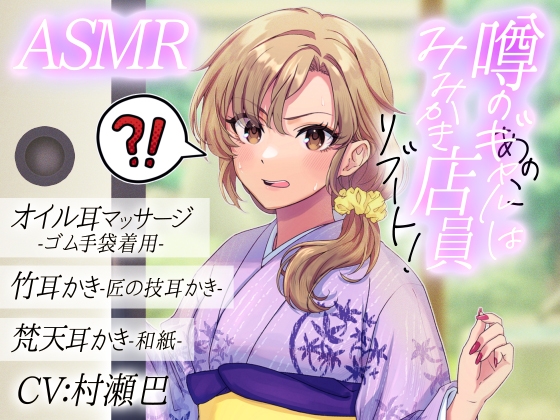


Inside the earphones, the other party speaks toward you. A voice asking if you are tired, a moment of silence assuming your reply, then a follow-up offering to reheat your dinner. Instead of answering, the listener nods while keeping still. Situation voice, neither monologue nor reading-aloud, places the listener firmly as “the other party,” and has formed the mainstream format of the doujin-audio market. The abbreviation is shichu-boe.
Overview
Shichueeshon boisu (シチュエーションボイス, shichu-boe; English: situation voice) is the umbrella term for audio works that proceed as a pseudo-dialogue between performer and listener on a preset relationship and scene. The listener is non-speaking and bears “one side of the dialogue” through the silences between the performer’s utterances. Works are designed from combinations of relationship types (girlfriend, older sister, younger sister, senior, married woman, nurse) and scene types (home, school, hospital, hot spring). As the mainstream format of the doujin-audio market, it is the matrix of erotic ASMR, girlfriend roleplay audio, and boyfriend roleplay audio.
The structural core of shichu-boe is three elements: the prior setting of a relationship, the prior setting of a scene, and the alternating progression of the performer’s utterances and the listener’s pseudo-utterances. The listener does not actually speak, but short silences placed between the performer’s lines generate a pseudo-dialogue experience of “having responded.” Lacking visual information, the listener must imagine the partner’s image, so a different “partner for me” is constructed in each listener’s imagination. This room for imaginative completion underlies the format’s repeat-listening durability and fixed subscriber base. On DLsite Maniacs and FANZA doujin audio, “situation” is a standalone category, and shichu-boe works occupy the majority of the monthly ranking.
Etymology
“Situation” is a loanword from English. In Japanese otaku culture it circulated from the 2000s in the forms “situation CD” and shichu-boe, at first denoting the situation-setting audio CD in the otome-game and BL genres. The label “situation voice” was organised in the early 2010s as a category term on doujin-audio platforms, redefining the earlier otome-genre usage as a general category transcending gender and preference. The abbreviation shichu-boe took hold as a colloquialism in the same period. In English, similar genres run under terms such as roleplay audio and scenario audio.
History
The commercial starting point of the situation CD lies in the “drama CD” and “situation CD” releases for the otome-game and BL genres in the 2000s. Specialist labels such as Frontier Works and Rejet continuously supplied romance situation CDs cast with female-oriented voice actors, forming a market that combined commercial voice-actor brands with situation settings. That market provided the structural template for the later doujin-audio shichu-boe.
After the establishment of DLsite Maniacs (the Maniacs zone opened in 2007, the doujin-audio category organised in 2009), male-oriented doujin audio premised on situation settings increased. At first centred on read-aloud audio of eromanga and voice dramas, it gradually established the fixed structure of “setup → dialogue between performer and listener → sexual development.” In parallel with the spread of binaural recording, shichu-boe was organised as a standalone format that staged “setup → dialogue → sexual development” in a single acoustic sequence. From 2018, as pure ASMR and ear-licking audio developed, the line between “shichu-boe” and “erotic ASMR” blurred, and many works combine situation setting with ASMR staging.
Structural features
At the work’s opening, within tens of seconds to a few minutes, the relationship is established. Types such as “girlfriend,” “senior,” “older sister,” “married woman,” “nurse,” “shrine maiden,” “classmate,” and “first love” are introduced in a single line. In parallel, the scene type is preset: home (living room, bedroom, kitchen, bath), school (classroom, club room, infirmary), workplace, hospital, hot spring, outdoors, hotel, with sound effects matched to the scene placed in the background.
Between the performer’s utterances, short silences of about one to three seconds are inserted. The listener does not actually speak, but during these silences a pseudo-dialogue experience of “I am responding” is generated, producing a listening experience fundamentally different from reading-aloud or monologue and functioning as a device that positions the listener as “the other party.” Shichu-boe often proceeds in five stages: establishing the relationship and scene, deepening intimacy through dialogue, a preliminary stage of physical contact, sexual development, and an afterglow. The time allotted to each stage varies by circle and work, but the five-stage structure is established as an industry-wide template.
Derived forms and adjacent concepts
Shichu-boe divides broadly into a wholesome-leaning type without depiction of genital contact and a type that passes through sexual development. The former centres on otome and boyfriend-roleplay lines, the latter forms the traditional core of male-oriented doujin audio. The boundary is fluid, and “branching” shichu-boe in which the listener can select whether sexual development occurs has also derived.
Shichu-boe and erotic ASMR are structurally distinct categories but deeply intersect in practice: many shichu-boe works include ASMR staging, and many ASMR works carry situation settings. The English-language roleplay audio is conceptually close. The participation of commercial voice actors under separate names is common; the practice supports income diversification and the acquisition of a fixed fan base, and has contributed to the quality of the shichu-boe market.
Cultural reception
Shichu-boe occupies the quantitative and qualitative core of the doujin-audio market, with the majority of the top monthly rankings on DLsite Maniacs and FANZA doujin audio occupied by shichu-boe works. Its structural feature is the “room for imaginative completion”: lacking visual information and expressing the listener’s response through silence, it has each listener construct a different “partner for me,” a consumption experience fundamentally unlike the visually fixed partner of video pornography. In English, roleplay audio developed non-commercially on free platforms such as Reddit’s r/GoneWildAudio and SoundGasm, a parallel market to Japan’s commercial doujin audio; the technical structure is shared.
Related terms
Updated
References
- 『DLsite Doujin-Audio Category Sales Trends』 DLsite Official Blog (2020)
- 『More Than a Feeling: Autonomous Sensory Meridian Response (ASMR)』 PeerJ (2015)
Also known as
- Situation audio
- Situation voice CD
- ja: シチュエーションボイス
- ja: シチュボ
Related
- "Girlfriend formation" voice drama
- Boyfriend Roleplay Audio
- Ero ASMR
- Ear-Cleaning Audio
- Close-Contact Audio
- Heartbeat Voice (Shinon Voice)
- Cuddle Audio (Soine Voice)
- Ear-Licking Audio
- Girlfriend Roleplay Audio (J-ASMR)
- Reverse-rape roleplay audio (fictional female-dominant doujin voice)
- Binaural audio (recording technique)
- Onasapo