Coupling (CP)
✎ 本文編集 (admin) 🖼 画像編集 (admin)“Coupling (CP)” works on DLsite
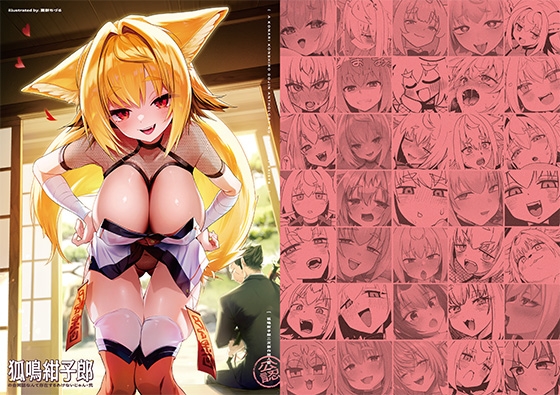
Which of two characters is on top, and which is below. That relationship, written nowhere in the original work, is something the reader finds, names, and crystallizes into creation. This designation of the pairing is the language and the currency of an enormous fan culture.
Coupling (Japanese: カップリング, abbreviated CP) is the concept in yaoi and BL culture of pairing particular characters as a romantic or sexual couple, and the pairing itself. Derived from English coupling, it functions, in both derivative and original work, as the organizing axis of who is joined to whom, the basis on which a story is read and made.
Overview
The defining feature of coupling is that it contains a uke (receiving) and seme (attacking) role assignment. The seme is the character who takes the active, penetrative role in the sexual relationship; the uke takes the passive, receiving role. This role is not merely a matter of position but is understood as a comprehensive interpretation of the relationship, including personality, build, social standing, and narrative power balance.
CP is conventionally written as “seme x uke.” For instance “A x B” and “B x A” are distinguished as separate couplings of the same two characters with reversed roles. The strictness of this order is a fundamental convention of coupling culture.
Fixed and omnivorous
Fans’ orientations divide broadly into “fixed” and “omnivorous.” Fixed means supporting only a particular role assignment or pairing and refusing others. Omnivorous means tolerating multiple couplings and role reversals. This difference carries real weight in fan exchange: toward an interpretation that differs from one’s preferred coupling, especially a reversed pairing (gyaku-CP), some feel strong aversion. Such mismatches of taste are called “interpretation differences” and are a main source of tension within the community.
”Landmine” culture
On the extension of the fixed orientation lies the concept of the “landmine” (jirai), an element one cannot accept physiologically or psychologically; a particular reversed pairing or combination itself may be a landmine. As a courtesy to avoid stepping on landmines, the custom of clearly stating the coupling in advance (CP notation) has become established.
At doujinshi events and on posting sites, the practice of labelling the coupling a work handles so viewers can protect themselves is firmly established, an original etiquette developed so that a large fan community of diverse tastes can sustain activity while minimizing conflict.
History and development
The practice of recombining characters to reread a story goes back to 1970s shojo-manga fan derivative work. Within the yaoi culture that arose in the same period, reinterpreting original characters as male-male romance grew active, and the notion and vocabulary of coupling developed. From the 1990s, with the expansion of the commercial BL market and the swelling of doujinshi events, coupling culture was refined as a shared language of the fan-girl (fujoshi) community. After the spread of the internet, tag-based CP notation grew more precise from the needs of search and separation, and now forms the basis of the classification systems on creative-posting platforms.
Function as an interpretive community
Coupling is not merely the designation of a combination but a shared language for reading the original work. Even reading the same work, which relationship one attends to and how one positions each side differs by reader. To name a coupling is to declare one’s reading and to connect with others who read the same way.
For this reason, debate over coupling readily takes on aesthetic and ethical heat. Because the role arrangement is bound inseparably to character dignity and narrative interpretation, differences of arrangement can develop into emotional conflict. At the same time, solidarity among supporters of the same coupling is strong, forming dense communities of creation, criticism, and exchange. Landmine culture and the etiquette of separation are a delicate system of consideration devised so that groups of strong attachment can coexist.
See also
Updated
References
- 『BL Shinkaron: Boys Love ga Shakai wo Ugokasu (BL Evolution Theory)』 Ota Publishing (2015)
- 『Boys Love Manga and Beyond: History, Culture, and Community in Japan』 University Press of Mississippi (2015)
- 『Fujoshi: Fan Girls and the Subcultural Imagination』 Bloomsbury (2011)
Also known as
- coupling
- CP
- pairing
- ja: カップリング
- ja: 受け攻め
Related
- Fujoshi
- Rule 34 (If It Exists, There Is Porn of It)
- Heat (Omegaverse)
- Haramase-mono (impregnation genre)
- Illustration collection (doujin art book)
- Kichiku-kei (brutal-abuse genre)
- Namamono (Real-Person Fanwork)
- CG Collection (CG-shu)
- Comiket (Comic Market)
- DLsite
- Doujin video (independent adult video)
- Doujin game (Japanese self-published video games)