Tongue (shita)
✎ 本文編集 (admin) 🖼 画像編集 (admin)“Tongue (shita)” works on DLsite
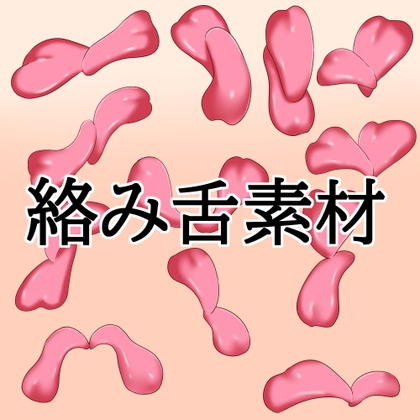






In the repertoire of sexual acts, no organ is as polysemous as the tongue.
Shita (Japanese: 舌; English: tongue; Latin: lingua) is the mobile muscular organ of the floor of the mouth, composed mainly of striated muscle. It carries the life-sustaining and linguistic functions of taste reception, swallowing, and articulation, and serves as the principal organ of movement and sensation in kissing, oral caress, and oral sex, occupying a central role in embodied sexual practice.
Overview
The tongue is a composite muscle formed from the intrinsic muscles (which alter its shape) and the extrinsic muscles (which connect it to the surrounding skeleton). Exceptionally for a skeletal muscle, it is capable of three-dimensional deforming movement. Its surface is covered in mucosa bearing the taste-receptor papillae.
In the sexual context, three properties converge: mobility, sensory density, and moisture. The tongue, with the lips, is a rare body-surface organ able to apply smooth and varied tactile pressure to a partner’s skin and mucosa, and it stays continuously moist through saliva (daeki), allowing sustained contact without friction. These properties form the physiological basis of oral sexual acts: kissing, fellatio (fera), and cunnilingus (kunni).
Anatomy and neurophysiology
The tongue receives exceptionally dense motor and sensory innervation. The hypoglossal nerve (cranial nerve XII) supplies the lingual muscles; taste is carried for the anterior two-thirds by the facial nerve (VII) and the posterior third by the glossopharyngeal nerve (IX); general sensation is carried for the anterior two-thirds by the lingual branch of the trigeminal mandibular division and the posterior third by the glossopharyngeal nerve.
This division of labour among four cranial nerves to a single organ is rare in the body. Consequently, the somatosensory representation of the tongue in the primary sensory cortex occupies a disproportionately large area, alongside the fingers and lips. In the sensory homunculus proposed by the neurosurgeon Wilder Penfield, the tongue, lips, and fingers are enlarged for this reason, and this is held to be the neurological basis for the strong pleasure that oral caress and kissing evoke.
No tongue tip is fixed directly to bone, and through coordinated contraction of the intrinsic muscles the tongue can independently elongate, contract, curl, rotate, and displace sideways. This high three-dimensional freedom of movement enables articulation, food-bolus handling in swallowing, taste scanning, and the precise contact movements of sexual life.
Role in sexual life
Contacting oral mucosa with mutual entwining of tongues is called deep kissing or French kiss in English, and “deep kiss” or bero-chu in Japanese. Sheril Kirshenbaum, in The Science of Kissing (2011), argues that in kissing the senses of smell, touch, taste, and temperature are activated together, and a mechanism may be at work that unconsciously evaluates a partner’s genetic compatibility (differences in the major histocompatibility complex).
Tongue-mediated kissing involves the exchange of chemical information through saliva. The anthropologist Vaughn Bryant’s research found that tongue-entwining kissing is not a universal human custom, being confirmed in only about 46% of cultures; in parts of Asia, Africa, and South America, kissing itself was rare in sexual contexts before the modern era.
In fellatio (taking the penis (inkei) into the mouth) and cunnilingus (oral caress of the clitoris, labia minora, and vaginal vestibule), tongue movement is the central source of stimulation. In fellatio, tongue-tip scanning of the glans (kitou) coronal groove and urethral opening, pressure of the tongue’s dorsum along the shaft, and the entwining movement of its sides have traditionally been discussed as “tongue technique”. In cunnilingus, the alternation of fine tongue-tip movement on the clitoral hood (houhi) and glans with broad-area pressure of the flat tongue is a principal theme of sex-technique manuals.
Codification in sex manuals
The systematisation of tongue caress was attempted across civilisations. The Indian classic Kama Sutra (composed around the 4th-6th century) classifies eight kinds of kiss and varied oral play in its second part, devoting several chapters to use of the tongue. Records of tongue technique also appear in the medieval Arabic manual The Perfumed Garden (15th century) and in Chinese bedchamber texts.
In early-modern Japan, descriptions of oral play and tongue use appear in the captions accompanying shunga. Representative works by Utamaro and Hokusai depict affectionate scenes including deep kissing. Edo-period erotic books used colloquial terms for tongue contact, suggesting it was recognised as an independent act.
Cultural-anthropological position
Showing the tongue outside the mouth carries widely divergent meanings across cultures: generally mockery or refusal in the West, a traditional greeting in Tibetan Buddhist culture. Sexual connotations are also broad: protrusion of the tongue is encoded as a gesture of seduction and as a provocative, transgressive act. Late-twentieth-century rock culture (the Rolling Stones’ “tongue and lips” logo, designed 1971) circulated the tongue’s sexual and rebellious imagery in mass culture.
In ritual traditions worldwide the tongue has been seen as an organ housing spiritual power: the long protruding tongue of the Hindu goddess Kali, the tongue-thrust of Maori warriors in the haka, and the tongue of the Noh hannya mask. Sexual and sacred meanings are often two sides of the same bodily sign.
Exaggeration in creative representation
In adult manga, animation, and AV, depiction of a tongue elongating beyond the real anatomical range is a widespread convention in late-twentieth-century Japanese representation. With its affinity to tentacle (shokushu) representation, it serves as the bodily sign of non-human beings (succubi, demons, snake-women) or as exaggeration visualising the extreme of pleasure. Representative examples include the long tongues of non-human beings in Go Nagai’s Devilman (1972-73), connecting the lineage of the elongating tongue to pre-modern demon imagery.
From the 2000s, protrusion of the tongue became a standardised facial sign of sexual climax: combined with eye-rolling, flushing, and drooling, this template became its own vocabulary in English as ahegao, spreading as a T-shirt motif and internet meme. Such expressions are physiologically rare but function as visual signs of climax.
Reception and medical caution
Tongue-mediated sexual acts carry the risk of pathogen transmission through saliva and oral mucosa. Herpes simplex virus, gonorrhoea, syphilis, human papillomavirus (HPV), and hepatitis A and B can all be transmitted by oral sex, and the link between rising oropharyngeal cancer and oral HPV infection has become a public-health concern. Healthy sexual practice presupposes regular oral hygiene, infection screening, and risk-aware self-determination.
Related Terms
Updated
References
- 『Gray's Anatomy』 Elsevier (2020)
- 『The Science of Kissing: What Our Lips Are Telling Us』 Grand Central Publishing (2011)
- 『The Complete Kama Sutra』 Park Street Press (1994)
Also known as
- tongue
- lingua
- ja: 舌
- ja: ベロ