Adultery scenario (J-AV genre)
✎ 本文編集 (admin) 🖼 画像編集 (admin)“Adultery scenario (J-AV genre)” works on DLsite
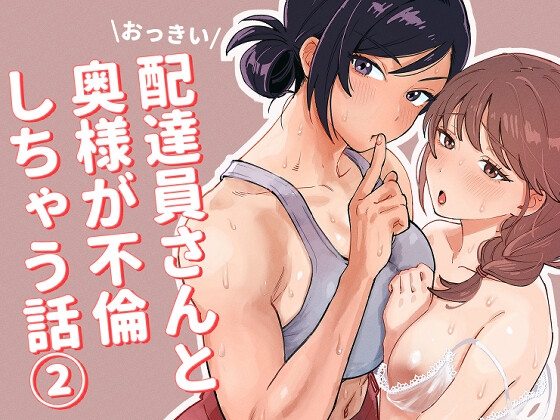



A grocery bag in one hand, an unfamiliar side-street stopped at instead of passed by. A message thread that cannot be deleted, opened and closed for a week now. The ring still on the finger; the next-station decision already half-made. The temperature at which guilt and arousal mix is the temperature the furin-mono scenario class is built to register on screen.
Overview
Adultery scenario (Japanese: 不倫もの, furin-mono) is the Japanese adult video scenario class centred on the extramarital intimate relationship of a person bound by marriage or long-term partnership. The category foregrounds the persistence of the spousal relationship as a background presence within the frame: the ring that is not removed, the household that is present off-screen, the calls from the spouse that arrive during the scene. The married-status physical and psychological signifiers are kept visible within the scene as a continuous element.
The principal protagonist configuration is the married woman, with age range broad (from the mid-twenties to the fifties). The standard counterpart configurations are “the husband’s colleague”, “the neighbouring man”, “the rediscovered classmate”, “the child’s tutor”, and “the person encountered on a business trip”, all of which place the partner figure at the edge of the household’s accustomed social network. The configuration “an outside other on the periphery of the home” supports the genre’s foundational dramatic stake.
Genre configuration
Three-stage structure
The standard dramatic structure runs through approach, transgression, and continuation-or-rupture stages.
The approach stage sets the motivational preparation: domestic tedium, the cooling of the spousal relationship, a chance reencounter with a new partner. A grocery-shop encounter, a class reunion, PTA committee work, a neighbourhood acquaintance: the wider configuration of “the outside other emerges through the routine extensions of daily life” supports the stage. Works that handle this material with attention to chronology tend to be valued.
The transgression stage stages the moment of crossing the line. The ring that cannot be removed remains on the finger, the household phone rings off-screen, a photograph of the husband sits in the background frame. The configuration of “calling the household’s presence into the scene” visualises the guilt as a foregrounded layer of the frame.
The continuation-or-rupture stage selects from several endings: the relationship continues, the protagonist returns to the household, the husband discovers the affair, the resulting confrontation closes the work. The audience preference for one or another ending varies, and the labels organise editorial decisions with attention to the sub-type clustering.
Setting
The standard adultery-scenario stages are: love hotels, the partner’s apartment, the protagonist’s home (with the husband absent), business-trip hotels, and exhibitionist-aligned public spaces (public toilets, laundromats, shrine grounds, roads).
The love hotel functions as the symbolic third-space of the genre, separated from both the household and the partner’s residence. Long stays, rest-rate use, and overnight stays all carry differential signalling about the depth of the relationship. The parking ticket, the hotel keycard, the receipt rapidly disposed of: such details of evidence-disposal anchor the on-screen realism.
Boundary with adjacent genres
Netorare and netorase
Netorare (NTR) frames the spouse’s adultery from the perspective of the betrayed partner, drawing on jealousy, loss, and irrecoverable grief as the principal affective register. Netorase frames the spouse’s extramarital activity from the perspective of a partner who actively encourages it.
The adultery scenario sits between these two. The actors-in-the-scene are the two participants in the affair; the spouse functions as the off-screen presence; the perspective sits with the participants (most commonly the wife). The grieving spouse-perspective of netorare and the procuring spouse-perspective of netorase do not occupy the foreground.
Married-woman and mature-woman categories
Married-woman AV and mature-woman AV overlap with the adultery scenario nearly entirely as a commercial classification. Works tagged “married-woman” or “mature-woman” almost invariably contain adultery as a situational premise; works tagged “adultery scenario” almost invariably feature married-woman or mature-woman protagonists.
The working distinction is whether the package emphasises the performer-attribute axis (married-woman, mature-woman) or the situational axis (adultery) as the principal selling configuration. Most commercial releases carry both axis-tags in parallel, and the audience navigates via whichever axis suits.
Business-trip and swapping
The business-trip configuration is a recurring justification device for the adultery scenario: a colleague encountered on the trip, a business contact, an accompanying supervisor. The business-trip setting structurally supports the configuration in which the household is at physical distance.
Swapping presupposes the spouse’s consent and participation, and on that ground is structurally opposed to adultery (which presupposes betrayal of the spouse). The two genres can share surface elements of intimate configuration but draw on distinct affective registers in the audience.
The guilt-as-pleasure register
Double life
The principal audience-side draw is the psychological tension of crossing the taboo. The configuration of “maintaining the household and social role while operating a separate intimate relationship outside it” structurally supports the genre.
The household duties drawn into the frame (“must go home”, “must answer the husband’s call”, “must collect the children”) sharpen the configuration of the affair as temporally limited and secret. “When can we meet again?”, “this may be the last time”: the time-limit register intensifies the relationship’s emotional density on screen.
Safe fictional rehearsal
The adultery scenario allows the audience to engage with “an action that would create real-world social problems if conducted in reality” within fictional rehearsal. The audience can engage with the psychological pleasure of the configuration without disturbing their actual social role. “The wife who betrays her husband”, “the back-channel feminine self within the wife-role”: both are configurations consumed precisely because they are fictional.
The wider configuration of safe-fictional-rehearsal is shared with much of the Japanese adult-content space, but the adultery scenario presents the configuration in particularly tight proximity to the everyday social setting, supporting a high-tension reception register.
Cultural reception
Literary and cinematic genealogy
The adultery motif precedes Japanese AV in a substantial literary and cinematic genealogy. Roman porno and pink film built sustained 1970s and 1980s output around married-woman adultery scenarios; classical postwar literature (Tanizaki Junichiro’s Kagi (1956), Kawabata Yasunari’s Nemureru Bijo (1961), Mishima Yukio’s Bitoku no Yoromeki (1957)) developed parallel treatments. The AV-form adultery scenario stands in the line of this prior literary and cinematic tradition, in a mass-distribution commercial register.
Position within recent AV
The 2000s expansion of the married-woman AV market established the adultery scenario as a stable principal genre within the wider industry. Labels with specialised married-woman lines (MADONNA among them) centre adultery configurations in their editorial planning. The 2010s expansion of the netorare cluster has, in parallel, supported the proliferation of perspective-varied adultery scenarios (husband’s perspective, wife’s perspective, partner’s perspective) as a recognised multi-axis sub-cluster.
See also
Updated
References
- 『AV 30-Nen Shi: Nihon no Adult Video Gyoukai no Ayumi』 Sairyusha (2011)
- 『AV no Shakaigaku』 Chuokoron Shinsha (2017)
- 『AV Joyu no Shakaigaku』 Seidosha (2013)
Also known as
- furin mono
- adultery theme
- extramarital affair scenario
- W-furin
- ja: 不倫
Related
- Married-woman scenario (J-AV genre)
- Cohabitation scenario (J-AV / hentai genre)
- Partner Swapping (Swinging)
- Business-Trip Genre (Shucchou-mono)
- Ecchi (Japanese Softcore Erotic Genre)
- Haramase-mono (impregnation genre)
- Female-teacher genre (J-adult fiction)
- Kikaku AV (planning-format AV)
- Time-Stop Series (Japanese AV Genre)
- Interview-Themed AV (Mensetsu-mono)
- Documentary-style AV (J-AV genre)
- Fantasy setting (J-eroge and adult game genre)