Cohabitation scenario (J-AV / hentai genre)
✎ 本文編集 (admin) 🖼 画像編集 (admin)“Cohabitation scenario (J-AV / hentai genre)” works on DLsite
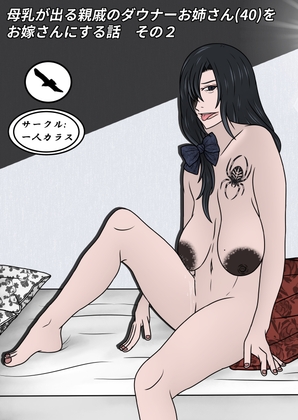







Morning, the long hair beside you on the pillow. The voice from the fridge asking “want some coffee?” The back of a partner on the sofa scrolling a phone after a bath. The cohabitation-scenario register builds its erotic frame from the countless non-sexual moments that only the shared address makes possible, then drops the explicit content on top of that base. The hand resting on the shoulder while folding laundry, the slow approach of kissing that emerges from watching a show together: the work’s spine is the continuity of daily life, not the punctuation of climax.
Overview
Cohabitation scenario (Japanese: 同棲もの, dousei mono) is the umbrella term for Japanese adult-content works set in the shared-residence daily life of a couple. The genre operates across Japanese AV, adult manga, eroge, and doujin audio as a scenario-class rather than a medium-class, and the present article treats it as a single cross-medium configuration.
The genre developed in parallel with the junai-kei (sweet-romance) AV and romance-line eroge expansion from the 1990s onward. The principal aesthetic decision is to dilute the dramatic build-up of the sex scene by spreading multiple intimate contacts across a daily-life timeline (waking, eating, bathing, sleeping), rather than concentrating them in a single peak. The audience experience is closer to following the couple’s living rhythm than to building toward a single climactic event.
The setting is normally a small Tokyo apartment (one-room, 1LDK, 2DK), with the entranceway, hallway, living-dining area, bedroom, bathroom, washroom, and balcony all functioning as distinct stage spaces across the runtime. Narrative time often runs explicitly through morning, afternoon, evening, night, and small hours, and the audience moves with the partners through the day.
Aesthetic registers
Daily routine
The central aesthetic device is the visible domestic routine. “I’m home” and “welcome back”, the gesture of removing shoes at the entrance, the placement of grocery bags in the kitchen, the hands folding laundry: these moments are filmed at length, and the runtime balance leans toward the surrounding domestic material rather than the explicit scene. The temperature of the work stays even across the runtime as a result.
Cooking and shared meals are heavily featured. Sitting opposite at the table, waiting for one partner to finish cooking, going shopping together: these motifs anchor the emotional weight of the work and frame the explicit material as a continuation of, rather than a departure from, the domestic routine.
Clothing and sleepwear
Costume design follows a visible arc from outside clothes to indoor clothes to sleepwear, tracked across the timeline. Long-sleeve shirts, shorts, single t-shirts, the partner wearing the male character’s shirt, the see-through t-shirt with no bra, the strap-fallen tank top: the “clothes only worn at home” register carries a particular unguardedness that outside dress does not, and these configurations operate as the genre’s iconic signatures.
Bedroom and waking
The waking sequence on a double bed or in two adjacent single beds is a stable centrepiece of the genre. Sleep-tousled hair, half-open sleepwear, the sleeping-into-waking expression: the configuration of “showing what nobody else sees” carries the genre’s core intimacy. Morning intimate contact, pre-shower intimate contact, the holiday lie-in: the dedicated morning-hour register supports several of the genre’s most identifiable scene types.
Narrative configurations
Relationship-development
Works beginning at the start of cohabitation devote substantial early runtime to the moving-in process, furniture arrangement, the adjustment of living rules, and the early discovery of one another’s habits. Time-skips of one week, one month, six months mark relationship-development against the changing intimate register. In the doujin segment, the explicit Day 1, Day 30, Day 365 dating-format scenario template has consolidated as the standard within this register.
Steady-state daily life
Works set in already-stable long-term cohabitation describe a single day from morning to night without staging dramatic incident. Mild relief structures (a small quarrel and its resolution, an anniversary surprise, a holiday day-trip) are inserted across the runtime, and the explicit material is woven into the structure. Commercial AV’s “one-day documentary of an amateur couple” framing is a recognised commercial application of this configuration.
End of cohabitation
A subset of works depicts the dissolution, separation, or reunion phase of cohabitation. Moving day, the last morning, an emptied apartment: these end-state scenes carry an emotional weight that constitutes the strand’s distinctive register. The reunion or rekindling subset overlaps with the broader recovery-scenario category.
Adjacent genres
Newlywed scenario
The newlywed-scenario register is the closest adjacent genre to cohabitation. The legal marriage relationship adds a public-recognition layer to the relationship, and external connections (family, relatives, workplace) enter the narrative. Cohabitation works typically depict a self-contained intimate sphere; newlywed works open that sphere to the outside.
Audio drama with cohabitation framing
The doujin audio segment has consolidated a stable cohabitation framing for both girlfriend-voice and boyfriend-voice configurations. The “cohabitating girlfriend wakes you up in the morning”, “cohabitating boyfriend comes home and talks with you” script types support continuous individual-circle production, with the listener configured as the partner sharing the address. The format has grown continuously through the 2020s on the back of the wider doujin audio expansion.
Married-woman scenario
The married-woman scenario is a derivative form of cohabitation that adds years of marriage, external contact (the husband absent, neighbouring male contact), and the adultery and netorare plot devices that cohabitation works do not stage. The branching from cohabitation to married-woman scenario is the principal pathway by which the wider genre cluster develops dramatic stakes.
Reception
The principal reception draw of cohabitation scenarios is the realism of a relationship that sustains itself across time, rather than the intensity of any single intimate sequence. The audience projects “this life could have been mine” onto the work. The audience clusters who seek the dramatic register of mainstream AV and those who seek the steady register of cohabitation and sweet-romance scenarios are substantially distinct, and the cohabitation scenario constitutes the central form within the latter cluster.
The wider social context of declining marriage rates, increasing single-person households, and the resulting demand for content that offers the experience of cohabitation without the underlying institutional commitment has supported the continuing growth of the genre across the 2010s and 2020s. The expansion of cohabitating-girlfriend and cohabitating-boyfriend voice work in doujin audio reflects this demand structure directly.
See also
Updated
References
- 『AV no Shakaigaku』 Chuokoron Shinsha (2017)
- 『The Transformation of Intimacy』 Polity Press (1992)
- 『AV Joyu no Shakaigaku』 Seidosha (2013)
Also known as
- dousei mono
- cohabitation ero
- living-together domestic scenario
- ja: 同棲もの
Related
- Adultery scenario (J-AV genre)
- Ryouri-Mono (Cooking-Setting Genre)
- Ecchi (Japanese Softcore Erotic Genre)
- Haramase-mono (impregnation genre)
- Female-teacher genre (J-adult fiction)
- Kikaku AV (planning-format AV)
- Time-Stop Series (Japanese AV Genre)
- Interview-Themed AV (Mensetsu-mono)
- Documentary-style AV (J-AV genre)
- Fantasy setting (J-eroge and adult game genre)
- AV comeback release (J-AV industry)
- Training-camp scenario (J-AV / hentai genre)