Oppai (Breasts)
✎ 本文編集 (admin) 🖼 画像編集 (admin)“Oppai (Breasts)” works on DLsite





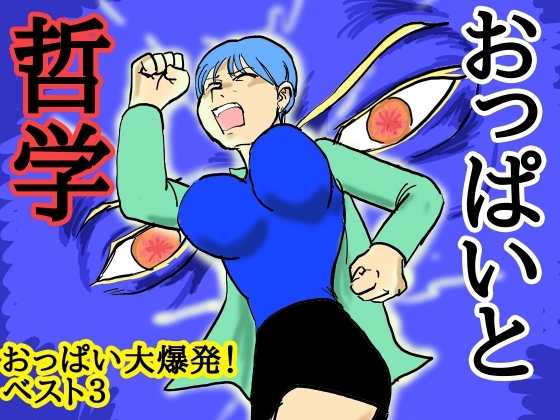


Nyubo is the clinical term. Kyonyu is the trade-press coinage. Oppai is the word everyone actually uses, from a child asking for milk to a Twitch chat erupting at a clip’s first frame.
Overview
Oppai (Japanese: おっぱい) is the everyday Japanese colloquial term for breasts, and by extension for breast milk. It occupies a distinctive position in the Japanese lexicon: it is simultaneously an infant-speech word used by toddlers and a fully adult slang term used in casual and erotic registers. The same single morpheme covers both ends of the social spectrum, with the surrounding context determining the register.
Adjacent vocabulary illustrates the position. Nyubo (乳房) is the formal Sino-Japanese term used in medicine. Chichi (乳) is the Yamato-Japanese root word, more often used in compound forms than as a stand-alone noun. Kyonyu (巨乳, “large breasts”), bakunyu (爆乳, “explosive breasts”), binyu (美乳, “beautiful breasts”), and hinnyu (貧乳, “poor breasts”) are size-classified trade terms that emerged in the 1980s and 90s adult-industry trade press. Each occupies a distinct discourse domain: medical, classical, industry-classifying. Oppai is the substrate term that the others build on.
Through the 2000s the word has become an international loan in anime and manga fandom, reproduced in romanised form as oppai in English-language fan vocabulary alongside the native boobs and tits.
Etymology
The infant-speech origin
The most widely accepted etymological account derives oppai from infant speech. Infants nursing produce reduplicated bilabial syllables of the form pai-pai or pa-pi. The Japanese honorific-and-affectionate prefix o- is attached, yielding o-pai-pai, which contracts and conventionalises to oppai. The Nihon Kokugo Daijiten (Shogakukan, 2nd ed., 2001) takes this position and cites usage examples from the late Edo and Meiji periods, establishing the word as documented in written Japanese by the second half of the nineteenth century.
The infant-speech route is part of a broader cross-linguistic pattern. Words for breast and breast milk in many languages cluster around bilabial stops [p] [b] and the bilabial nasal [m] in reduplicated forms (mama, papa, pai, boo). Roman Jakobson’s classic analysis attributed this to the developmental order in which infants acquire articulation: bilabials are the easiest sounds for the very young vocal tract to produce, and reduplicated forms emerge before more complex syllable structures.
Tomosada Kenji’s Yojigo Jiten (Dictionary of Japanese Infant Speech, 1997) collected regional variants for breast across Japan and recorded pai, paipai, bobo, and chicchi as the principal forms. Oppai corresponds to the variant that won out under the standardising influence of Tokyo-dialect-based modern Japanese.
Folk etymologies
Several folk-etymological accounts circulate in popular writing. One derives oppai from o-ippai (“plentiful, full”), suggesting that the word refers to the breast becoming “full” with milk. Another argues for derivation from related onomatopoeic forms. Neither has manuscript or dictionary support in the form of attested intermediate stages, and standard etymological references do not adopt them.
Vocabulary structure: oppai vs nyubo vs kyonyu
The lexical division of labour between oppai, nyubo, and kyonyu shows the structure of the field clearly.
Nyubo is the formal medical term and appears in clinical language: nyubo-zoyu (breast augmentation), nyubo X-sen (breast X-ray), nyubo-gan (breast cancer). Substituting oppai in any of these phrases produces a register clash that native speakers will reject as unnatural.
Oppai is the language of domestic and intimate life: aka-chan ga oppai o nomu (“the baby is drinking oppai”), oppai no jikan (“oppai time”, a parental phrase for feeding). Substituting nyubo in these phrases is also unnatural; it would sound like medical language inserted into a children’s bedtime conversation.
Kyonyu is industry-trade vocabulary for breast size as a marketable category. It enters the language in the mid-1980s through adult-video and grayure-magazine trade press, and it carries the marketing logic of size-tier classification. Watashi wa kyonyu ni akogareru (“I admire/aspire to be kyonyu”) is a coherent sentence; watashi wa oppai ni akogareru is barely interpretable because oppai is not a comparative class.
This is why the Kyonyu no Tanjo (Yasuda, 2017) treatment of breast representation in postwar Japan can use oppai throughout as the substrate referent, while reserving kyonyu for the moment in the 1980s when size becomes a marketing category.
Postwar reception
In postwar Japanese mass media, oppai found a comfortable mid-register slot. It was less clinical than nyubo, less rude than other available vulgar terms, and acceptable for use in domestic contexts where the more obviously sexual vocabulary was not. Through the 1950s, 60s, and 70s the word penetrated weekly magazines, late-night television, and the wider popular media.
A parallel postwar coinage, boin (from the English bouncy, a contemporary reading), was popularised in 1968 when the late-night television show 11PM (host: Hashimoto Osamu, Nippon TV) used it to refer to the singer-hostess Asaoka Yukiji’s chest. Boin established itself as a fashionable, English-flavoured slang term in the 1970s, while oppai continued to occupy the deeper, less time-stamped substrate.
The position of oppai in Japanese broadcasting regulation is delicate. Direct sexual usage falls under industry self-regulation, but parenting, health-show, and comedy-show usage is widely permitted, and the line aka-chan wa oppai o nonde okiku naru (“babies grow up by drinking oppai”) is unremarkable on children’s programming. This combination of explicit-context restriction and domestic-context permission is rare for slang vocabulary and helps explain why the word has held its mid-register position over decades.
Cultural codification: oppai in anime and manga
From the 1990s onward, manga and anime developed a stylised visual and onomatopoeic vocabulary around the breast. The first-appearance shot that emphasises physical size, the exaggerated jiggle motion, and the standard onomatopoeic effects (boin-tsu, purun-tsu) all became codified visual conventions of the medium.
The derived noun oppai-seijin (“oppai-being”, literally “person from the oppai planet”) emerged as fan vocabulary in the 1990s, meaning a person obsessively interested in breasts. The -seijin suffix is a productive 1990s-onward formation, also producing loli-seijin, megane-seijin, twintails-seijin, and many others; oppai-seijin is one of the earliest and most widely distributed.
The 2009 mainstream film Oppai Volleyball (dir. Eiichiro Hasumi, starring Aragaki Yui Haruka Ayase), based on Mizuno Sotoku’s 2006 Shueisha novel, demonstrated the word’s ability to appear in fully mainstream contexts: a school-set youth film, named with oppai in its title, screened on the national distribution circuit and advertised through ordinary newspaper, television, and trailer channels. The film’s success confirmed a pre-existing social fact: that oppai, though slang, sits comfortably enough in the language that it can carry mainstream titles without triggering rejection.
Internet memes and the loanword
Reaction-word usage
From the late 2000s, internet anonymous-board and video-comment culture (2ch, Futaba, Niconico) developed a use of oppai as a one-word reaction term. Comment streams attached to scenes featuring female characters or performers would fill with strings of oppai, oppai! unrelated to specific bodily description. The word had moved out of its noun function and into a function-word position, signalling a collective excitement-response rather than referring to anything in particular.
This usage parallels the English-language boobs! or tits! reaction calls, but with a softer phonetic profile: oppai’s reduplicated bilabial structure carries less aggressive a sound than the English equivalents, which is part of why the word has travelled.
VTuber and streaming culture
Through the late 2010s and 2020s, VTuber chat culture canonised the oppai reaction comment. Streams from major agencies (Hololive, Nijisanji) routinely see oppai comments arrive in clusters regardless of the actual stream content, with the streamer’s responding routine treating the comments as a standing meme. The form is now a settled element of Japanese-language streaming chat.
English-language loanword reception
In English-speaking anime and manga fandom, oppai has been adopted in romanised form as a loanword sitting alongside native English equivalents. Anime tag systems, English-language fan-fiction sites, and YouTube and Reddit anime communities all use oppai as a recognised term, often in contexts where it carries a slightly different register-marking than the native boobs or tits. The native English terms read as colloquial or vulgar; oppai reads as fandom-marked and culturally specific, and that distinction is part of why the word has found a stable place in the English-language fandom vocabulary.
See also
Updated
References
- 『Nihon Kokugo Daijiten (2nd ed.), entry oppai』 Shogakukan (2001) — Reference dictionary entry tracing the infant-speech origin and early-modern usage examples.
- 『Kyonyu no Tanjo: Okii Oppai wa Do Hakken Sareta ka (The Birth of Kyonyu: How Big Oppai Were Discovered)』 Ota Shuppan (2017)
- 『Nihon Zokugo Daijiten (Japanese Slang Dictionary)』 Tokyodo Shuppan (2003)
- 『Yojigo Jiten (Dictionary of Japanese Infant Speech)』 Tokyodo Shuppan (1997)
- 『oppai, n.』 Jisho.org / WWWJDIC (community dictionary) — Loanword reception in the English-speaking anime community. https://jisho.org/word/oppai
Also known as
- boobs
- tits
- breasts (colloquial Japanese)
- ja: おっぱい
- ja: 乳