Kotoba-zeme (verbal teasing)
✎ 本文編集 (admin) 🖼 画像編集 (admin)“Kotoba-zeme (verbal teasing)” works on DLsite





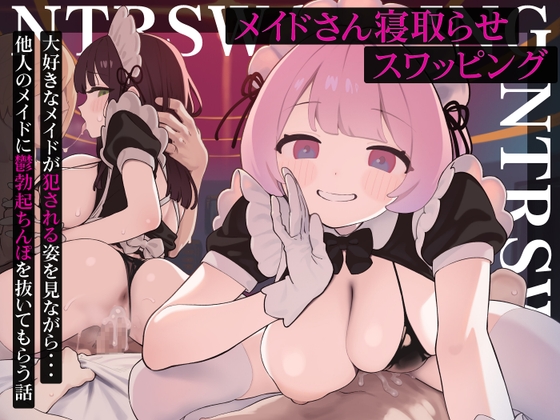


In a curtained bedroom a woman puts her mouth to a man’s ear and says something in a low voice. He shrinks under the covers, all his attention on the resonance of the voice. The hands have not yet moved. They need not. The temperature of the voice and the cadence of its endings alone unravel him from within. Kotoba-zeme (Japanese: 言葉責め, “teasing with words”) is the use of words during or around sex to provoke a partner’s shame, sense of submission, and sexual arousal. It covers not only verbal abuse but commands, running commentary, ear-whispering, humiliating questions, mockery, and inverted praise, a broad operative concept.
Etymology and formation
The native combination “to tease with words” is old. The captions of Edo shunga and erotic albums include dialogue formats that shame the partner through question and answer, with verbal flirtation and provocation a key element of the scene. But the settling of “kotoba-zeme” as a genre name within SM is postwar: it appears in 1970s Dan Oniroku-lineage SM fiction and in the glossaries of SM magazines as the counterpart to “physical teasing,” and came to broad recognition as a standard technique of 1980s erotic fiction. It is conceptually close to English dirty talk and verbal humiliation, but where the latter is fairly confined to BDSM contexts, the Japanese term has a wide reach extending into soft romantic scenes.
Types of the act
Kotoba-zeme divides into several typical modes by the teaser’s intent and the teased partner’s response. First is the abuse mode: words that degrade the partner’s character or conduct provoke shame, functioning as an entry to soft psychological training. The choice of degrading words is culture-specific; in Japanese, social-evaluation words like “unsightly,” “shameful,” and “shameless” are held to work better than direct naming of genitals or acts, the structure of being made to confirm one’s deviance through words forming the core of arousal. Second is the command mode: direct instructions (“don’t move,” “open your legs,” “touch yourself”) place the partner in subordination, the awareness of “now moving exactly as told” confirming the transfer of control linguistically, with submission foregrounded over shame. Third is the commentary mode: describing the act aloud as it happens (“now I’m licking here,” “look how your body is reacting”) forces the partner to recognise that their own body is under another’s gaze, functioning as a shame-involving psychological play. Fourth is the questioning mode: making the partner answer (“what’s being done to you?” “say you want it yourself”) takes the form of a confession, the desire verbalised the moment it is spoken, the way back sealed linguistically. Fifth is the inverted-praise mode: positive words (“you’re good at this,” “such an obedient girl”) used with shifted context, emphasising the partner’s obedience or depth of desire, easy to introduce in soft romantic scenes since it carries no explicit contempt.
Reception and appeal
Kotoba-zeme is durably supported because it works regardless of the amount of physical contact. In doujin audio (ASMR), erotic fiction, and voice dramas, arousal must be built through words alone without visual information, making kotoba-zeme the core technique; the boom in ear-licking and binaural-whisper doujin audio shows the scale of demand. In real sex too, kotoba-zeme functions as a low-physical-load act little constrained by age or fitness; where the physical teasing of SM demands strength and skill, kotoba-zeme works on vocabulary and vocal delivery alone, holding some support among older practitioners as a means of sustaining a long relationship and as an alternative to contact-dependent play.
Psychologically, the arousal of kotoba-zeme derives from the experience of having one’s state verbalised by another. When sensations and reactions usually held inside the self are externalised by another’s voice, a sense arises of being observed and evaluated beyond one’s own control. This externalisation is the substance of the sense of submission, while simultaneously granting the recognition that “I monopolise this person’s attention.” The ambivalent mechanism of pleasure underlies the durable appeal of kotoba-zeme.
Distinction from neighbouring concepts
Kotoba-zeme is continuous with abuse and training but differs in extension. Abuse requires the use of contemptuous words, whereas kotoba-zeme works also through commands or inverted praise containing no contempt. Training connotes long-term transformation of a relationship, whereas kotoba-zeme can complete as a single act. It neighbours ASMR whisper voice, but where ASMR aims at comfort and ease, kotoba-zeme deliberately evokes shame, submission, and arousal, differing in purpose.
In creative works
In erotic manga, eroge, and doujin audio, kotoba-zeme circulates as a nearly independent genre tag. On DLsite and other doujin platforms, “kotoba-zeme,” “whisper,” and “ear-teasing” function as individual search keys, the teaser’s vocal colour, vocabulary design, and line delivery becoming the axes of evaluation, with the voice actor’s whisper acting, the script’s word choice, and the timing of pauses established as quality indicators. In AV, it is incorporated as a core element of chijo works and works aimed at submissive men, the performer’s vocalisation and delivery becoming the point of product differentiation.
Related Terms
Updated
References
- 『The History of Sexuality』 Gallimard (1976)
- 『Language and Sexuality』 Cambridge University Press (2003)
Also known as
- dirty talk
- verbal teasing
- ja: 言葉責め
- ja: ことばぜめ
Related
- Namida-zeme (tear play)
- Fisting
- Jirashi (teasing / sexual denial)
- Shallow teasing bounce (jirashi-jouge)
- Kanchou (enema, in adult-fiction context)
- Face-burying position (kao-nose)
- Water play (mizu-zeme, BDSM context)
- Hana to Hebi (Flower and Snake)
- Masochism
- Piercing Fetish
- M-Seikan (Female-Led Pleasure Service)
- Hazukashi Play (Embarrassment Play)