Shukan (POV Filming)
✎ 本文編集 (admin) 🖼 画像編集 (admin)“Shukan (POV Filming)” works on DLsite
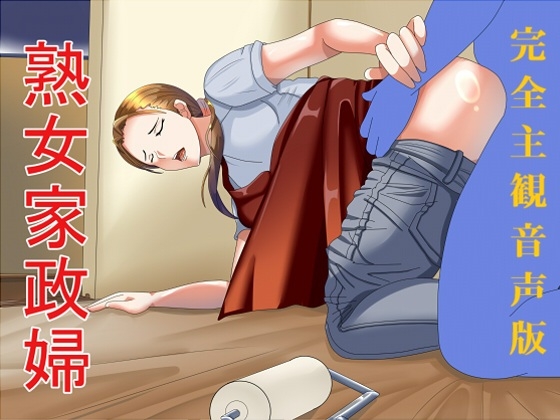
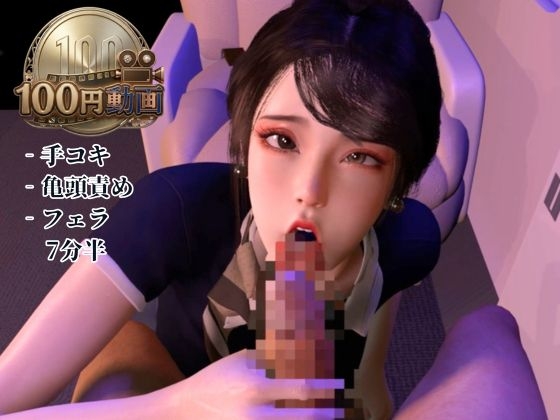
Put the camera at the male performer’s eye height. That alone makes the viewing experience a different thing. A small choice of cinematic technique created a genre.
Shukan (主観, subjective) is the umbrella term for an AV and adult-video filming technique that shoots the female performer from a camera angle and position close to the male performer’s viewpoint. It is a distinctively Japanese industry term corresponding to the Anglophone POV (point of view), understood as a filming style that became an independent genre from the 2010s as staging that strengthens viewer self-insertion.
Overview
In POV filming the camera is set near the male performer’s head or chest height, reproducing on screen a composition close to his field of view. Often part of his body (arm, torso, hips) appears at the bottom of the frame, aiming at the effect of the viewer borrowing his viewpoint to experience the scene. Where traditional AV filming centred on a third-person composition that objectively shows both performers from overhead, distant, or multiple switched angles, POV filming maximises viewer self-insertion. Its formation as an independent genre advanced within the 2010s industry context of intensifying competition and response to fragmented viewer tastes. POV may be adopted consistently through a whole work, called “POV-only,” forming an independent genre, or only in part of a work, used within mixed-method releases.
Etymology
Shukan is a Sino-Japanese compound of shu (main) and kan (to view), a modern Japanese translation word in philosophy and epistemology meaning “the standpoint seen from individual consciousness” and “the counterpart to the objective” (translating subjective, German subjektiv). The academic translation term that settled in the Meiji period was repurposed as AV-industry vocabulary from the late twentieth century. The Anglophone counterpart is POV (point of view), originally a general term of literary and film criticism from the early twentieth century, which generalised as industry vocabulary for this filming method in the Anglophone adult-video industry from the 2000s. The fixing of “shukan” as Japanese industry vocabulary appears to have advanced from the late 2000s into the 2010s, settling as an independent genre name as the viewership expanded.
History
First-person viewpoint has been attempted early in film history; Robert Montgomery’s Lady in the Lake (1947), shot entirely in the protagonist’s first-person view, is a classic example. In adult works too, partial first-person composition close to the male performer’s viewpoint is found from the 1970s. From the 2000s, with the shift from videotape to DVD and the full arrival of internet distribution, the AV industry advanced the sub-division and genre-ification of filming methods, and POV works were produced and distributed as a specialist genre. In the late 2000s the vogue for POV works in the U.S. and European adult-video industry gave a degree of influence to the Japanese industry, and “shukan” established itself as an independent genre.
From the 2010s POV filming established itself as a core AV genre, with specialist labels, series, and performers, and a body of production specialised in the method. In the genre classifications of major distribution platforms such as FANZA and DMM, “shukan” appears as an independent category. While the genre centres on staging that strengthens viewer self-insertion, it carries its own filming constraints (limited field of view, restricted male-performer movement) and has developed its own staging techniques. From the late 2010s, with the spread of VR, POV filming in VR formed an independent genre offering a more immersive experience qualitatively different from flat-screen POV.
Derived forms and adjacent concepts
POV filming sub-divides by method: full POV (camera fixed at the male performer’s head, synchronising his bodily movement and camera movement); pseudo-POV (camera near his head while keeping editing freedom); and partial POV (POV only in part of a work).
Gonzo (hamedori), the method in which the male performer himself films while engaging in the act, is sometimes positioned as a form of POV filming. The two overlap, but gonzo centres on the person-arrangement of “the filmer doubling as the performer,” while POV centres on the choice of viewpoint position. In recent POV works, audio is often also worked on to raise immersion: binaural recording (two-microphone recording near the position of the two ears), whispering, and approach sounds function as techniques connecting to the adjacent ASMR field. The formation of POV as an independent genre runs parallel to the rise of work-types with a more explicit function of supporting the viewer’s self-insertion during masturbation; the filming method that maximises self-insertion is discussed as directly serving that function.
Cultural references
The support base for POV works overlaps partly with the traditional AV audience but has its own characteristics, with a viewership that values self-insertion forming the core fan group. As theory of expression, POV holds the position of an alternative to the traditional third-person-based visual expression, and is of distinctive interest in thematising the choice of viewpoint as a core element of the work.
See also
Updated
References
- 『Adult Video Kakumeishi (A Revolutionary History of Adult Video)』 Gentosha Shinsho (2009)
- 『Pornography: Men Possessing Women』 Putnam (1981) — On viewpoint staging and viewer psychology.
Also known as
- subjective POV
- point-of-view filming
- POV-style shooting
- ja: 主観
- ja: 主観モノ
Related
- Massage Play
- Gyaku-nan (Reverse Pickup)
- Flight Attendant Genre (Stewardess Theme)
- Chikan-Themed Train Media (Fictional Adult Genre)
- Dark Elf (Fantasy Character Archetype)
- Mind Break (Hentai Tag and Narrative Type)
- Oyakodon (Mother-Daughter Threesome Trope)
- CBT (Cock and Ball Torture)
- Gothic Lolita
- Leotard
- Masochism
- Piercing Fetish