Massage Play
✎ 本文編集 (admin) 🖼 画像編集 (admin)“Massage Play” works on DLsite

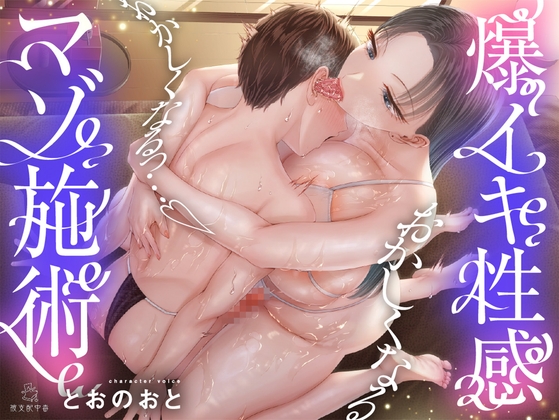

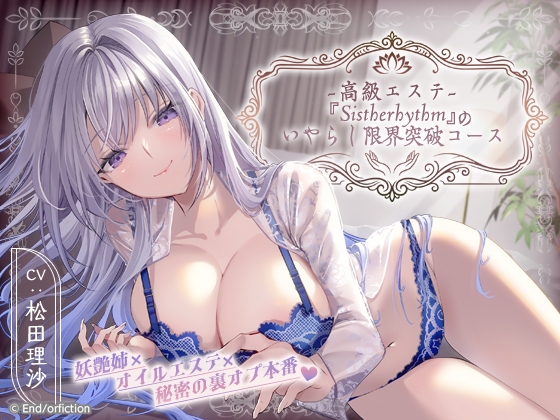


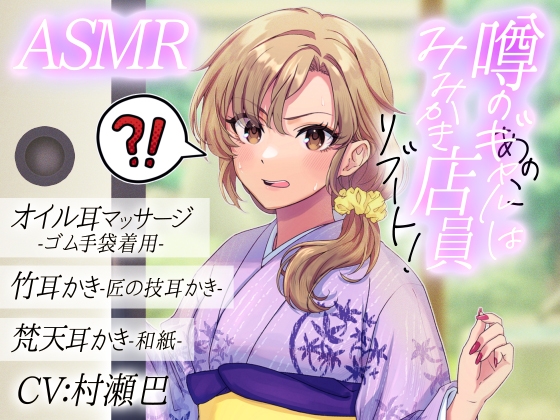
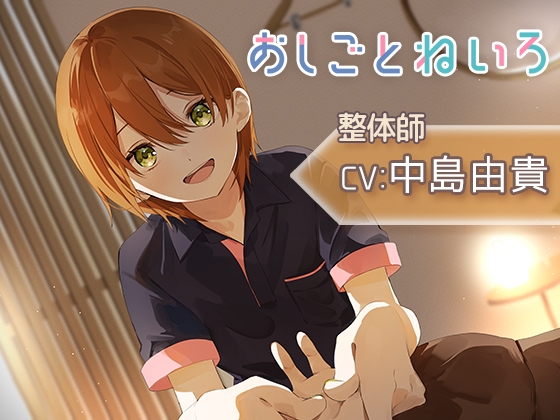
A woman laid face-down gives herself to the sensation of the masseur’s hand tracing her back. Shoulders first, then the waist, then the calves, and the moment the palm reaches the inner thigh her back lifts slightly. The practitioner says nothing and does not stop the movement of the hand. Before long she bites her lip not to make a sound, pressing the breath that leaks anyway into the pillow. Massage play is the term for a staging mode that disguises a practitioner-client relation as sexual contact.
Overview
Massage play is a role-play situation genre distinct from the business of sensual massage or rejuvenation massage as an actual trade. The former refers to a real trade run as a sex-industry business; the latter refers to a narrative type that, as a staging mode in AV, eromanga, and doujin, turns the practitioner relation into sexual activity.
It takes the two-party relation of practitioner role and client role as its base, using visual signs of a treatment table, towel, oil, treatment clothing, and a private room. In most cases the structure begins with the client not conscious of, or resisting, sexual contact, and as the treatment proceeds the guard relaxes and finally reaches a sexual act. This very transition, “from lowered guard to sexual act”, forms the core of the staging.
Staging grammar and structure
Works of massage play follow a nearly fixed stage structure. In the first stage the practitioner treats the ordinary massage range (back, shoulders, waist), and the client relaxes and gives in. In the second stage the practitioner reaches into the boundary zones (thigh, buttock, flank), and the client, aware yet not raising a voice, asks inwardly “is this part of the massage”. In the third stage direct contact with genitals and erogenous zones begins, and the client’s shame, resistance, and resignation are depicted. In the fourth stage it reaches a sexual act.
This staged progression connects easily with the structure of teasing. Because the act of massage is premised on an ambiguous zone of “touching but not a sexual act”, for the viewer too the time spent waiting for “when it will cross” produces a teasing effect.
Derived forms
The seitai (manual-therapy) massage type takes the role of a manual therapist, disguising a medical-like act to reach sexual contact. The esthe massage type is set in a beauty salon, depicting an event at a women’s treatment shop. The home-visit massage type is set on a treatment dispatched to home or hotel, exploiting the tension of enclosed space. The maternity-massage type disguises a treatment for pregnant women, combined with the married-woman type and the husband-away setting. The voyeur type sets a hidden camera in a shop to film the woman during treatment. The male-rejuvenation type reproduces the business of sensual massage within AV.
Background of the reception psychology
Several structural factors overlap behind the steady popularity of massage play. First, the premise of legitimised bodily contact: massage is recognised as a socially legitimate occasion for bodily contact, and by the time the client lies on the treatment table they have lowered their defences. The structure of turning this “already-disarmed body” into a sexual zone holds strong psychological pull for the viewer.
Second, the staging of postures hard to resist from: face-down, face-up, and prone treatment postures are all positions from which active resistance is hard to take, functioning as a visual sign of passivity and defencelessness. Lying down and entrusting oneself to another is itself a sign of submission and relaxation.
Third, the narrative structure of staged transgression of the relation: the distant relation of professional and customer gradually increases in intimacy through bodily contact during treatment and finally slides into a sexual relation. This transition carries narrative thickness, accompanied by a narrative pleasure not obtainable from blunt sexual depiction.
Fourth, the ease of stepping into the dangerous zone of ambiguous consent: this is continuous with the real-world problems of sexual exploitation and voyeurism at treatment sites, and the viewer is required to hold the literacy to distinguish consumption as fiction from real events. Sexual harm at real massage and manual-therapy clinics is recognised as a social problem, and care is needed that staging within fiction does not affirm the real trade.
Crossing with industry terms
As industry terms, “massage-mono”, “seitai-mono”, and “esthe-mono” are used in parallel as AV genre tags. On distribution platforms such as FANZA and MGS they are searchable as independent categories, a field that draws steady search traffic over the long term. A “reverse massage” (chijo-style, with a female practitioner treating a male client) derives from this, forming an independent line as the AV adaptation of the sensual massage trade. The situation of a chijo masseuse treating a male customer holds a relation in which the male-rejuvenation-massage trade and AV staging mutually reference each other.
See also
Updated
References
- 『The Sociology of the Sex Industry』 Keiso Shobo (2017)
- 『The Sociology of AV Male Performers』 Takarajimasha (2014)
Also known as
- massage play
- sensual massage scenario
- massage parlor roleplay
- ja: マッサージプレイ
Related
- Mind Break (Hentai Tag and Narrative Type)
- Oyakodon (Mother-Daughter Threesome Trope)
- Iribitari (Lodger Cuckolding)
- Height Difference Fetish
- Sisters Threesome (Ane-Imouto Don)
- Chijoka (Becoming a Lustful Woman)
- Reading Fetish (Dokusho Fechi)
- School-Nurse-Office Scenario (Hokenshitsu)
- Ishukan
- Transfer-student moe (tenkousei)
- Senpai-Kohai Dynamic
- Koshu Benjo (Public Toilet, Derogatory Metaphor)