Senpai-Kohai Dynamic
✎ 本文編集 (admin) 🖼 画像編集 (admin)“Senpai-Kohai Dynamic” works on DLsite

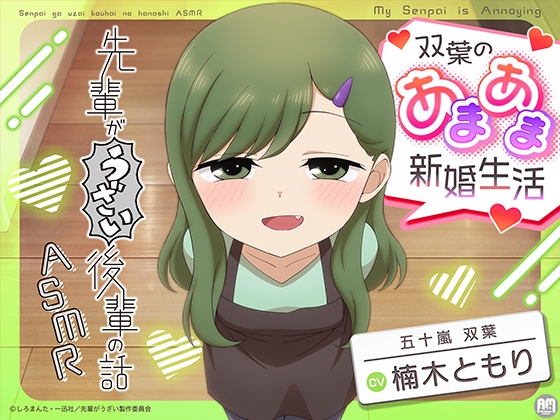
A corner of the clubroom, the evening after the last match. “Senpai, thank you for everything,” said a tone lower, signals that graduation is near. “I’ve always, about you,” he begins and stops, then: “is it all right if I drop the polite speech?” The senior had been a courteous junior for a year. The collapse of polite speech means the collapse of hierarchy and the reordering of the relationship at once.
The senpai-kohai dynamic is the umbrella term for a relationship kink that takes a cross-sex relationship premised on the vertical hierarchy of clubs, schools, and workplaces, turns it onto a romantic axis, and runs the psychological asymmetry of rank as the core element of the story. As a structuring of the Japanese vertical-society relationship style into a subcultural story-type, it has been deployed widely in bishoujo games, eroge, romance manga and anime, and doujin audio.
Overview
The core is the drama of an asymmetry imposed by social hierarchy reversing or collapsing as the relationship moves toward romance. The senior stands in a position of guidance, protection, and superiority; the junior shows respect, deference, and distance. When this role-setting collides with the move toward a sexual relationship, the hierarchical premise wavers and a new relational frame is born.
Narrative interest typically branches in two directions. The “senior→junior” type has the superior senior recognise the junior as a romantic object, moving from a protective to an affectionate stance; this couples readily with the older-sister attribute and forms a core story-type for older female characters. The “junior→senior” type has the lower-ranked junior accumulate admiration and attempt to cross the relational boundary.
The use and collapse of polite speech is the central staging device. The senpai-kohai relationship is typically maintained through keigo, and the instant it shifts to casual speech, dropping the honorific, or first-name address linguistically makes the crossing of the boundary visible. Lines like “is it all right if I stop using polite speech?” or “call me by my name, not senpai” serve as the symbolic moment of relational change.
Etymology
Senpai and kohai are old general words for “one who learned earlier” and “one who learns later.” After the establishment of the modern school system in the Meiji period, they settled into the present seniority-based relationship style of clubs, schools, and workplaces. Sociologically, Chie Nakane’s Japanese Society (1970) analysed the peculiarity of vertical hierarchy in Japan and noted its international distinctiveness. Subcultural derivatives such as “senpai-kohai situation,” “senpai moe,” and “kohai moe” formed in the 2000s bishoujo game and romance-anime context, as works set in clubs and schools mass-produced romance and a story-type centred on the senpai-kohai relationship was organised out separately.
In Anglophone fandom senpai-kohai dynamic is recognised as a distinctively Japanese relationship type, and senpai circulates as a loanword for “the upperclassman the protagonist secretly admires.” The meme “Notice me, senpai” is a symbol of that cultural penetration.
Scene types
Several standard scene compositions exist. The club scene is the most central: shared activity, instruction, and encouragement supply continuous legitimate contact, naturally building the psychological accumulation toward romance, with tennis, brass band, track, shogi, and photography clubs as background settings. The after-school clubroom, classroom, or gymnasium scene provides the typical stage for an intimate, closed-room approach, with cleaning up, leftover work, or fetching a forgotten item supplying a “legitimate reason to be alone.” The retirement or graduation scene serves as the decisive trigger for relational change, forcing a decision within a physical time constraint at “the last tournament” or “graduation day.” The workplace new-employee training scene transposes the relationship outside the school context, combining with attributes such as “new office worker” and “trainer” to form more complex relational types.
Reception psychology
The genre’s stable support in Japanese subculture rests on the fact that the relationship style is experientially shared as a basic mode of Japanese social relations. Most Japanese experience senpai-kohai relationships at school and work, and hold memories of “the moment I might have re-recognised that senior as a sexual object” or “the moment a junior might have shown me affection.” Projection onto these memories makes up the genre’s psychological pull. The conversion of a hierarchical relationship onto a romantic axis is a Japanese variation on the universal theme of the collision of social role and private feeling, and the renegotiation of those roles itself constitutes the drama.
In adult works, the dynamic frequently compounds with adjacent attributes such as tsundere, the older-sister attribute, and the childhood-friend situation, yielding refined types like “tsundere senpai” and “childhood-friend-and-senpai.” In recent doujin audio and situation-voice works, audio centred on the senpai-kohai relationship is steadily supplied, with the use, collapse, and address-change of polite speech as the central means of expression.
See also
Updated
References
- 『Japanese Society』 University of California Press (1970) — Classic analysis of the vertical-hierarchy structure of Japanese social relations.
- 『Otaku Yougo no Kiso Chishiki』 Takarajimasha (2014)
Also known as
- senior-junior relationship theme
- senpai-kohai moe
- ja: 先輩後輩シチュ
- ja: 先輩後輩関係
Related
- Oyakodon (Mother-Daughter Threesome Trope)
- Menhera (Emotionally Unstable Archetype)
- M-Seikan (Female-Led Pleasure Service)
- Height Difference Fetish
- Sisters Threesome (Ane-Imouto Don)
- Reading Fetish (Dokusho Fechi)
- Twins Moe (Futago Moe)
- Step-Parent Theme (Giri no Oya-kei)
- School-Nurse-Office Scenario (Hokenshitsu)
- Batou (verbal humiliation play)
- M-otoko (submissive male, Japanese context)
- M-onna (submissive female, Japanese context)