Armpit fetish (waki)
✎ 本文編集 (admin) 🖼 画像編集 (admin)“Armpit fetish (waki)” works on DLsite
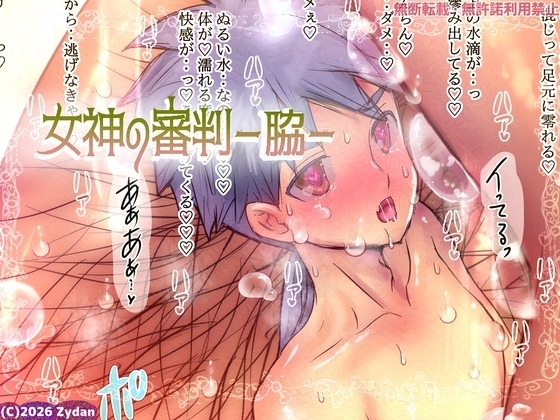

A raised arm, a fold of skin, a band of skin somewhat paler than the rest. The site has been recognised in sexology since the late nineteenth century, in classical-Indian erotic literature for two millennia, and in contemporary international fan culture since the 1990s. The armpit fetish — waki fetish in the Japanese vocabulary, axillism in the older sexological term — is one of the more durable body-part fetishes, with international fan communities and a reasonably substantial documentary record.
Overview
Armpit fetish (English: armpit fetish, axillism; Japanese: 脇フェチ, waki fetish; medical-anatomical: axilla / axillary fetishism) is the kink-and-aesthetic category for sexual or aesthetic interest focused on the armpit and adjacent body-region. The category has been recognised in international sexology since the late-nineteenth-century work of Havelock Ellis, in which it appears as one of the documented loci of erotic-response variation among the human population.
The body-region in question — the axilla or armpit — is the hollow at the junction of the upper arm and the torso, between the shoulder and the chest. Anatomically, the region has several features that distinguish it from other body surfaces: the skin is thin and relatively pale, the underlying connective tissue contains a dense lymph-node network, and the apocrine sweat glands (distinct from the eccrine glands distributed across most of the body, and operating on hormone-dependent activation) are concentrated in this region along with the genital and nipple areas. The combined features produce a body-region with distinctive thermal, olfactory, and visual properties that distinguish the armpit from neighbouring skin.
The fetish category divides on the narrow and broad axes. The narrow definition is interest specifically in the armpit’s skin surface — the visual and tactile properties of the axillary skin. The broad definition extends to the armpit’s associated features: armpit hair (or its removal-trace), axillary perspiration, the characteristic scent the apocrine glands produce, and the gestures of arm-raising that expose the armpit. Fan communities operate with the broader definition by default; clinical sexology operates with the narrower definition.
Etymology and definition
The Japanese 脇 (waki) and 腋 (eki; sometimes also read waki) are nearly-synonymous variants meaning “side” or “armpit”, with 腋 occurring more often in medical-anatomical contexts. The compound waki-fechi (脇フェチ) is the contemporary subcultural-fetish category term. The English axillism is derived from Latin axilla (armpit) on the model of fetishism / paraphilism word-formation patterns, and was current in late-nineteenth-and-early-twentieth-century sexological vocabulary; armpit fetish / armpit kink is the more current contemporary English term.
The category covers, in standard fan-vocabulary use:
- Axillary skin: the visual and tactile properties of the armpit-region skin.
- Axillary hair (or its removal trace): the presence of underarm hair, its texture and density, or — in the armpit-kink sub-register that prefers shaved armpits — the smooth surface of the freshly-removed hair-region.
- Axillary perspiration: the moisture characteristic of the apocrine-gland-active region, particularly during athletic activity, in warm conditions, or during emotional response.
- Axillary scent: the characteristic apocrine-gland scent of the region, treated by the scent fetish tradition as a related-and-overlapping kink.
- Arm-raising gesture: the act of raising the arm to expose the armpit, treated as a visual signal of accessibility-and-exposure.
History
Classical and pre-modern background
Erotic interest in the armpit appears in classical-Indian erotic literature. The Kama Sutra of Vatsyayana (4th–7th century CE, traditionally dated to between the 200s and the 400s CE) explicitly addresses kissing, caressing, and other engagement with the armpit as part of its catalogue of erotic practice. The text’s broader catalogue of bodily attention sites includes the armpit alongside the breast, the neck, and other recognised loci, and the armpit’s status as an erotic body-region in classical Sanskrit erotic literature is well-documented.
In classical Greek and Roman erotic literature, the armpit appears as a recognised erotic-attention site, with references in the Imperial-period love-poetry tradition (some attributed to Hadrianic and post-Hadrianic court writers) addressing armpit-caress and armpit-scent as elements of the lover’s encounter. The Mediterranean classical-erotic-literature tradition treats the region as one of the recognised body-attention sites, alongside the more frequently-cited registers.
In medieval and early-modern European literary tradition, the armpit appears less frequently in the erotic-attention vocabulary, with the religious-and-ascetic tradition’s treatment of bodily perspiration and bodily-fluid registers as morally-suspicious territories shaping much of the period’s writing on the area. The shift began with the early-modern poetry of late-Renaissance Italy and Spain, in which the armpit-as-erotic-attention-site begins to reappear in the written record.
Modern Western: from Ellis to fan culture
Havelock Ellis’s Studies in the Psychology of Sex (Volume IV: Sexual Selection in Man, 1905) addresses axillary erotic response as one of the documented categories of erotic-response variation. Ellis’s framework was descriptive rather than pathologising — the work treated armpit fetishism as a recognised pattern of sexual interest among the studied population — and the documentation of the category in mainstream sexology dates approximately from this period.
The Western-language armpit fetish community has developed substantially in the internet-era. International fan communities organise around the kink, with dedicated forums, online photo-and-video archives, and substantial production of dedicated content. Within Western body-fetish hierarchy, armpit-fetish is generally treated as the most-developed independent body-part-fetish category after the foot fetish, with substantial standing as a recognised independent kink.
Japanese: from postwar pin-up to subcultural-recognition
In postwar Japan, female armpit-hair was widely visible in mid-20th-century pin-up photography and film through the 1960s and 1970s, when underarm hair-removal was not yet a near-universal practice. The 1980s diffusion of hair-removal technology shifted the cultural-default toward shaved underarms among younger Japanese women, and the contemporary Japanese culture’s bilateral-default operates with both the unshaved and shaved registers as recognised variants — with the shaved register more standard in mainstream presentation and the unshaved register present in particular fashion-and-aesthetic contexts.
In Japanese subcultural vocabulary, waki fetish as a category-term consolidated through the 1990s and 2000s, with substantial doujinshi, eromanga, and adult-anime production specialising in the armpit-attention register. The Japanese-subcultural register tends to treat the armpit-fetish less as an independent category and more as one element within the broader body-fetish vocabulary alongside foot fetish, neck fetish, and similar parts.
The structure of the kink
The armpit-fetish kink operates on four structural elements that distinguish it from neighbouring body-fetishes.
The first is visibility instability. The armpit is normally concealed by the upper arm and is exposed only when the arm is raised, extended, or held at certain angles. This means the body-region is not continuously visible: glimpses of it are partial, time-limited, and conditioned on the arm’s position. The variable-visibility character produces a particular visual-attention dynamics — the brief glimpse, the moment of arm-raising, the held-pose that sustains the exposure — that is part of what the kink reads as appealing.
The second is skin texture and tone. The axillary skin is thin and relatively pale (less melanin and less weathering than facial or arm-side skin), producing a characteristic appearance distinct from neighbouring skin. The texture is also distinctive — softer, more flexible, with the skin moving against the underlying tissue in a way the neighbouring zones do not. The combination produces a body-region with its own visual-and-tactile signature.
The third is hair-presence variability. The armpit’s body-hair status is one of the few body-regions where Western contemporary culture maintains a binary default with both options visible. Some viewers prefer the natural-hair register; others prefer the shaved register; and the kink-community subdivides reasonably-evenly on the axis. The hair-presence variability is a structural feature of the kink that has produced two distinct sub-registers within it.
The fourth is the scent connection. The apocrine-gland concentration in the armpit makes it one of the body’s principal scent-emission sites, and the scent register’s overlap with the scent fetish tradition gives the armpit-fetish a sensory dimension that more visually-coded body-fetishes lack. The fan vocabulary treats the scent component as an integrated part of the kink’s appeal rather than as a separate category.
The category sub-divides further on the active-versus-passive engagement axis. Active sub-registers include armpit-licking, armpit-tickling, armpit-stimulation — the engagement-with-touch sub-register that connects to the broader licking-and-touching tradition. Passive sub-registers include armpit-watching (the visual register), arm-raised pose-watching, clothed-armpit visibility through clothing-gaps — the visual-observation register that connects to the clothed-erotic and observational fashion-fetish traditions.
Sub-forms and adjacent registers
- Shaved armpit: the smooth-skinned register, most standard in contemporary mainstream-fashion contexts.
- Unshaved (natural-hair) armpit: the natural-hair register, more standard in earlier 20th-century presentation and in some contemporary subcultural contexts.
- Tanned-and-darker armpit: the pigmentation-variation register, with its own dedicated fan attention.
- Sweat-coated armpit: the perspiration-foregrounded register, connecting to athletic and body-temperature-warm scenarios.
- Armpit-licking and oral-engagement: the active-touch register, connecting to broader oral-attention vocabulary.
- Armpit-tickling: the laughter-and-reaction register, connecting to the broader tickling-attention vocabulary.
- SM armpit attention: the SM-tradition inclusion of armpit as an attention-site within bondage and sustained-stimulation production.
- Restraint-pose armpit: the body-positioning register where restraint exposes the armpit as part of the pose.
- Sleeveless and arm-gap-clothing visibility: the visibility-through-clothing register, connecting to the broader clothed-erotic tradition.
International circulation
The contemporary armpit-fetish community has substantial international presence. Anglophone, French-language, German-language, Spanish-language, and Portuguese-language online communities maintain dedicated forums and content archives. Indian, Latin American, and Middle Eastern aesthetic-traditions have their own armpit-attention-and-visibility vocabularies — in those traditions the maintenance of natural underarm hair as an aesthetic-default has been more sustained than in Western-default culture, and the resulting visual conventions are distinct.
In Japanese commercial AV, dedicated armpit-fetish productions are a small minority of total production, but armpit-attention as a scene-element within productions in adjacent categories (cosplay, clothed-erotic, athletic-themed productions) is reasonably common. In Japanese anime and manga visual conventions, the summer-clothing armpit-gap (sleeveless tops, sailor-uniform short sleeves, athletic-uniform armpit-visibility) is a routine visual-attention site, with the production grammar treating the visible armpit as one of the available visual-attention loci alongside other clothing-gap registers.
Related Terms
- Foot fetish (ashi fetish)
- Navel fetish (heso fetish)
- Scent fetish (nioi fetish)
- Hair fetish (kami fetish)
- Nail fetish (tsume fetish)
- Hand fetish (te fetish)
- Clothed-erotic (chakui)
Updated
References
- 『Studies in the Psychology of Sex』 F. A. Davis (1897-1928) — Includes early discussion of axillary erotic response in Volume IV: Sexual Selection in Man (1905).
- 『Sexual Behavior in the Human Male』 W. B. Saunders (1948)
- 『The Smell Report』 Social Issues Research Centre (2001)
- 『The Kama Sutra of Vatsyayana』 Oxford University Press (2002) — Includes references to armpit as a kissing-and-caress object in classical-Indian erotic literature.
Also known as
- armpit fetish
- waki fetish
- axillism
- ja: 脇フェチ
- ja: 腋フェチ