“Group sex (fukusū-play)” works on DLsite


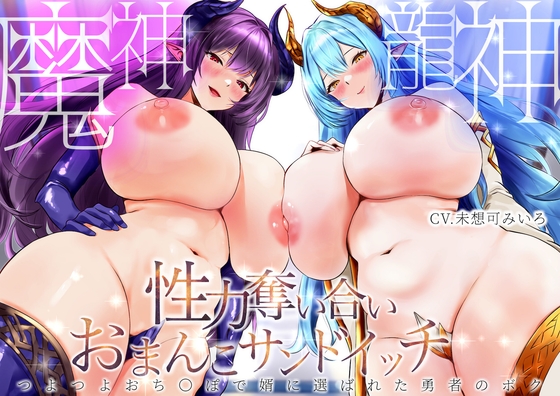


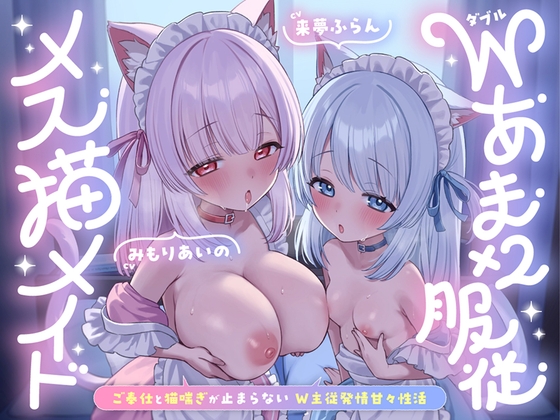


All participants in the depictions discussed here are fully-fictional adults of legal age, and the consent-and-negotiation framing that the responsible kink-and-non-monogamy literature establishes for real-life practice is treated as the baseline assumption throughout. Each additional participant past the dyadic configuration restructures the visual composition, the negotiation, and the safety-and-health prerequisites of the scene.
Fukusū-play (Japanese: 複数プレイ, fukusū-purei; English: group sex, multi-participant sex; specific configurations: threesome, foursome, orgy; Japanese sub-categories: 3P, 4P, rankō) is the Japanese-industry-and-vernacular umbrella term for sexual scenes with three or more participants. The category includes the dyadic-expansion configurations (3-and-4-person) where narrative-and-emotional frames typically remain attached, the larger-scale configurations (5 or more, named rankō in Japanese) where the visual-and-numeric scale becomes the foregrounded element, and the various sub-genres with consent-and-fantasy frames.
Overview
The Japanese sub-categorisation operates on participant-count and on the gender-composition axis.
- 3P: three participants (typically one male + two female, or two male + one female)
- 4P: four participants (two-and-two, one-and-three, three-and-one configurations)
- Rankō: five or more participants, as the threshold for the orgy-register naming
- Shūdan-rankō: larger-scale configurations (10+) with the mass-scale register
The P in the Japanese 3P / 4P / 5P abbreviation derives from English person (a wasei-eigo construction: an English-derived term that does not exist in English in this usage). Anglophone vocabulary uses the named forms threesome / foursome / fivesome and, for larger configurations, group sex or orgy, without the numeric-shorthand convention. The Japanese register thus runs the numeric-prefix sub-categorisation more granularly through the small-numbers range, with the threshold to the rankō-register at five-or-more.
In Japanese adult-content production, fukusū-play operates as a cross-cutting tag rather than as a discrete genre. The configuration combines with other principal categories: with bukkake, with netorare, with chijo, and with the harem-and-reverse-harem subcultural sub-forms.
Distinction in vocabulary
The Anglophone vocabulary distinguishes more sharply between the numerically-small configurations (threesome / foursome) and the larger-scale configurations (orgy / group sex). The two registers carry different cultural-emotional load: threesome often retains the frame of an experimental dyadic-expansion, orgy carries the frame of mass-scale-and-anonymous configuration with the etymological connection to the Greek orgia (Dionysian-mystery-rites).
The Japanese vocabulary distributes the registers somewhat differently. 3P and 4P operate as numeric industry-terms with neutral register-load. Rankō (乱交, “disordered intercourse”) originates in Sino-Japanese vocabulary as a general term for socially-disordered relations and has been narrowed in modern Japanese to denote the mass-scale-sexual-configuration. Rankō carries some of the orgy register’s transgression-coding but with the etymological-and-cultural background pulled from Sino-Japanese moral-vocabulary rather than from Greek-mystery-rite vocabulary.
The Anglophone swinging and swap registers (referring to consensual-non-monogamy practices of partner-exchange among couples) operate as adjacent but distinct categories. The Japanese vocabulary borrows these as loanwords (suwingingu, suwappingu) without producing native compounds with the same cultural depth.
Etymology
The Japanese compound fukusū-purei combines the Sino-Japanese 複数 (fukusū, “plural-count”) with the katakana purei (from English play, broadly used in Japanese adult-content vocabulary for sexual acts). The compound stabilised in industry vocabulary alongside the 1980s establishment of the AV industry’s tagging-and-categorisation conventions.
The numeric-prefix shorthand 3P / 4P / 5P stabilised in the 1990s as the industry’s shorthand for participant-count tagging in package design, scene-description, and consumer-vocabulary use. The kanji-compound rankō (乱交) is older Sino-Japanese vocabulary that was repurposed in modern Japanese for the specific mass-scale-sexual-configuration meaning. The English group sex is a direct descriptive compound; orgy derives via Latin from Greek orgia, originally referring to the rites of Dionysus and similar mystery-cults.
Historical record
Classical and pre-modern record
Group-sexual configurations appear in literary and visual records across multiple classical traditions. The Greek orgia (Dionysian mystery-rites) and the Roman Bacchanalia are widely-cited historical-religious referents for the mass-scale configuration in Western antiquity. The Indian Kāmasūtra (c. 4th century CE) catalogues group-configuration alongside dyadic positions in the Saṅghaṭa sections.
In Japanese visual record, the shunga (Edo-period erotic woodblock prints) repertoire includes group-configuration scenes within the standard composition vocabulary. Utamaro, Hokusai, and other major shunga artists produced multiple-figure compositions, with named composition-categories such as yotsume-ya (four-eyed) and sannin-gumi (three-some grouping) catalogued in period image-collections, indicating that the configuration had stabilised as a recognised visual category in early-modern Japanese erotic visual culture.
Modern industry establishment
The contemporary fukusū-play category developed primarily through the 1980s-onward establishment of the Japanese AV industry as an industrial commercial form. In the 1980s late period through the 1990s, the 3P and rankō sub-categories stabilised as discrete production-and-marketing categories, with multiple manufacturers developing dedicated series differentiated by participant-count and configuration.
From the 1990s onward, the fukusū-play configuration combined with bukkake, gokkun, and the broader group-staging-genre cluster. The multiple-male-against-one-female bukkake configuration operates as a sub-form of fukusū-play in the structural reading, though bukkake simultaneously functions as an independent category with its own production conventions.
From the 2000s onward, the netorare genre’s integration with fukusū-play configurations produced narrative-frame-bearing group-configurations where the multiple-participant structure reinforces the “possession-by-others” theme that NTR centrally develops.
Western parallel
The Anglophone group-sex production-and-cultural-discourse has developed along several parallel tracks. The 1970s American swinger-culture (chronicled in Gilbert Bartell’s 1971 Group Sex in the Seventies and similar period sociology) developed consensual-non-monogamy frameworks with practical and ethical articulation. The 1980s-and-1990s Anglophone academic and community literature, including Janet Hardy and Dossie Easton’s The Ethical Slut (1997), articulated the consent-and-negotiation-and-STI-prerequisite framework that has remained the standard ethical-articulation reference in subsequent decades.
The Anglophone adult-content industry developed orgy and gangbang sub-genres along similar timelines to the Japanese rankō category, with distinct production conventions in each tradition.
Sub-forms
3P / 4P
The minimum-scale configurations (3 or 4 participants). The configurations typically retain narrative-and-emotional frames as natural extensions of the dyadic structure. Male-1-female-2 configurations often operate from the male-viewpoint frame; male-2-female-1 configurations sometimes operate from the female-viewpoint frame or from the male-shame-and-jealousy theme that overlaps with the netorare register.
Swinging / swap configuration
The narrative-frame of multiple-couples-gathering, with influence from the 1970s-onward Anglophone swinger-culture and the loanword-vocabulary that entered Japanese adult-content. The Japanese implementation developed its own production-and-staging conventions while retaining structural reference to the Anglophone consensual-non-monogamy framework.
Harem configuration
The one-male + multiple-female configuration with the male-fantasy-fulfilment frame. The category operates primarily in the doujinshi, eroge, and ero-manga sub-cultural domains, with characteristic narrative-conventions that the live-action AV register replicates less centrally.
Reverse harem
The one-female + multiple-male configuration. Operates in two principal modes: as the chijo-genre extension where the female-as-active-figure dominates the multiple-male recipients, or as the narrative-device within bukkake and netorare configurations.
Mass-scale rankō (orgy)
5-or-more-participant configurations, with the production-logistics (participant-coordination, hygiene-and-STI-protocol, on-set choreography) being a significant determinant of the resulting work’s quality. The category operates closely with bukkake and gokkun for the larger-scale group-staging tradition.
Cultural and academic position
In sociology and cultural anthropology, group-sexual configurations are studied in connection with collective-bond-formation, ritual-boundary-dissolution, and temporary-departure-from-social-order functions. The Greek Dionysian-mystery and the Roman Bacchanalia have generated substantial scholarly literature on the ritual-and-religious framing of group-sexual configurations in classical antiquity.
In modernity, the individualisation-and-nuclear-family-and-privatisation-of-sex tendencies have produced a cultural framing of group-sex as transgression or taboo. The transgression-coding itself becomes part of the contemporary pornographic-genre frame, producing the paradoxical structure where the genre depends on its own transgression-coding for its appeal. This is a recurring topic in gender-and-media-studies literature on adult-content.
In gender-studies, the participant-composition and the agency-distribution within fukusū-play configurations are subjects of substantive analysis. The male-centred harem form is typically discussed as a maintenance-and-reinforcement of the traditional-gender-configuration; the chijo-style reverse-harem form is discussed as a structural-inversion. Both readings sit within the broader debate on the political function of sub-genre conventions in commercial adult-content.
Health and consent framework
Responsible practice in group-sexual configurations carries elevated requirements beyond those for dyadic practice. The principal additional requirements concern:
(1) Explicit negotiation: all participants discuss in advance what activities are within scope, what activities are out of scope, and what signals are used to indicate state-changes during the scene. (2) STI-and-health prerequisites: testing prior to the scene is widely recommended in the consensual-non-monogamy literature, with barrier-protection and fluid-bonding-status discussions handled in advance. (3) Safe-word and signal protocols: with multiple participants, the standard dyadic safe-word convention extends to a multi-party signal-system that all participants can recognise.
These framings are extensively articulated in the Anglophone consensual-non-monogamy literature (The Ethical Slut and parallel sources) and are referenced in responsible Japanese adult-content discourse as part of the kink-and-non-monogamy ethical framework that surrounds the fictional commercial-content register.
Related Terms
Updated
References
- 『Sexual Behavior in the Human Male』 W. B. Saunders (1948)
- 『Permitted and Prohibited Desires』 University of California Press (2000)
- 『The Ethical Slut』 Ten Speed Press (1997) — Foundational text on consensual non-monogamy and group-sex ethics.
- 『Group Sex in the Seventies』 Wyden Books (1971) — Sociological study of swinger culture and group-sex practice.
Also known as
- group sex
- threesome
- foursome
- orgy
- multi-participant sex
- fukusū-play
- ja: 複数プレイ
- ja: 乱交
- ja: 3P
- ja: 4P
Related
- Double penetration (DP)
- Awa-awa Play (Soapland Foam Body-to-Body Service)
- Anal (anal sex)
- Ashikoki (footjob)
- Back position (doggy style / rear-entry)
- Simultaneous penetration (douji-sounyu)
- Fera (fellatio / blowjob)
- Gansha (facial cumshot)
- Irrumatio
- Koneageru (to knead up)
- Foreplay (Zengi)
- Fudeoroshi (Sexual Initiation by an Older Woman)