Newlywed Theme (Shinkon)
✎ 本文編集 (admin) 🖼 画像編集 (admin)“Newlywed Theme (Shinkon)” works on DLsite


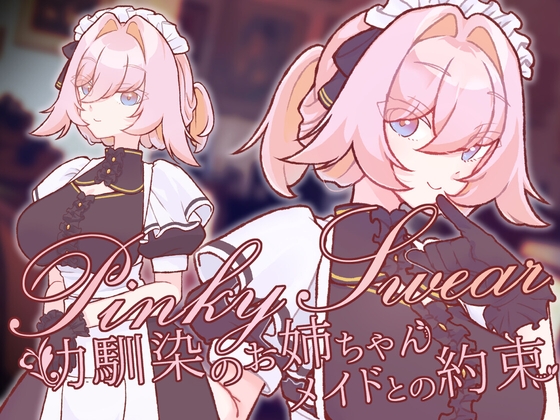

The moment the two are alone in the hotel room after the ceremony, the husband, having taken off his suit jacket, looks at his wife still in her wedding dress. From today this relationship carries legal and social recognition, and yet their bodies alone have changed nothing. Rather, the addition of the device called marriage brings a kind of intimacy that did not exist in the prior courtship, an equal measure of bashfulness, and a faint ceremonial quality. The newlywed theme commodifies the particular affect of this moment.
Overview
Shinkon ero (新婚エロ) is the umbrella term for the genre that places a couple just after the wedding or marriage at the centre, handling the first night, the early period of new married life, and the honeymoon. As a subcategory of the pure-love type, and while bearing relations to the married-woman and cuckold lines, it forms a stable market in eroge, eromanga, and AV as an independent narrative type.
The core of the definition is its handling of the particular period just after passing through the social institution of marriage. The narrative timeline runs from the day after the ceremony to a honeymoon period of some months, with the staging of the first night, the process of growing accustomed to married life, and the deepening of sexual mutual understanding as a couple at its core. The newlywed theme occupies a distinct position against similar genres: the pure-love type handles courtship in general, while the newlywed theme narrows to just after the rite of marriage; the married-woman line handles married women in general, while the newlywed theme stresses the specificity of just-after-marriage; the infidelity and cuckold lines handle the collapse and violation of marriage, while the newlywed theme depicts sexuality within the establishment of marriage and its lawful, social recognition.
The cultural position of the wedding night
The wedding night has been positioned in many cultures as a principal component of the wedding. In pre-Meiji Japanese marriage custom there existed communal rites confirming the couple’s sharing of a bed. With modernisation and the spread of the nuclear family from the Meiji period, the wedding night gradually left communal observation for the couple’s private domain. After the postwar high-growth period, the establishment of the honeymoon reconstructed the first night as a private rite at the lodging.
In contemporary Japan, premarital sex is broadly accepted, and cases where the wedding night is literally a “first experience” are a minority. Even so, the wedding night is still recognised as a symbolic milestone, providing the foundation for the genre. The ceremonial, social meaning of “first” rather than the factual one functions as the genre’s core affective device. As the sociologist Emiko Ochiai argues, contemporary Japanese marriage tends to be organised around emotional bonds rather than functional roles, foregrounding the “symbolic” over the “practical” value of the wedding-night rite, which is reflected in the newlywed theme’s emphasis on emotional and ceremonial staging.
Narrative types
The first-night type places the first night of the wedding day or the next day at the core, with staging such as removing the wedding dress, the hotel room, and the bride and groom’s bashfulness and anticipation. The new-life-adaptation type handles the early period of new-home life, depicting the embarrassment of the first day of cohabitation, the adjustment of housework, and the formation of nightly patterns as a long-form narrative. The honeymoon type sets the trip destination (an overseas resort, a hot-spring inn, a remote island) as the stage; in AV the “honeymoon-location shoot” is standardised, strengthening the sense of a real honeymoon through scenic location over studio. The pregnancy and first-child type sets the conception and birth of a first child as a milestone in the extension of married life, forming a connection point with pregnancy-themed works.
Reception
The psychological core of the newlywed taste lies in consuming sexual depiction within the safe domain of “a lawfully and socially recognised sexual relationship.” Where the infidelity, cuckold, and violation lines carry the negative drivers of transgression and coercion, the newlywed theme organises its story with the positive drivers of affirmation, recognition, and happiness. By identifying with its characters, the reader can pseudo-experience a relationship including social and legal recognition.
In the social context of rising unmarried rates and a heightened psychological and economic threshold to marriage in contemporary Japan, the newlywed theme functions in part as a device offering “the pseudo-experience of married life” as a product. It carries a romanticisation of a relationship (publicly recognised intimacy with one’s closest partner) that has become difficult to attain, and in this sense can be read beyond a mere sexual genre, as a cultural reflection of contemporary Japanese views of marriage and partnership.
Peripheral and derived genres
The newlywed theme sits on the extension of the pure-love type, the difference lying in the timeline: the pure-love type includes everything from meeting to building the relationship, while the newlywed theme narrows to the honeymoon period after marriage. Against the married-woman line, which tends toward the boredom or stability of married life or toward infidelity and cuckold developments, the newlywed theme handles the happy period just after marriage. Where it intersects the cuckold line, the setting of a wife just after marriage having a relationship with someone other than her husband forms an extreme structure of violation that inverts the genre’s positive driver. A marriage-counselling type, depicting overcoming small early frictions through the deepening of the sexual relationship, also exists as a more narratively long-form direction.
Related terms
- Pure-love type
- Married woman (hitozuma)
- Infidelity
- Cuckold (netorare)
- Eroge
- Eromanga
- Japanese AV
Updated
References
- 『Marriage in Changing Japan: Community and Society』 University of California Press (1971)
- 『Nihon no Kekkon (Marriage in Japan: Its History and Future)』 Keisō Shobō (2019)
Also known as
- Honeymoon-period genre
- Newlywed couple erotica
- ja: 新婚エロ
Related
- Ecchi (Japanese Softcore Erotic Genre)
- Haramase-mono (impregnation genre)
- Female-teacher genre (J-adult fiction)
- Kikaku AV (planning-format AV)
- Time-Stop Series (Japanese AV Genre)
- Interview-Themed AV (Mensetsu-mono)
- Documentary-style AV (J-AV genre)
- Cohabitation scenario (J-AV / hentai genre)
- Fantasy setting (J-eroge and adult game genre)
- AV comeback release (J-AV industry)
- Adultery scenario (J-AV genre)
- Gravure AV (J-AV with gravure-idol or gravure-style production)