“Renzoku-ikasare (continuous forced-orgasm narrative)” works on DLsite
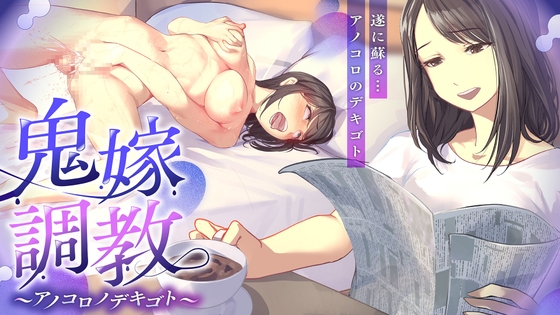

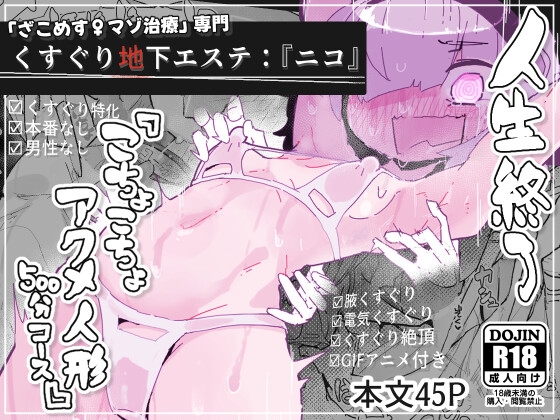

A bound figure, a vibrator held in place, a counter on the page incrementing through the scene. The Japanese fictional-and-AV genre has stabilised this combination of elements into a distinct narrative convention, renzoku-ikasare (continuous forced-orgasm), and the resulting category sits at the intense end of the Japanese fictional-narrative kink-vocabulary, with a particular structural focus on the depicted character’s loss-of-agency under sustained-orgasm pressure as the narrative-aesthetic engine.
Overview
Renzoku-ikasare (Japanese: 連続イカされ, renzoku-ikasare; literal compound: 連続 renzoku, “continuous / consecutive” + イカされ ikasare, the passive-causative form of the verb イク iku, “to come / to climax”; English working translations: continuous forced orgasm, multiple forced climax) is the Japanese AV-and-eromanga narrative convention of fictional or AV scenes in which the depicted female character experiences successive orgasms, beyond her stated limit, under the sustained pressure of stimulating equipment or a partner’s continued attention. The category names a fictional production-and-reception convention: the works are produced by adults for adults, depict fictional characters or AV-performance in fictional-narrative or AV-narrative frames, and refer to the intensity register of sustained-stimulation scenes.
The Japanese-grammatical structure of the term encodes the genre’s core narrative element. The verb-form ikasare combines the passive marker -rare with the causative -(s)aseru — the depicted female character is the grammatical-object-and-receiver of someone else’s action, and the genre’s narrative-grammatical structure makes the loss-of-agency the subject’s grammatical default. This grammatical signal is one of the most concentrated indicators of the genre’s underlying narrative-aesthetic register.
The corresponding English-language vocabulary uses forced orgasm, multiple orgasm, and continuous orgasm in adjacent registers; the Japanese renzoku-ikasare circulates as a loanword in dedicated international hentai-fan vocabulary.
Etymology and the medical background
The category’s vocabulary stabilised through the 1990s as AV-package marketing copy, with phrases such as renzoku-zecchō (“continuous climax”), renzoku-akume (“continuous acme”), and ikasare-tsudzukeru (“continually being made to come”) appearing on AV packaging and titles. Through the 2000s the vocabulary extended into eromanga, doujinshi, and adult-game production, with the contemporary working term renzoku-ikasare stabilising as the genre-marker of choice.
The medical background is that multiple orgasm capacity in women is a real clinical phenomenon documented in the foundational sex-research literature. Masters and Johnson’s Human Sexual Response (1966) established that the refractory period (the recovery period following orgasm during which further orgasm is unavailable) is essentially absent in many women, in contrast to the male pattern, and that sustained-stimulation scenarios can therefore produce successive orgasms in women under appropriate conditions. The fictional-narrative renzoku-ikasare convention takes this real biological capacity and exaggerates-and-extends it as a fictional-narrative trope, with the depicted-character experiencing far more successive orgasms under more sustained pressure than typical real-world capacity would support.
Historical development
1980s-90s: denma AV and the genre’s establishment
The genre’s establishment runs through the late-1980s and 1990s expansion of AV productions using the denma (the Hitachi Magic Wand and equivalent industrial-strength vibrators). The denma-zeme (denma-pressure) AV format, with the vibrator held in sustained contact with the performer’s body, produced a viewing experience in which the camera could record substantial duration of orgasmic-and-post-orgasmic response, and the format consolidated as a distinct AV sub-category through the 1990s.
The convention of placing on-screen text indicating the sequential count of orgasms (“1st orgasm”, “2nd”, “10th”) stabilised during the same period. The numerical-count format provides a structurally important narrative-aesthetic device: the count externalises the cumulative sustained-stimulation as a numerical metric the viewer can track, and the resulting numerical-cumulative narrative is one of the genre’s defining structural features.
2000s: equipment diversification and project AV
In the 2000s, AV productions in the convention diversified the stimulating equipment: alongside the denma, vibrators, rotors, multi-point combinations of toys, sustained restraint configurations, and other equipment combinations expanded the convention’s repertoire. Industry working practice through this period treated the performance as a negotiated scene with the performer: the duration of the scene, the equipment used, and the limits of the scene were negotiated in advance, with safe-stop procedures in place if the performer’s stated limit was reached.
2010s: doujinshi and eromanga adoption
Through the 2010s, the convention extended substantially into the doujinshi and eromanga production traditions. The page-margin orgasm-count notation (“12th”, “23rd”, and so on, written in small text in the margin alongside the scene’s progression) became a recognisable visual-narrative convention; the ahegao facial-expression complex (with eye-roll, tongue-out, drool, and tear elements) became the standard visual-expression convention for the depicted character at high-count points; and the connection to the mesu-ochi thematic register established the long-form narrative-arc within which the cumulative-orgasm pressure operates as a transformative element.
Reception structure
Three structural elements are typically cited for the convention’s reception.
Pleasure-and-pain boundary dissolution. Orgasm in the human body’s response-pattern represents the threshold beyond which sustained stimulation begins to read as overwhelming rather than pleasant. The convention’s narrative engine runs on the dissolution of the pleasure-and-pain distinction under sustained pressure: the depicted character’s body continues to respond to stimulation while her stated experience crosses from pleasure into overwhelm. The narrative-aesthetic interest is in this boundary dissolution and the loss-of-agency it implies in the fictional frame.
Limit-violation and refusal-while-responding. A signature element of the convention is the depicted contrast between the character’s verbal protest (“mou muri”, “I can’t anymore”; “yurushite”, “please stop”) and her body’s continued response. The convention foregrounds the dissociation between stated-experience and body-response, with the loss-of-control over her own body’s response as the convention’s central thematic element. The fictional-narrative-frame requirement is structurally important here: the convention as a fictional simulation depends on, and operates within, a fictional-narrative frame, distinct from real-world consensual practice.
Quantification and externalised metric. The orgasm-count numerical notation provides an externalised cumulative metric for the viewer’s tracking of the scene’s progression. Numbers like “20th”, “48th” carry combined-meaning of accumulation-and-transformation: the depicted character has crossed quantitative thresholds that mark the narrative-aesthetic transformation the genre tracks.
Real-world consensual practice and ethical framing
The convention exists in two distinct registers that should not be confused. The first is the fictional-narrative register described above: fictional simulations in eromanga, doujinshi, and adult-game production, where the convention operates as a fictional-narrative kink trope within a contained-fictional frame. The second is the real-world consensual-SM practice, in which a sustained-stimulation scene is a recognised practice-form within the broader BDSM tradition, conducted under the consent-ethics framework (SSC: Safe, Sane, Consensual; RACK: Risk-Aware Consensual Kink; see BDSM).
For real-world consensual practice in this register, the consent-ethics framework requires: pre-scene negotiation of the scene’s intensity, equipment, and duration; a pre-agreed safe-word or non-verbal safe-signal that ends the scene immediately when given; substantial aftercare following the scene; and ongoing communication during the scene to monitor the receiving partner’s physical and emotional state. The fictional convention’s narrative element of limit-violation does not transfer into responsible real-world practice: in real practice, the safe-word ends the scene immediately when given, and the limit is the participant’s own limit as they themselves report it.
The fictional-narrative convention and the real-world consensual practice are, accordingly, two distinct things, and the relationship between them is the same as the relationship between any fictional kink-trope and the corresponding consensual real-world practice: the fictional convention operates within a fictional-simulation frame, the real-world practice operates within a consent-ethics frame, and the responsible production-and-reception of the fictional convention maintains the distinction explicitly.
Sub-forms
Restraint-bound continuous-ikasare: the depicted character is restrained (kinbaku or kousoku) while the sustained stimulation is applied; the inability to move is a structural element of the scene.
Multi-point toy: combinations of denma, rotor, and vibrator applied simultaneously at multiple body locations.
Verbal-pressure combination: combination with verbal-seme (kotoba-zeme), with the verbal pressure providing a psychological-and-emotional layer alongside the physical sustained-stimulation.
Mesu-ochi connection: long-form narrative arcs in which sustained-orgasm pressure functions as the transformative element that produces the depicted character’s mesu-ochi transition.
Related Terms
- Climax (zecchō)
- Ahegao
- Mesu-ochi
- Restraint (kousoku)
- Denma (vibrator wand)
- Chōkyō (training)
- BDSM
Updated
References
- 『Human Sexual Response』 Little, Brown and Company (1966) — Clinical description of multiple-orgasm capacity in women.
- 『Erotic Comics in Japan: An Introduction to Eromanga』 Amsterdam University Press (2021)
- 『Different Loving: The World of Sexual Dominance and Submission』 Villard Books (1993)
- 『The New Topping Book / The New Bottoming Book』 Greenery Press (2003)
Also known as
- renzoku ikasare
- continuous forced orgasm
- multiple forced climax
- forced orgasm
- ja: 連続イカされ
- ja: イカされ続け
- ja: 強制絶頂
- ja: 連続アクメ
Related
- Kichiku-zeme (intense fictional kink)
- Choker fetish
- Hime-dorei (princess-slave fantasy)
- Scar / wound fetish (kizu)
- Sukatoro (scatology kink)
- Corset
- Jawline Fetish
- Blazer School Uniform
- Bodikon (Body-Conscious Fashion)
- Sexual Dimorphism Fetish (Dansa Fechi)
- Reading Fetish (Dokusho Fechi)
- Gangimari (Drugged-Face Expression)