Tattoo Fetish
✎ 本文編集 (admin) 🖼 画像編集 (admin)“Tattoo Fetish” works on DLsite
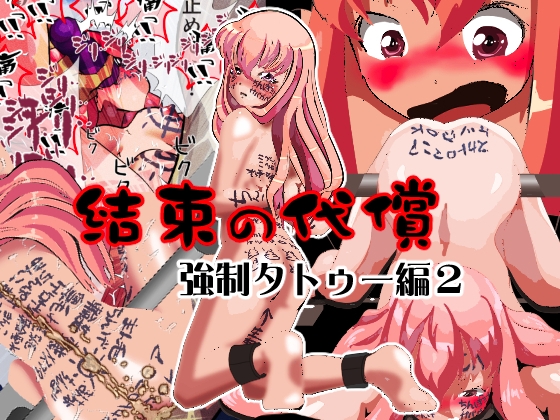
Skin that has been written on. The interest gathers around the surface where ink has been deposited and around the social meanings that mark of writing carries. In the Japanese case the underlying tradition is irezumi, with a documented history reaching back to the Edo period and a continuing presence in current society as both a refined craft and a heavily stigmatised one. The fetish reads on this whole surface.
Tattoo fetish is the focused sexual or aesthetic attraction to tattooed bodies. The interest works on the visual surface of the tattoo, on the bodily modification it represents, and on the social and cultural associations the tattoo carries. The Japanese version of this interest, irezumi fetish, is shaped specifically by the distinct historical position of irezumi in Japan, where tattoo aesthetics, organised-crime imagery, traditional craft culture, and ongoing institutional exclusion practices have produced a cultural register sharply different from the Western tattoo tradition.
Sources of appeal
Three structural sources of interest can be distinguished within the broader tattoo fetish.
The visual surface. A tattoo introduces colour, line, and graphic motif onto the otherwise uniform plane of skin, and the result is a heightened legibility of the body’s contour. A back-piece reads against the curve of the spine; a hip tattoo reads against the line of the pelvis; a sleeve tattoo reads against the shoulder and arm. Across these placements the tattoo functions as both decoration and visual emphasis, drawing the eye to the underlying body part. Placements at the lower back, hip, side of the chest, and back of the shoulder are particularly common in the fetish register because they fall on already-suggestive body lines.
The mark of decision. A tattoo is painful to acquire and permanent in result. The fact of having chosen it operates as a signal about the wearer’s personality, value commitments, and personal history. The signal reads roughly as: “unconventional, willing to commit, not bound by the standard rules”. Whether or not this signal is accurate to the person, the legible signal itself is part of what generates the fetish interest.
Taboo and exclusion. In Japan, irezumi carries dense associations with the yakuza and with informal exclusion from public bathhouses, swimming pools, gyms, and many onsen. The garment of “the dangerous side” hangs visibly on the skin. The fetish often runs on exactly this charge: the tattooed person is read as standing outside the conventional social field, and that exteriority is itself the source of the attraction.
The Japanese case
Irezumi as craft
Japanese tattoo (wabori, “Japanese-style work”) has its own iconographic system, technical lineage, and aesthetic register, separate from the Western tradition. The motifs are drawn from a recognised vocabulary: carp (koi), dragons, cherry blossom, hannya masks, peonies, the figures of the Suikoden, deities. The compositional logic uses large back-pieces, full-body suits, and sleeves with linked motifs flowing across the body. The traditional hand-poke technique (tebori) is still practised by a small number of masters and produces a different surface texture from machine work. Western-style tattooing using machines is also widespread in current Japan.
The genre’s deep history in Edo-period popular culture is visible in the ukiyo-e prints of the early nineteenth century, particularly Utagawa Kuniyoshi’s Suikoden series (1827–1830), which depicts heroic outlaw figures with elaborate full-body tattoo. The aesthetic and iconographic system of modern wabori descends from this lineage.
The exclusion regime
The modern social stigma derives from the Meiji-period state campaign against tattoo as a marker of pre-modern lawlessness and from the post-war association of irezumi with the yakuza. The 1948 lifting of the formal ban did not lift the social exclusion. Through the late twentieth and into the twenty-first century, the institutional regime of refusal at bathhouses, onsen, public pools, gyms, and many hotels remains in force across much of Japan.
A second, partly separate, exclusion targeted tattoo artists themselves. The 2020 Supreme Court of Japan ruling (Second Petty Bench) settled a major case by holding that tattoo work does not constitute the practice of medicine and does not require a medical licence. The ruling resolved a decade of prosecutions of tattoo artists under the Medical Practitioners’ Act and stabilised the legal position of the craft, while leaving the social exclusion regime against tattooed customers largely untouched.
Aesthetic registers and the fetish
The fetish interest in Japanese contexts splits along the wabori / Western-tattoo line. Interest in wabori tends to read along an axis of traditional craft, the “outlaw” or kyokaku (chivalrous-outsider) cultural type, the lacquered surface of the full back-piece. Interest in Western tattoo styles (tribal, blackwork, fine-line, illustrative) tends to read along an axis of subcultural identity, individual choice and personal narrative, the punk and rock surface. The two often coexist in the same field of imagery but draw on different cultural associations.
Adult media
In Japanese adult video, irezumi-ari (“tattooed”) functions as a category tag for performers with visible body work. Particular tattooed performers have built distinct fan bases around the wabori-and-AV pairing, and dedicated series featuring back-pieces have been produced as a recognisable subgenre since at least the 2000s.
In adult manga and illustration, tattoo is widely used as a character-design device to mark a character type: the gyaru, the yankee, the cool-girl outsider, the dominant female. The convention pairs the calligraphic or graphic body work with a contrasting character trait (the demure face, the soft voice) to produce a deliberate aesthetic dissonance. This use of tattoo in character design predates and parallels the more general gyaru and yankee visual conventions and has been a recurrent device in adult illustration since the 1990s.
Western tattoo culture as comparison
The Western tattoo tradition runs along a distinct cultural line: the maritime and military origins, the carnival sideshow circuit, the Sailor Jerry (Norman Collins) lineage in twentieth-century American work, the 1970s and 1980s alternative-culture adoption, and the mainstream normalisation from the 1990s onward. Where Japanese irezumi developed under conditions of formal and informal prohibition, Western tattoo developed largely outside the framework of state suppression but inside informal social marginality.
The fetish reading of tattoo skin runs on similar structural logic in both traditions: visible bodily decision, marker of outsider status, surface that reads against the underlying body line. The cultural content of the “outsider status” differs (organised crime in Japan, alternative subcultures in the West), and the fetish reads with that content.
See also
Updated
References
- 『The Japanese Tattoo』 Kodansha International (1980)
- 『Bodies of Subversion: A Secret History of Women and Tattoo』 powerHouse Books (1997)
- 『Tattoos in Japanese Prints』 MFA Publications (2017)
- 『Supreme Court of Japan ruling on tattoo artists』 Supreme Court of Japan, Second Petty Bench (2020) — Held that tattoo work does not require a medical licence.
- 『The Dark Side: Infamous Japanese Crimes and Criminals』 Kodansha International (2001)
Also known as
- tattoo fetish
- ink fetish
- irezumi fetish
- ja: タトゥーフェチ
- ja: 刺青フェチ
Related
- Mind Break (Hentai Tag and Narrative Type)
- Gothic Lolita
- Piercing Fetish
- Menhera (Emotionally Unstable Archetype)
- Neko (Bottom Role)
- Tachi (active role in same-sex relationships)
- Demon Girl Moe (Akuma Chara)
- Sisters Threesome (Ane-Imouto Don)
- ASMR (Autonomous Sensory Meridian Response)
- Bakajoshi (Airhead Girl Archetype)
- Blazer School Uniform
- Plain-Appearance Preference (Busu-kei)