Kimomen (Ugly Bastard)
✎ 本文編集 (admin) 🖼 画像編集 (admin)“Kimomen (Ugly Bastard)” works on DLsite

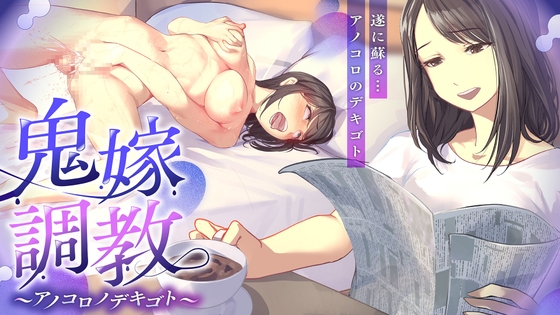

The man standing next to the heroine is not handsome. More than that: he must not be.
Kimomen is Japanese slang for an adult male character whose looks are coded as repellent. A coinage contracting “disgusting face”, it derived as “kimoi” (gross) spread widely in otaku vocabulary from the late 1990s, and settled in the doujinshi and eromanga communities of the 2000s. It is one of the closest Japanese expressions to the English fan-translation tag ugly bastard, and is run as a concept separate from debu-otoko (fat man) in that obesity is not a requirement.
Overview
Kimomen does not directly describe a particular physical feature. It is slang that names, in one word, the receiver’s subjective disgust at an appearance, and the core of the matter is that this disgust was commercially functionalised as a genre sign.
The kimomen character is drawn through a combination of visual signs: oily skin, acne scars, thinning or bald hair, stubble, drooping eyes, a perpetual leer, unclean teeth, a sweat-yellowed shirt, a pot belly. Where the fat man is typed on the single axis of obesity, kimomen is typed on the subjective, composite axis of “unpleasantness”. Thin or fat, balding or long-haired, young or middle-aged, if the image makes the reader feel “gross”, it falls within the range of kimomen. The genre-grammatical role largely overlaps that of the fat man, but for thin types that strongly carry unpleasantness (nervous, clingy, sex-offender-coded types), the term kimomen is functionally more precise.
Etymology
The “kimo” of kimomen comes from “kimoi”, the slang contraction of “kimochi warui” (disgusting). “Kimoi” itself spread among the young from the 1990s, and Yonekawa’s Nihon Zokugo Daijiten (2003) records derivatives such as “kimo-ota” and “kimomen”. “Kimomen” (parsed as “kimo + men/face”) arose in young women’s speech of the same period and settled as an everyday insult for an ugly, unclean man.
In the subcultural context, “kimomen” inherits the semantic range of this everyday word while specialising into a genre term naming a character type in doujinshi and adult games. Variant spellings coexist, but in search-based genre distribution the mixed katakana-kanji spellings of “kimomen” and “kimomen ojisan” (creepy old man) are the most frequent. “Shikoo” / “buotoko” is an older native word for an ugly man, less current in subculture but sometimes adopted for its literary, classical resonance in eromanga prose and doujinshi titles.
Establishment as a subcultural sign
The fixing of character types in eromanga advanced greatly in the 1990s, after the gekiga and loli-style author generations of the 1980s. In that period, adult male characters drawn as the aggressor or sexual counterpart of the heroine were often handled by attribute (“teacher”, “boss”, “middle-aged man”), and dramaturgy that foregrounded ugliness itself as a genre sign was limited.
In the late 1990s, as the secondary-creation scene centred on conventions expanded, readers who venerated the bishoujo characters of popular works showed strong demand for dramaturgy that consumed their object of veneration paired with “the least fitting partner”. As a device visualising the extreme of the least-fitting partner, the typical images of kimomen and the fat man developed in parallel.
Through the 2000s, kimomen rose to a fixed character repeatedly depicted across eromanga, adult games, and adult anime. It became no single author’s invention; multiple authors and circles refined the type in parallel. Nagayama’s Eromanga Studies (2006) sets out how such types are sorted as “components of a pleasure apparatus” within the medium. As a derivative, “kimomen ojisan” circulates as a genre term combining middle age or above, low social standing, and proximity to the heroine’s everyday space; placed as a teacher, facility staffer, neighbour, or relative, it secures narrative menace through character attribute itself.
Turning “disgust” into a sexual sign
The chief feature of the genre is the reversal of the negative adjective “gross” into a sexual sign. Ordinarily “gross” expresses aversion and severs the object from sexual appeal. In the subcultural context, however, the very visual information the reader feels as “gross” is used as a device maximising the gap with the heroine, turning instead toward driving sexual tension. This coexistence of aversion and arousal shares its emotional-drive mechanism with the way cuckoldry works coexist “grief” and “arousal”.
The reader processes aversion at “the heroine submitting to such a man” and the desire “to see the heroine submit to such a man” as a single bodily response. As a device that synchronises moral rejection and sexual arousal without dissociating them, the kimomen type has an irreplaceable sign-value.
Comparison abroad
In the Anglophone doujin-translation community the corresponding type is run under the genre tag ugly bastard. On English doujin archives, the UGLY BASTARD tag is maintained as an independent category, functioning as a slightly broader category word covering both the Japanese “kimomen” and “fat man”. In Chinese subcultural translation, terms for “ugly man” are used; the Korean word for “ugly man” exists as a general term, while the romanised “kimomen” is sometimes imported as a loanword in the subcultural context, a phenomenon in which the genre name itself moves across cultures without translation.
Structure of reception
Several factors underlie the genre’s steady demand. The ugliness works as a high-efficiency gap device, generating visual difference from the bishoujo heroine on the subjective axis of cleanliness and looks rather than sex or age. Connectivity with adjacent genres (cuckoldry, netori, defilement, kichiku-style) is high: the mere appearance of a kimomen switches the emotional tone of the page from “the everyday” to “violation”, minimising the cost of a genre switch. There is also a relation to reader self-projection: for some readers the kimomen functions as a grotesque mirror-image of their own self-image, mediating a vicarious experience; for other readers it is wholly other, a “villain” preserving moral superiority. The same type sustains opposite reader positions at once. Finally there is a reaction against fatigue with normative beauty: readers tired of mainstream expression where only handsome men appear as sexual counterparts sought expression swung to the opposite of the norm.
See also
- Debu-otoko (Fat Man)
- Bishoujo
- Cuckoldry
- Netori
- Doujinshi
- Kichiku-style
Updated
References
- 『Eromanga Studies: An Introduction to Manga as a Pleasure Apparatus』 East Press (2006)
- 『Erotic Comics in Japan: An Introduction to Eromanga』 Amsterdam University Press (2021)
- 『Nihon Zokugo Daijiten』 Tokyodo Shuppan (2003) — Records 'kimoi' and its 1990s-onward slang derivatives.
Also known as
- ugly bastard (thin type)
- creepy old man
- busaiku
- kimomen
- ja: キモ面
Related
- Futanari
- Mind Break (Hentai Tag and Narrative Type)
- Gothic Lolita
- Menhera (Emotionally Unstable Archetype)
- Neko (Bottom Role)
- Tachi (active role in same-sex relationships)
- Demon Girl Moe (Akuma Chara)
- Sisters Threesome (Ane-Imouto Don)
- ASMR (Autonomous Sensory Meridian Response)
- Bakajoshi (Airhead Girl Archetype)
- Blazer School Uniform
- Plain-Appearance Preference (Busu-kei)