Saikai-Mono (Reunion Genre)
✎ 本文編集 (admin) 🖼 画像編集 (admin)“Saikai-Mono (Reunion Genre)” works on DLsite

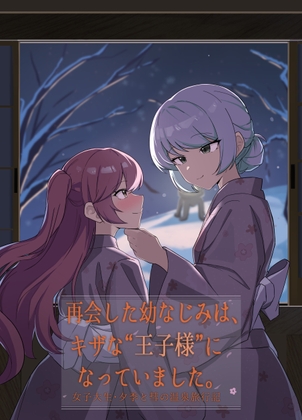


The profile of a woman parted from years ago, across the window of a train stopped on the opposite platform. A first-love classmate not seen in ten years, seated beside you at the after-party of a reunion. An ex-lover, now a working adult, appearing at the office. The instant a relationship supposed to be over reappears before your eyes in a different context, past and present connect at once. The feeling of that time does not simply remain; there has been another life, another relationship since, and yet the body reacts the instant eyes meet. The figure of reunion functions as a device bringing a time axis where past and present overlap into the story.
Saikai-mono (再会もの, “reunion genre”) is the collective term for adult works that take a reunion with a parted lover, an estranged acquaintance, a childhood friend, or a former classmate as the narrative starting point. This article treats it as a situation genre spanning AV, adult manga, eroge, and doujin audio.
Overview
Saikai-mono is a sub-genre established from the 1990s in romance eroge, pure-love AV, and adult manga. Its time structure, “a person with whom one had a past relationship and one’s present self meet again”, differs from a story beginning at first meeting. The viewer receives the past episode the characters share through recollection, dialogue, photographs, and letters left behind, overlaying past nuance on the present scene after the reunion. The settings are frequently a reunion venue, the next room at a new home, a new workplace, a hotel on a business trip, and transit spaces (stations, airports, bus terminals); more than the place itself, the contingency of “we should not have met here” forms the core of the device.
Narrative devices
The most standard setting is the class reunion of middle school, high school, or university: a former classmate met again after over a decade, the present figure of someone there was little contact with before, the contrast of those who have changed and those who have not, form the base of the composition. A figure matured as a working adult, a figure married into a married woman, a figure single and unchanged, all connect with the married-woman genre, mature-woman, and pure-love narrative types. The very flow after a reunion, the after-party, missing the last train, the move to a nearby hotel, shapes a narrative format specific to the genre. The chance encounter, an accidental meeting in the street, reunion as a neighbour at a new apartment, reunion as superior or subordinate at a new workplace, is also a standard setting; the stronger the contingency, the more the ensuing development is positioned in the story as “fate”. In recent years contemporary reunion routes are drawn too: an ex-lover found by chance on social media, a message arriving after ten years, a renewed contact beginning from a notice of relocation, the form of the device updating along the shift of medium from telephone and letter through e-mail and social media.
Narrative structure
The central pattern is the rekindling of a sexual relationship with a parted lover: parted in youth, separated by entering school or employment, parted over a difference of values, such a past parting presented in the story, and after the reunion the relationship reconstructed by recalling the old feeling while confirming the partner’s changed present. When combined with the married-woman genre, the partner being married becomes the narrative obstacle, and the structure wavering between the desire to regain the old relationship and the reason not to break the present marriage produces the genre’s emotional depth; development connecting with netorare and affair is a principal branch. The childhood-friend and first-love type depicts reunion with a childhood friend, someone parted by a move, or a first love, a core motif of pure-love and romance eroge, carrying a structure that drives a past relationship “interrupted unfinished” toward completion through the reunion. The one-sided-longing type reconstructs a “one-way past”, a partner never confessed to, a partner of unrequited love, a partner whose feeling went unnoticed, with the gap of mutual recognition producing the narrative undulation.
Reception psychology
The core appeal is that the viewer can overlay their own past memory on the story. Everyone holds some past relationship and has overlaid a “what if” on it; the reunion device functions as a contrivance that lets one experience this personal “what if” vicariously in narrative space. When it branches into pure-love it works as a story of emotional reunion, when into netorare or the married-woman genre as a story of taboo deviation, the same reunion device developing in opposite directions, which sustains the genre’s versatility: depending on the emotional direction the viewer seeks, the same “reunion” becomes blessing or transgression. The technique of dropping into the frame the changes time brings (ageing, marriage, childbirth, a change of occupation or values) depends heavily on the acting, age, and casting of the performers, and in commercial AV actresses in their late twenties to thirties tend to carry the axis of such work.
Related terms
Updated
References
- 『アダルトビデオ革命史』 Gentosha (2009)
- 『AV女優の社会学』 Seidosha (2013)
- 『ロマンティック・ラブ・イデオロギーの誕生』 Shin'yōsha (2004)
Also known as
- reunion genre
- ex-lover reunion scenario
- rekindled-romance setting
- ja: 再会もの
- ja: 元カノもの
Related
- Idol-producer theme (J-adult media)
- Private-tutor genre (J-adult fiction)
- Seikotsu-in Mono (Osteopathy / Massage Clinic Genre)
- Sports Trainer Theme (J-AV)
- Netoge-Mono (Online-Game Romance)
- Ryouri-Mono (Cooking-Setting Genre)
- School-Trip Genre (Shuugakuryokou-mono)
- Business-Trip Genre (Shucchou-mono)
- Height Difference Fetish
- Reading Fetish (Dokusho Fechi)
- School-Nurse-Office Scenario (Hokenshitsu)
- Car sex