Slice-of-Life Erotica
✎ 本文編集 (admin) 🖼 画像編集 (admin)“Slice-of-Life Erotica” works on DLsite

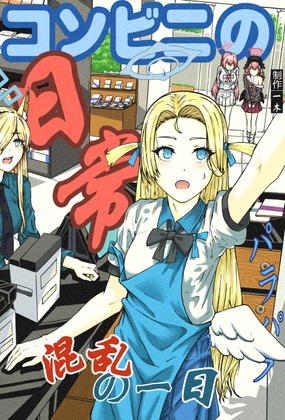
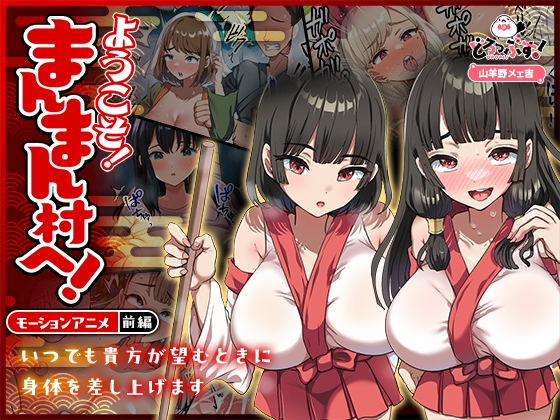
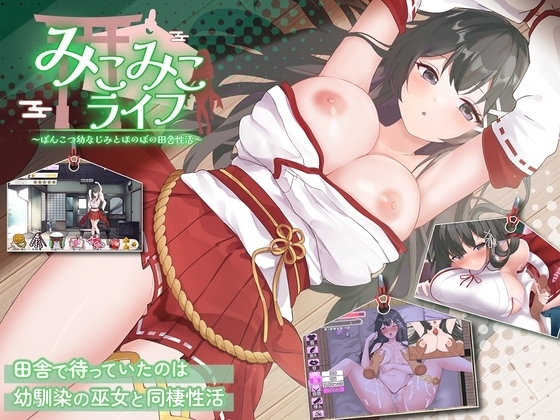
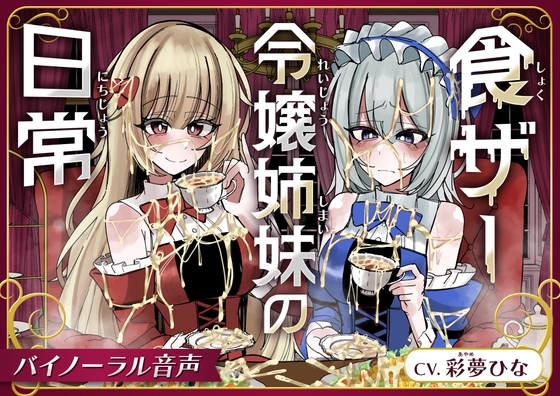



On a holiday morning, the hair of the girl sleeping next to you, breathing softly, falls across your cheek. From the kitchen drifts the faint smell of the miso soup prepared the night before; the sensation of her body pressing into the crook of your arm on waking is as it always is, and that it is as it always is fills the heart. Slice-of-life erotica (日常系エロ, nichijō-kei ero) is the collective term for the adult creative genre that depicts sexuality as an extension of the everyday life of lovers, married couples, and cohabitants, without dramatic incident, world-crisis, or great conflict.
Overview
Slice-of-life erotica stands in a phase opposite to the “the fate of the world hangs in the balance” narrative types: the world-systemic, the supernatural-mystery, the fantasy. Its driving force is not incident but the continuation of relationship, and the deepening attachment and sexual intimacy within a daily routine are its subject. The principal bearers are eroge, eromanga, doujin audio, and adult light novels, recurring in eroge of the gentle moe lineage, in newlywed and cohabitation eromanga, and in situation-voice work like “a week with your girlfriend”.
The core: absence of incident, continuation of relationship
The core of the slice-of-life is the active choice that nothing big happens. No one needs to save the world in the story, no one needs to die, no one needs to part. The heroine is healthy, life is peaceful, the relationship is stable. The small differences within that stability become the driving force: the tone of the morning greeting, food preferences, how a holiday is spent, trivial quarrels and reconciliations, small events keyed to the turning seasons. The fine detail of life accumulates. Sexual contact is built into that continuity, depicted as a nightly routine, an offhand touch after a bath, a touch of bodies at the hour of waking.
Origin of the term
The label “slice-of-life” (nichijō-kei) began to be used in late-2000s anime and manga criticism for the body of work in which no incident worth the name occurs. It was a concept applied when placing Kiyohiko Azuma’s Azumanga Daioh and the Kirara-line four-panel manga (Hidamari Sketch, Lucky Star, K-On!) on the critical table, discussed by Tsunehiro Uno and Tamaki Saitō in contrast with the world-systemic. The flow into the eroge domain proceeded from the late 2000s as a further de-incidentalising of the pure-love genre: after the incident-driven narrative types (world-systemic, supernatural, assault) had run their course, slice-of-life erotica formed in the current of reconstructing “a story without incident” as a positive value.
Variants
The “ichaicha-romance” form (a contraction of ichaicha, flirting, plus lovelove) depicts the everyday after entering a relationship with one specific heroine. A classmate, childhood friend, colleague, or neighbour serves as the partner; the process of meeting, confession, and being united is handled briefly, and the narrative weight is placed on the relationship after they are united. The cohabitation and newlywed form depicts daily life and sexuality within an already-cohabiting relationship: breakfast, shopping, laundry, and the touch of bodies in bed are depicted in alternation, the structure of “sexuality dissolved into life” forming the narrative core. The married-couple form depicts the daily life of a couple after marriage, with efforts toward conception, changes after childbirth, and recovery from a slump as subjects; it is adjacent to the married-woman genre, but where the married-woman genre tends to take “affair, intrusion of an outsider” as subject, the slice-of-life married-couple form depicts the closed world of the two by contrast. The slice-of-life form derived from the English “slice of life” takes no clear narrative arc and arranges fragments of life in sequence, frequently used in doujin audio in series like “a day with your girlfriend”.
Reception psychology: a desire for stability
What draws the audience to slice-of-life erotica is the guarantee that the relationship will not break. Real romantic relationships are full of uncertainty (parting, ennui, the intrusion of a third party, economic problems, changes of environment), but the slice-of-life narrative offers a world in which stability continues. This desire for stability came to be more strongly supported from the 2010s onward against a background of social anxiety (the destabilisation of employment, the falling birth rate, the structuring of loneliness). That nothing happens, that the relationship does not break, that the same day continues tomorrow, became in itself a precious narrative value for the contemporary young and middle-aged. If the world-systemic depicts “pure love on the brink of the end”, the slice-of-life depicts “the pure love of days without end”, a paired phase. The two formed the two poles of 2000s eroge and influenced the narrative types of later subcultural creation.
Related terms
- Eroge
- Newlywed genre
- Junai-kei (pure-love)
- World-systemic erotica
- Visual novel
- Married-woman genre
Updated
References
- 『Otaku: Japan's Database Animals』 University of Minnesota Press (2009)
- 『Beautiful Fighting Girl』 University of Minnesota Press (2011)
- 『ゼロ年代の想像力』 Hayakawa Shobō (2008)
Also known as
- slice-of-life erotic content
- ichaicha romance genre
- domestic erotica
- ja: 日常系エロ
- ja: イチャラブもの
Related
- Haramase-mono (impregnation genre)
- Training/development eroge
- Isekai genre (Japanese fantasy/adult setting)
- Live-action eroge
- Pure-love genre (junai-kei)
- Kichiku-kei (brutal-abuse genre)
- Vampire erotica genre (J-adult media)
- Mahou-mono (Magic-Themed Genre)
- Action Eroge
- Cohabitation scenario (J-AV / hentai genre)
- Eroge music culture (J-adult game soundtracks)
- Eroge voice actress culture (J-adult game industry)