Tentacle-mono (tentacle-genre adult media)
✎ 本文編集 (admin) 🖼 画像編集 (admin)“Tentacle-mono (tentacle-genre adult media)” works on DLsite
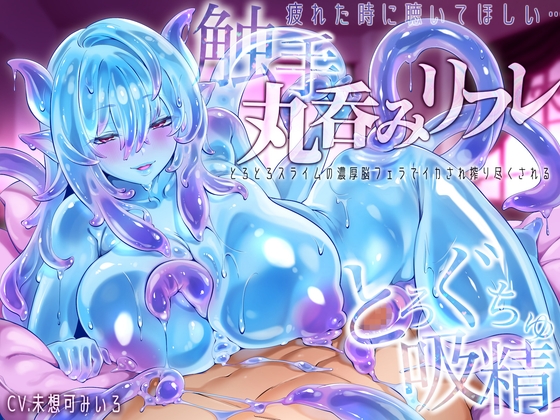
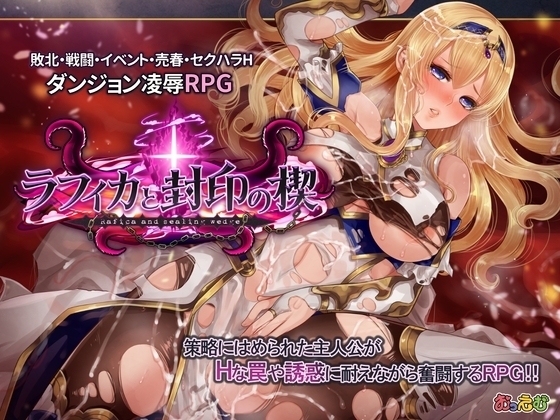
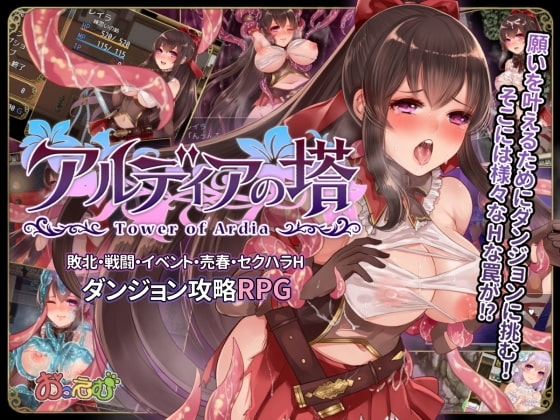
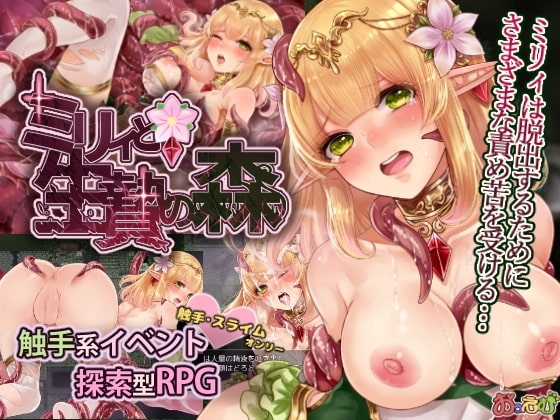
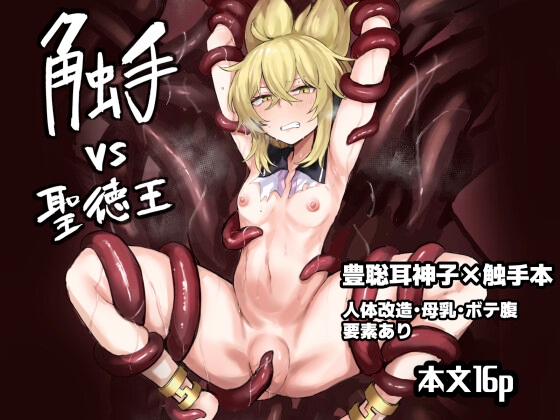
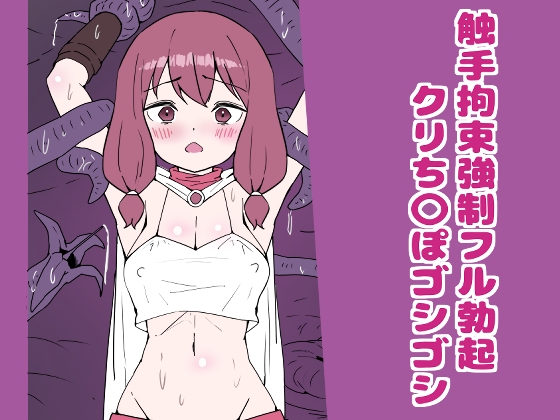
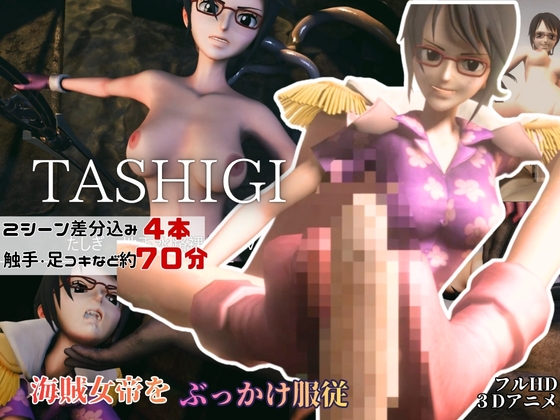
A tentacle-bearing octopus, an alien organism, a magical creature of indeterminate species, a creature whose tentacles do the work that a human partner would do in a conventional erotic narrative. Tentacle-mono names the genre of Japanese adult media organised around this configuration, with a recognisable visual vocabulary, a production history that runs from 1980s OVA through to contemporary digital production, and an international fan-recognition position as one of the defining specifically-Japanese categories of hentai.
The framing essential to any responsible discussion of the genre: all material in tentacle-mono operates in an explicit fantasy register, with the depicted creatures fictional non-existent fantasy-entities. The genre is not a depiction of any real-world practice, has no real-world referent, and exists purely as a fictional-fantasy production category. All depicted characters are, in the relevant production context, adult-aged characters in adult-content production, and the genre operates within the same regulatory-and-self-regulatory frameworks as the broader Japanese adult-content industry.
This article concerns tentacle-mono as a media-genre category. The adjacent fetish-aesthetic article on tentacle (shokushu) covers the underlying aesthetic-and-symbolic content; the present article concentrates on the media-genre and production-history dimensions.
Overview
Tentacle-mono (Japanese: 触手もの, shokushu mono; the -mono suffix marks “works/things of [category]”; English equivalents: tentacle erotica genre, tentacle hentai, tentacle porn) is the Japanese adult-media genre category for works centred on the depiction of tentacle-bearing fictional creatures (octopus, squid, marine creatures, fantasy monsters, alien organisms, magical entities) engaging in sexual scenarios with human (usually female) characters. The genre spans multiple media formats — animated OVA, theatrical and direct-to-video animation, eromanga and adult comics, doujinshi, eroge CG production, live-action adult video — with cross-media production lineages and a recognisable internal vocabulary.
The genre’s distinguishing feature in production-grammar terms is the fantasy-creature partner. The sexual encounter’s other-than-human partner — the tentacle entity — operates as a creature with no real-world referent, with the genre’s fictional-fantasy frame providing a particular kind of production-grammar permission. The configuration’s specific feature of multiple simultaneous tentacle-engagements with multiple body-regions gives the genre a visual signature that ordinary human-partner adult-content cannot replicate.
The genre has been the subject of substantial international fan-recognition as a definingly-Japanese hentai category, with the English-language vocabulary tentacle porn and tentacle hentai operating as recognised category-names with strong Japanese-origin association. International reception’s positioning of the genre as “the weird Japanese hentai” has been a subject of academic commentary, with the cross-cultural reception itself a recognised dimension of the genre’s contemporary cultural position.
The genre’s distinguishing features
Two structural features mark the genre’s distinctive position in the broader hentai production-vocabulary.
Non-human partner with multiple-tentacle articulation. The tentacle-entity’s structure — multiple flexible appendages, no single organising body-plan corresponding to human anatomy, capacity to engage multiple body-regions of the human partner simultaneously — gives the genre’s depicted scenarios a structural feature that human-partner adult-content cannot match. The multi-point simultaneous stimulation configuration is the genre’s most-recognisable visual feature, with multiple body-regions of the depicted character engaged simultaneously by separate tentacles. The configuration produces compositions that conventional human-partner depictions could not produce on anatomical grounds, with the production-grammar exploiting the fantasy-permission to design compositions that work specifically with the multi-articulation feature.
Agency-ambiguous partner. The tentacle-entity’s status as a creature without clear personhood means the question of agency-and-responsibility that adult-content depicting human-partners would engage is structurally differently positioned. The tentacle-entity is neither a willing-co-participant in the human sense nor a clearly-malicious-agent in the human sense; the entity operates in a register where conventional moral-and-social vocabulary for sexual encounters does not straightforwardly apply. The production-grammar exploits this register-displacement to construct scenarios that operate outside the conventional moral-and-social frame of human-partner depictions, with the fantasy-creature register providing the operating frame.
These two features together give the genre its distinctive identity within the broader hentai production-vocabulary. The genre is not simply “monster-creature adult content” but specifically “tentacle-creature adult content with multi-articulation-engagement and agency-displaced register”.
Historical development
The visual lineage of tentacle-and-human-figure compositions in Japanese visual culture has a long pre-modern history. Katsushika Hokusai’s Tako to Ama (“Octopus and Diving-Woman”, c. 1814), one of the most famous individual shunga prints in the international shunga reception-history, depicts an octopus engaging with a human female figure in a sexual scenario. The print is among the most-internationally-recognised individual shunga prints, with substantial scholarly commentary on its status as the historical antecedent of the modern tentacle-genre tradition. The connection between Hokusai’s prewar print and the modern tentacle-mono genre is, however, more discontinuous than continuous: the genre’s modern form developed in late twentieth-century Japanese adult-animation production rather than continuously through the intervening period.
The modern tentacle-mono genre’s establishment is conventionally placed in the 1980s Japanese adult animation (OVA) production. The release of Yōjū Toshi (Wicked City, 1987) and the broader cycle of late-1980s adult-animation releases, with the explicit-content variants of works like Chōjin Densetsu Urotsukidōji (Legend of the Overfiend, 1987) and adjacent productions, established the modern tentacle-mono visual vocabulary. The OVA medium’s particular suitability to the genre (animated fluidity-and-flexibility of the tentacle-entities, freedom from live-action’s anatomical constraints, the genre-specific compositional possibilities) made it the establishing format for the modern genre.
The international diffusion of the genre followed the 1990s and early-2000s licensing of adult animation to Western distribution. The English-language release of works in the Urotsukidōji lineage and adjacent productions placed the tentacle-porn / tentacle-hentai category in front of international audiences, with the establishing publications (the manga and anime fan press of the period) treating the genre as a representative example of “Japanese hentai” as a recognisable international category.
Through the 1990s, the expansion of the doujinshi market provided substantial production-volume for the genre at the user-creator level, with dedicated tentacle-themed circle production becoming a stable presence in the broader doujinshi market. The 2000s digital-distribution transition extended the genre’s reach further, with dedicated tentacle-themed productions on DLsite, FANZA, and Pixiv operating as a recognised independent production-category.
In live-action adult video, the genre’s representation is necessarily more constrained than in animation, with the technical limits of practical-effects production restricting the genre’s visual rendering. Live-action productions in the genre typically deploy mechanical-or-prop-based tentacle effects, with the resulting compositions less visually flexible than animation but with their own distinct register of real-physical-tentacle-effect production-grammar. The Japanese live-action market includes ongoing productions in the genre with established production techniques.
Production-and-narrative conventions
The standard narrative-structure of tentacle-mono works has stabilised into a recognisable three-phase pattern:
Phase 1: Encounter setup. The human character (typically a fantasy-coded female-character role: magic-user, fighter, priestess, astronaut, explorer) encounters circumstances where a tentacle-entity becomes a relevant presence. The setup phase establishes the fictional-frame and the character’s professional-or-occupational-context. The character types are heavily over-represented in fantasy-and-science-fiction-coded roles, because the narrative-frame of “encountering a tentacle-creature” requires a fictional-context where such encounters are plausible-within-the-fiction.
Phase 2: Capture or engagement. The tentacle-entity engages with the character, with the multi-articulation feature operating at scene-construction level. The phase’s central feature is the depicted multi-region engagement, with the visual-grammar exploiting the genre’s distinctive compositional possibilities.
Phase 3: Resolution or continuation. The work concludes with various possible scenarios: escape, succession-to-further-encounter, transformation-of-character, integration-into-the-tentacle-world, or other narrative outcomes. The phase’s specific configuration varies by work and by sub-genre.
The character-type vocabulary developed within the genre is correspondingly substantial: the magic-user / witch type, the fighter / warrior type, the priestess / shrine-maiden type, the astronaut / space-explorer type, the underwater-diver type, the forest-explorer type. Each character-type carries narrative-context expectations that the production-grammar deploys.
International reception
The genre’s international fan-recognition as a definingly-Japanese hentai category has been substantial. Western adult-media databases (in international fan-vocabulary) and Western fan-discussion forums treat the genre as a recognisable category with strong Japanese-origin specificity. The English-language vocabulary tentacle porn, tentacle hentai, and tentacle erotica operates as established category-vocabulary with consistent reference across the international fan-community.
A notable feature of the international reception is the regulatory-discontinuity factor. In many international jurisdictions, depictions of non-human-with-human sexual scenarios that would otherwise engage zoophilia regulatory regimes are not so engaged when the non-human partner is a clearly-fantastical-entity rather than a real-world animal. The fantasy-entity status of the tentacle-creature places the genre outside the regulatory regime that would apply to real-animal depictions, which has been a factor in the genre’s distribution viability across international jurisdictions. This regulatory-position-difference has contributed to the genre’s positioning in international hentai distribution as a particularly-distributable category.
The international academic literature on the genre treats it as a representative example of Japanese adult-content production’s distinctive features. Galbraith’s Erotic Comics in Japan (2021) places the genre within the broader Japanese eromanga production-history, with the genre’s development connected to the broader cultural-historical patterns of Japanese fantasy-and-monster-cultural tradition. Allison’s Permitted and Prohibited Desires (2000) connects the genre to the broader Japanese cultural framing of fantasy-and-monster figures in popular culture, with the cross-cultural specificity of the configuration as a recognisable feature.
Sub-genres
Marine-organism tentacle-mono (the octopus / squid / sea-creature lineage): the original Hokusai-print-derived sub-genre, with the marine-creature partner as the central feature. Continuing tradition with substantial contemporary production.
Magical-being tentacle-mono: with the partner as a fantasy-magical-entity (witchcraft-entity, demonic-entity, spirit-entity). The fantasy-magical frame permits stylistic-design freedom that the marine-organism sub-genre’s anchoring in real-world creature-imagery constrains.
Alien tentacle-mono: with the partner as an extraterrestrial-or-alien-entity, often within a science-fiction-coded narrative frame. The configuration of “encountered in space” or “encountered in alien environment” is a recurring narrative-frame for the sub-genre.
Slime / amorphous-creature tentacle-mono: with the partner as a slime-or-amorphous-creature, often within fantasy-RPG-coded narrative frames. The configuration is particularly prominent in fantasy-game-derived doujinshi-and-derivative productions.
Plant tentacle-mono: with the partner as a sentient-plant-or-vine-creature, often within fantasy-or-horror-coded narrative frames.
Mechanical-tentacle mono: with the partner as a robot-arm-or-mechanical-tentacle-entity, often within science-fiction or laboratory-setting narrative frames.
Cultural reception
The genre’s continued cultural position in the Japanese adult-content production landscape is stable. Production continues across animation, manga, doujinshi, eroge CG, and live-action production, with the genre maintaining its position as one of the established sub-categories of the broader Japanese hentai production market. The international fan-recognition of the genre as a defining Japanese-origin category continues to anchor the genre’s cross-cultural position.
The genre’s relationship to the broader cultural-historical lineage of Japanese fantasy-and-monster culture is one of the more substantively-discussed dimensions of its analytical reception. The continuity from Hokusai’s Tako to Ama through Japanese folkloric monster-tradition (the kappa water-creature, the various yōkai creature-types) through modern manga and animation production’s monster-character vocabulary, with the tentacle-mono genre as one of the contemporary endpoints of this lineage, is a recurring frame in academic discussion of the genre. The contemporary tentacle-creature is, in this analytical frame, not a sudden invention but a particular development of a much older cultural disposition toward fantasy-creature-and-human interaction as a generative imaginative configuration.
Related Terms
- Shokushu (tentacle as fetish) — the underlying aesthetic-and-symbolic content
- Eromanga — the adjacent adult-comics medium
- H-manga — adjacent adult-comics vocabulary
- Ishukan (inter-species) — the broader inter-species kink category
- Doujinshi — the substantial parallel production-format
Updated
References
- 『Erotic Comics in Japan: An Introduction to Eromanga』 Amsterdam University Press (2021)
- 『Manga: The Complete Guide』 Del Rey (2007)
- 『Permitted and Prohibited Desires: Mothers, Comics, and Censorship in Japan』 University of California Press (2000)
- 『Beautiful Fighting Girl』 University of Minnesota Press (2011)
Also known as
- tentacle-mono
- tentacle erotica genre
- tentacle porn
- tentacle hentai
- ja: 触手もの
- ja: 触手エロ
Related
- Shokushu (Tentacle)
- Eromanga
- Ishukan
- Sacrificial-victim genre (J-hentai)
- Vampire erotica genre (J-adult media)
- Adult Anime (Broad-Sense Animated Erotica)
- Demon-Summoning Erotic Content
- Fantasy setting (J-eroge and adult game genre)
- Ryoujoku-Mono (Non-Consensual Genre)
- Saimin-Mono (Hypnosis Genre)
- Hentai Anime
- Hentai Video