Nun (Sister) Fetish
✎ 本文編集 (admin) 🖼 画像編集 (admin)“Nun (Sister) Fetish” works on DLsite
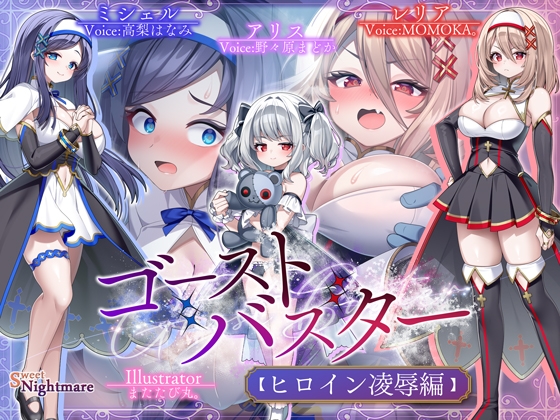
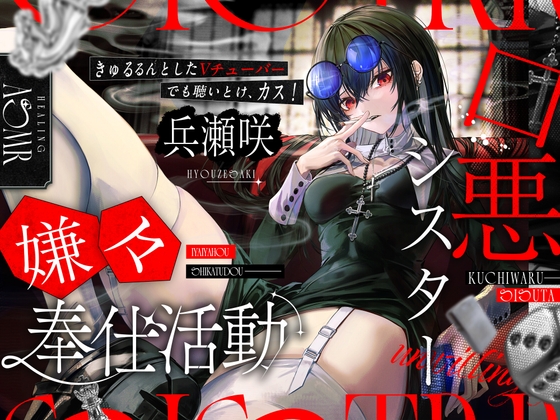


A character in habit and veil, eyes lowered, fingers around a rosary. The setup foregrounds vowed celibacy as the precondition for its erotic violation in fiction. The pattern is one of a small set of Japanese costume-and-vocation archetypes that organise both anime/eroge character design and the cosplay costume market. All depictions discussed in this article are of fictional adult characters (18+) in role-play contexts.
Overview
Sister moe (Japanese: シスター萌え, shisutaa moe) is the Japanese subcultural taste for nun characters in conventional habit-and-veil costume. The genre is internal to Japanese anime, eroge, eromanga, adult anime, and doujinshi; the nun figure stands alongside the miko (shrine maiden), the nurse, and the maid as one of the four most stable religious-or-vocational costume archetypes in Japanese subculture.
The target of the taste is not the historical or contemporary Catholic nun but a stylised costume-and-iconography package: black floor-length habit, white veil and wimple, a prominent rosary, a posture of downcast eyes, and a setting in a mission school, a chapel, or a convent. The actual practice of religious life is not at issue; the figure operates as a stylised costume archetype.
Iconography
Habit and veil
The standard visual package is the black floor-length habit with a white veil. Real religious habits vary substantially by order, but Japanese subcultural depiction has converged on a stylised Benedictine/Dominican-derived form with white wimple at the chest, a large rosary at the neck, and a hem that falls to the floor. Together these elements are sufficient, in a single panel, to read the figure as nun without any further textual marker.
The veil holds a privileged position within the iconography. It compactly encodes withdrawal from the secular world, the covering of female hair as a symbolic seal on femininity, and membership of a religious community. Removing the veil, as a single image, carries a weight comparable to or beyond ordinary disrobement, and is treated within the genre as a privileged dramatic moment.
Derivative costumes
A range of derivative costumes have developed alongside the strict habit: shortened skirts, modified necklines, white novice habits, choir-style variants. The market in cosplay costumes has largely diverged from any historical reference, and what circulates is a moe-fied habit: a costume-language internal to the subculture.
Narrative archetypes
The mission-school teacher
A particular Japanese factor in the development of the figure is the historical role of Catholic missionary schools as the most visible public-facing instance of the Catholic nun in Japan. Schools such as Shirayuri Gakuen, Sacred Heart, and Futaba Gakuen have employed nuns as teachers since the Meiji period, and the resulting cultural image of the mission-school teacher — well-mannered, elegant, intellectually serious — supplies one of the standard narrative roles in sister moe fiction. Konno Oyuki’s Maria-sama ga Miteru (1998–2012) is the canonical reference for this register; the series established a vocabulary of mission-school elegance that subsequent adult and non-adult fiction has continued to draw on.
The celibacy-violation plot
Eroge, eromanga, and adult anime more often work with the second standard plot: a vowed nun, in a fictional adult role, is brought into a sexual relationship with the male protagonist. The visual conventions include continued partial wear of the habit, rosaries handled within scenes, and lines of dialogue invoking forgiveness. Shinsho: Genmukan (1998) is one of the often-cited early eroge entries; subsequent dōjinshi and impregnation-themed and netorare-themed series have continued the trope through to the present.
The fighting nun
A third archetype combines the vocational habit with combat capability: exorcists, demon-hunters, paladin nuns. Hellsing (1997–2008) is the most-cited example of the lineage, with subsequent appearances in mobile games and light novel adaptations. The combination of disciplined vocational identity and combat competence functions as a separate, but compatible, moe configuration.
Adjacent archetypes
The four standard religious-or-vocational archetypes — miko, nurse, maid, sister — are routinely consumed as a parallel set. Each carries a distinct symbolic backdrop: the miko the Shinto purity register, the nurse the medical-care register, the maid the class-service register, and the sister the religious-celibacy register. Despite the symbolic divergence, all four are treated within Japanese subcultural production as interchangeable in their structural role: a costume immediately signals the vocation, and the costume itself becomes the visual centre of the erotic scene.
The cross-over with the ojou-sama (well-bred lady) archetype is particularly common in the mission-school setting: nun-teacher with ojou-sama student is one of the most stable two-archetype combinations in the genre, frequent in both adult and non-adult fiction.
Reception and reading
The reading offered by the genre’s commentators is that the central source of the figure’s appeal is the taboo-violation as quasi-experience: the figure embodies celibacy, devotion, and self-renunciation in stylised form, and the act of fiction puts those vows in tension with the encounter narrated. For the Japanese audience, who consume the figure at considerable cultural distance from any actual Catholic religious practice, the figure retains an otherness that other moe archetypes lack, and this otherness is part of its endurance.
A secondary reading concerns the costume itself. The habit fully covers hair and body silhouette, and as a result intensifies the imaginative work done by the audience on what remains hidden. This is the inverse of high-exposure erotic aesthetics: rather than show more, the habit shows less and trusts the audience to fill in. Saito Tamaki’s Beautiful Fighting Girl (2000) sets out the framework within which this kind of erasure-as-amplification pattern in Japanese subcultural character design is usually analysed.
See also
Updated
References
- 『Beautiful Fighting Girl』 University of Minnesota Press (2011) — Translation of the 2000 Japanese original; on character archetypes in Japanese subculture.
- 『The Moe Manifesto』 Tuttle (2014)
- 『Bishoujo no Gendaishi』 Kodansha (2004)
- 『Adult Video Kakumeishi』 Gentosha (2009)
Also known as
- nun fetish
- sister moe
- Catholic-school costume fetish
- shisutaa moe
- ja: シスター萌え
- ja: しすたーもえ
Related
- Knee-high socks (kink)
- Dark Elf (Fantasy Character Archetype)
- Jawline Fetish
- Demon Girl Moe (Akuma Chara)
- Bakajoshi (Airhead Girl Archetype)
- Chijoka (Becoming a Lustful Woman)
- Dosukebe (Super-Lewd Character Type)
- Twins Moe (Futago Moe)
- Gangimari (Drugged-Face Expression)
- Gap Moe (Gyappu Moe)
- Haraguro Moe (Two-Faced Character Appeal)
- Hikikomori Character Moe